San Mateo County Sets First Local Rules for AI Robots
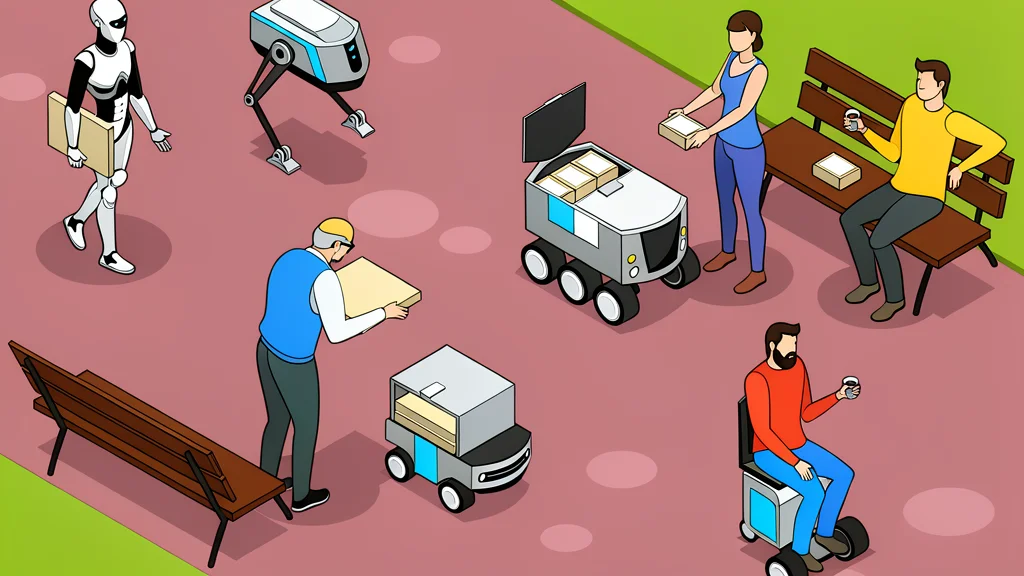
San Mateo County has voted to create a unique permitting system for businesses using autonomous, AI-controlled robots, prioritizing worker safety and fire prevention.
San Mateo County supervisors have approved a pioneering ordinance requiring businesses to obtain permits before deploying autonomous, AI-controlled robots in unincorporated areas. The vote, passed unanimously, establishes a regulatory framework that focuses on public safety and workforce stability rather than banning the technology. Officials aim to address potential risks such as battery fires and job displacement before these machines become a standard feature in local commercial spaces.
The new rules, introduced by Supervisor Ray Mueller, apply specifically to robots that operate partially without human control in areas accessible to the public or employees. To qualify for a permit, businesses must demonstrate that their machines meet strict standards for battery safety, privacy, and accessibility. This approach represents a shift from reactive regulation to proactive oversight, acknowledging that while the technology is not prohibited, its deployment carries specific liabilities that local government is now prepared to manage.
Safety standards for lithium-ion power
A primary concern driving the ordinance is the risk of thermal runaway in lithium-ion batteries. When these batteries fail, they can ignite fires that reignite after being extinguished, release toxic gases, and require specialized equipment for safe suppression. The new regulations mandate that businesses pay a fee to help fire agencies cover the costs of this specialized training and equipment. This ensures that first responders are adequately prepared to handle incidents that standard fire protocols may not address effectively.
Worker protections and economic impact
Beyond physical safety, the ordinance introduces specific requirements for protecting workers who may be displaced by automation. Businesses seeking a permit must submit an Economic Impact Assessment and a Workforce Mitigation Plan. This plan requires the company to commit to one of three options for any affected employees: redeployment with equal or higher pay, providing sixty days' notice plus severance, or contributing to a new County Automation Impact Fee. This fee would fund a workforce retraining program, creating a financial safety net for those whose roles are automated.
According to GN auto tech/robotics, this framework highlights a broader tension in regulating emerging technology. While the county can manage permits, recalls, and workplace effects, it explicitly states it cannot certify the safety of the AI systems themselves. Supervisor Mueller noted that while local rules can address foreseeable impacts, the need for federal and state-level safety certification for the underlying AI remains a critical gap. The ordinance serves as a local safeguard while waiting for broader national standards to emerge.
Limited scope of local authority
The practical limits of this new regulation are significant. San Mateo County is not testing the reliability of the AI decision-making processes nor certifying the safety of the algorithms powering these robots. Instead, the ordinance focuses on familiar administrative tools: permits, recall records, battery compliance, and privacy standards. Critics argue that this paperwork-heavy approach may not adequately address the deeper ethical and safety questions surrounding autonomous systems, which are increasingly appearing in complex fields such as immigration enforcement and military operations.
The ordinance is scheduled to return to the Board of Supervisors for final adoption, with a potential effective date thirty days after approval. If implemented, it will serve as a test case for how local governments can balance innovation with public safety. The trade-off is clear: businesses gain the right to operate these machines, but they must accept increased oversight, financial contributions to public services, and responsibility for their workforce's economic well-being.