Huawei Targets One Million Processors in New AI Architecture

Huawei has introduced a system designed to link one million processors into a single entity, aiming to solve the data bottlenecks that limit large-scale artificial intelligence training.
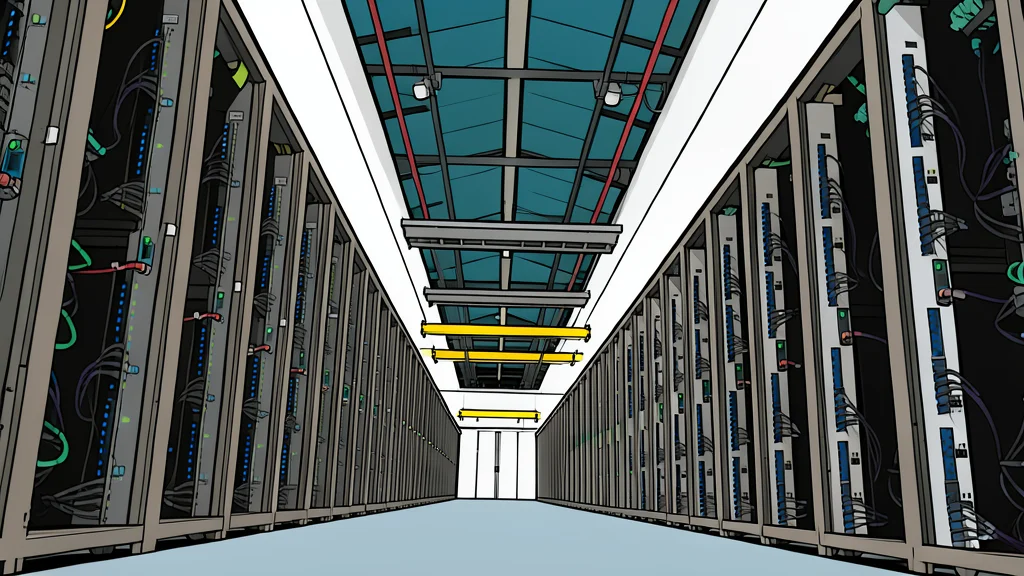
Huawei has unveiled the Peerium Computing Architecture, a design intended to connect up to one million processors into a unified system. Announced at an event in Shanghai, this approach seeks to make massive clusters of hardware operate like a single, powerful computer for artificial intelligence tasks. The company is positioning this as a shift from improving individual chips to optimizing the entire network that links them together.
The core challenge in building large AI systems is not just raw computing power, but the speed at which data moves between processors. If communication is too slow, adding more hardware yields diminishing returns. Huawei’s solution uses a technology called UnifiedBus, which handles memory addressing and parallel processing to keep data flowing efficiently across the entire cluster. This reduces the overhead that typically erodes performance gains in distributed systems.
System scaling outpaces single-chip gains
The architecture relies on nested parallelism and peer interconnects to manage the complexity of such a vast network. According to GN auto tech/hardware, this method allows for bulk synchronous processing, meaning groups of processors can work in coordinated steps without waiting for the entire system to synchronize after every small task. This is critical for workloads like large language model training, where data dependencies are complex and frequent.
However, there is a significant trade-off in this ambition. While the design supports a million-processor scale, Huawei has not provided independent benchmarks proving that production systems are currently operating at this magnitude. The claims describe intended capability rather than verified, widespread deployment. Engineers must still manage the physical and thermal limits of packing so much hardware into a single logical unit.
Accelerator roadmap moves to 2027
Alongside the new architecture, Huawei is advancing its Ascend line of AI processors. Reports indicate the company plans to bring the Ascend 960DT to market in the first quarter of 2027. This chip is designed to work within the Peerium framework, supporting both training and inference for large models. The company also announced a SuperPoD configuration that uses near-package optics to further speed up data transfer.
Demand for these domestic alternatives is currently outstripping supply within China. As access to advanced US-designed accelerators remains restricted, local developers are turning to Huawei’s ecosystem. This creates a competitive environment where the availability of hardware is as important as its theoretical performance. The 2027 timeline will be a key indicator of whether Huawei can meet this surging market need.
Domestic infrastructure faces capacity constraints
The expansion of China’s domestic AI stack is gaining momentum, but it faces tangible limits. Huawei has not disclosed detailed production capacity for the upcoming processors, leaving a gap between announced plans and actual availability. In regions like Thailand, the company is already deploying AI cluster services using its interconnect technology, signaling a push for international adoption of its infrastructure.
The focus on the full computing system rather than just the accelerator reflects a broader industry shift. Success now depends on the harmony between memory, networking, and processing. As the 960 generation reaches customers next year, the real test will be how closely real-world deployments match the architectural promise of a million-processor unified system.