Humanoid Robots Join Surgeon in First Unified Operating Room Demo
A team in Seoul demonstrated a new approach to surgery where two humanoid robots assist a lead surgeon in a simulated procedure, marking a shift toward collaborative surgical teams.
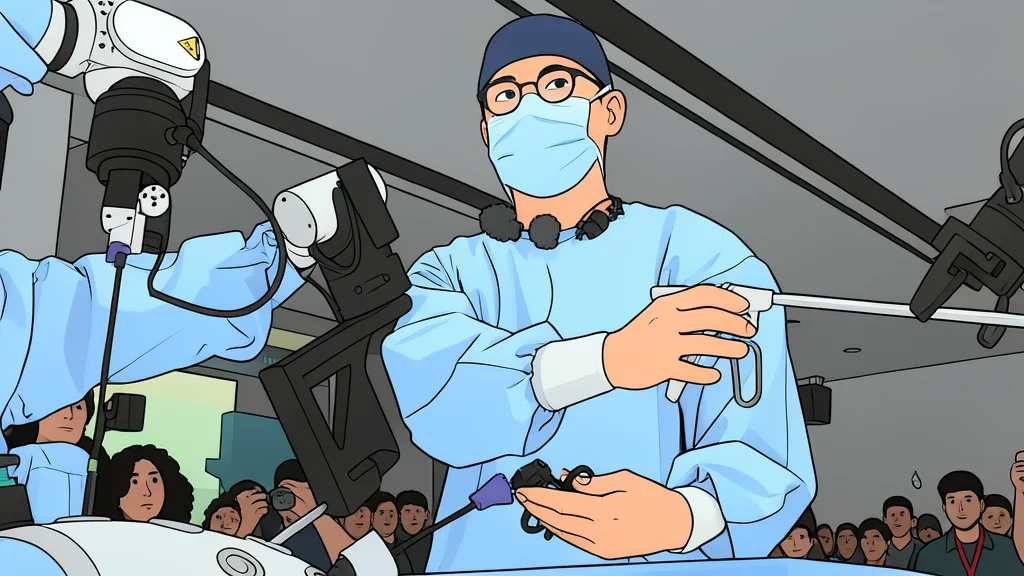
In a simulated operating room in Seoul, a transplant surgeon worked alongside two standing robots to remove a gallbladder from a goat liver. Unlike traditional robotic surgery, where a doctor sits at a console controlling mechanical arms, these humanoid units stood at the operating table. They used their own hands to pick up instruments, expose tissue, and hand tools to the surgeon, acting as physical assistants rather than remote-controlled devices.
The demonstration, reported by GN auto tech/robotics, marked the first time a single human surgeon and multiple humanoid robots collaborated as a unified team. The robots, standing 1.4 meters tall and weighing up to 170 kilograms, wore blue surgical gowns and moved with fluidity. One unit acted as a nurse, locating specific tools among others on the tray. The other acted as an assistant, holding a laparoscope and pulling tissue to reveal the surgical site, responding to verbal cues from the lead surgeon.
Collaborative Design Differs From Remote Control
This approach diverges significantly from systems like the da Vinci, which are precision tools operated from a distance. Here, the robots enter the operating room as physical participants. They use the same standard surgical instruments as human staff, requiring no modification to existing hospital setups. The goal is to create a shared surgical context where machines and humans work in close proximity, sharing the physical space and the workload of the procedure.
The technology integrates cameras, sensors, and voice recognition to interpret commands. When the surgeon said "Grasper, please," a robot identified the tool, picked it up, and handed it over with the handle facing the doctor. This interaction took less than two seconds. The system aims to alleviate staff shortages, particularly in smaller hospitals that struggle to find skilled assistants for long or overnight procedures.
Precision Metrics and Operational Limits
During testing, the robots achieved a 100% success rate in picking up five types of surgical tools and a 98.7% success rate in handing them to the surgeon. They can lift objects up to three kilograms and adjust their posture by bending or rotating their bodies. Visual servoing technology allows the robots to automatically adjust the endoscope's position by tracking tool movements on video, ensuring the surgical field remains exposed.
However, the technology remains in the verification phase. Significant safety challenges persist, such as ensuring the robots do not apply too much or too little force when pulling tissue. Institutional and regulatory hurdles also remain before commercialization. While the demonstration was successful in a controlled environment, the robots have not yet performed surgery on live human patients.
Trade-Offs in Physical Assistance
The primary benefit is the potential to reduce the physical burden on surgical teams. Skilled assistants are required for hours during complex surgeries, and their availability is often limited. By taking on repetitive tasks like tool retrieval and tissue retraction, the robots could allow surgeons to focus more on the intricate aspects of the operation. This could make surgery more comfortable and sustainable for medical staff.
The trade-off is the complexity of integrating multiple AI-driven agents into a high-stakes environment. Unlike a single remote-controlled arm, multiple robots must coordinate their movements to avoid collisions and misunderstandings. This requires robust communication protocols and fail-safes. The current demonstration used a goat liver, indicating that the system is still far from routine clinical use in human hospitals.