Humanoid Robot Tidy up in Unseen Homes
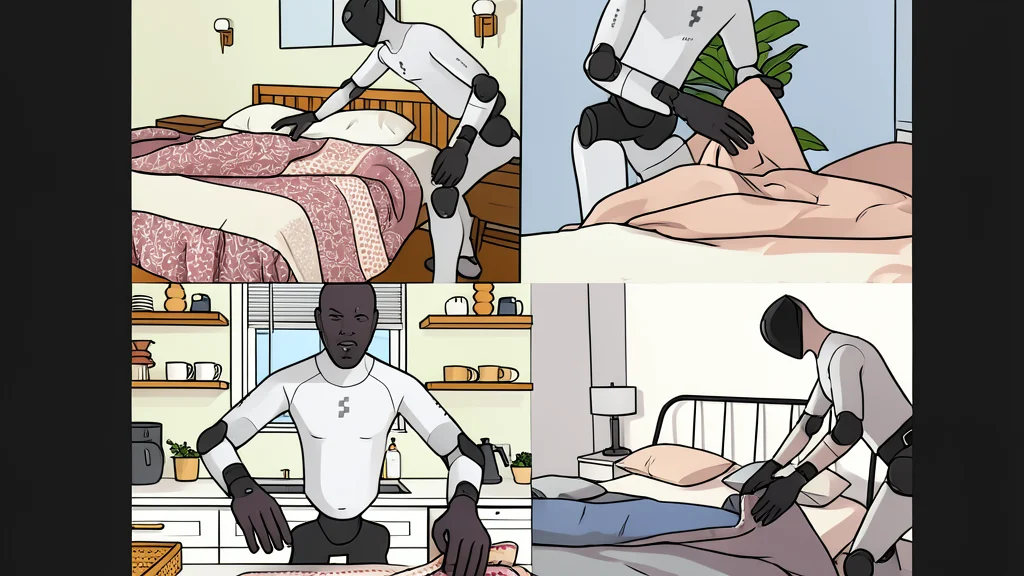
A California-based robotics firm has demonstrated a humanoid robot capable of performing complex household chores in 30 homes it had never visited, marking a significant step toward general-purpose domestic automation.
Figure, a robotics company based in California, has revealed that its humanoid robot can enter a home it has never seen and immediately begin tidying up without any prior mapping or specific training for that location. The system, powered by a new neural network called Helix 2.5, successfully completed tasks like making beds and folding towels in thirty different residences in the San Francisco Bay Area. This achievement is notable because the robot did not rely on pre-existing data from these specific houses or undergo fine-tuning for their unique layouts.
The demonstration highlights a shift away from controlled industrial environments toward the chaotic reality of domestic spaces. Unlike factory settings where objects are standardized and positions are fixed, a home presents variable lighting, diverse furniture arrangements, and unpredictable clutter. Figure claims this capability represents zero-shot generalization, meaning the robot adapts to new environments using only its pre-existing knowledge of human behavior, rather than learning from the specific scene it is currently in.
Navigating Unfamiliar Living Spaces
The tests assigned the robot three long-horizon tasks that require coordination between perception and physical action. It had to collect scattered items such as toys into a basket, fold various towels, and make beds in unfamiliar bedrooms. According to reports from GN auto tech/robotics, the system was able to recover from mistakes and adjust its approach when initial attempts failed, without direct human intervention. This ability to self-correct is critical for a machine that must operate safely around people and pets, where a simple error could lead to accidents or damage.
Performance Data and Trade-offs
Figure states that pretraining the model on a proprietary dataset of human behavior significantly improved its success rate. In controlled comparisons, the zero-shot success rate for whole tasks rose to 56 percent, compared to just nine percent for a similar model trained from scratch. However, there is a clear trade-off here. While a 56 percent success rate is impressive for a general-purpose system, it means the robot fails or requires assistance nearly half the time. For a consumer product, this level of inconsistency would likely be frustrating, as users expect near-perfect reliability for daily chores.
Barriers to Consumer Adoption
Despite the progress, significant hurdles remain before such robots become common household items. The current demonstrations are based on company figures that have not yet undergone independent peer review. A viable consumer robot must operate safely around children, handle fragile items, and manage unpredictable human behavior with far higher precision than a 56 percent success rate. Additionally, practical concerns such as battery life, maintenance costs, and privacy protections must be resolved. For now, this remains a research milestone rather than a ready-made product, but it suggests the vision of a helpful household assistant is becoming increasingly tangible.