Toyota Bets on Human-Robot Collaboration in Global Factories
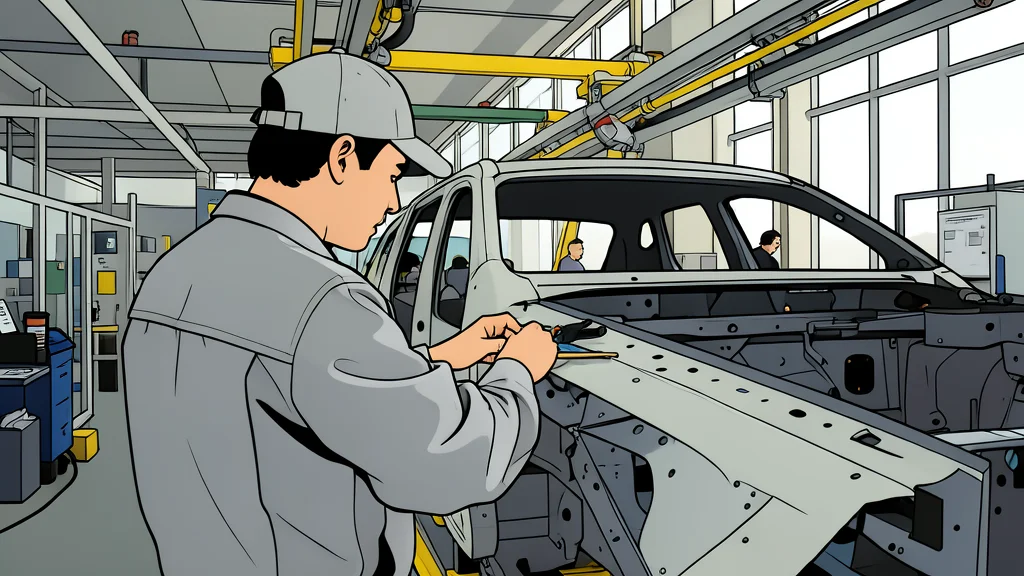
Toyota is planning a massive overhaul of its manufacturing network, investing roughly one trillion yen annually to integrate 400,000 robots. The strategy focuses on collaboration rather than replacement, leveraging new wheeled robots that learn from human workers.
Toyota Motor has outlined a ambitious plan to upgrade its global manufacturing system, committing to an annual investment of approximately one trillion yen starting in 2028. This significant financial commitment will fund the renovation of about 60 plants worldwide and the deployment of 400,000 self-developed robots. The company emphasizes that this initiative is designed to enhance human-robot collaboration rather than eliminate human labor.
According to reports from biggo.com, the deployment will be split between Toyota’s own facilities and those of group-affiliated companies. Executive Vice President Yuki Nakajima clarified that the goal is a coexistence model. The core philosophy is to integrate robotic assistance into existing workflows, allowing workers to focus on higher-value tasks while machines handle repetitive or physically demanding processes.
Wheeled Robots Learn by Observation
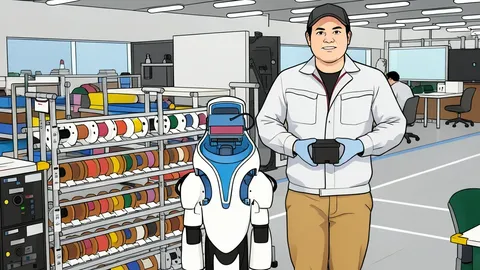
A central component of this strategy is ELEY, a new type of embodied learning robot. Weighing around 50 kilograms, ELEY departs from the traditional bipedal humanoid design in favor of a stable wheeled base. It features a two-fingered gripper and uses vision systems to observe human actions. Workers can perform standardized tasks while wearing auxiliary tools, and the robot records and analyzes these movements to replicate them.
The learning process relies on Large Behavior Models developed by the Toyota Research Institute. Unlike fixed industrial arms that only repeat pre-programmed motions, these new robots can perceive their surroundings and adapt to different scenarios. In a recent demonstration in Europe, ELEY learned to fold T-shirts with high accuracy after about two weeks of training iterations, illustrating its potential for flexible manufacturing tasks.
Closed-Loop Skill Transfer System
Toyota aims to create a global network where robot training data is shared across its factory footprint. This allows a skill learned at one plant to be rapidly acquired by robots at other sites. The system is designed to evolve into a closed-loop transfer mechanism, where robots not only learn from veteran technicians but also teach new employees the standardized operational methods they have mastered.
This approach leverages the expertise of Toyota’s approximately 18,000 veteran craftsmen, known as takumi. Their accumulated knowledge serves as a critical data source for the robots. By interconnecting production equipment and robots, the company is building what it calls a Connected Factory, internally referred to as Factory Automation 3.0, which aims to streamline processes through shared data.
Integration Over Full Replacement
Industry analysis suggests that this plan does not intend to fully replace existing equipment but rather to augment it. The focus remains on enhancing productivity and reducing physical strain on workers. The trade-off for this collaboration model is the significant upfront capital expenditure and the complexity of integrating new AI-driven systems into established manufacturing lines. However, Toyota positions this as a long-term investment in a more adaptable and efficient production environment.