Toyota's 400,000-Robot Push to Save Craft Skills
Toyota is investing billions to deploy wheeled robots that learn from human masters, aiming to preserve decades of factory knowledge before it disappears with retiring workers.
Toyota has committed approximately $6.4 billion annually to deploy 400,000 in-house developed robots across its global factories starting in 2028. The initiative is not merely about replacing labor but about capturing the embodied skills of 18,000 master craftspeople who are set to retire. According to reporting by GN auto tech/robotics, the company views this as a race to preserve industrial knowledge that has taken decades to build.
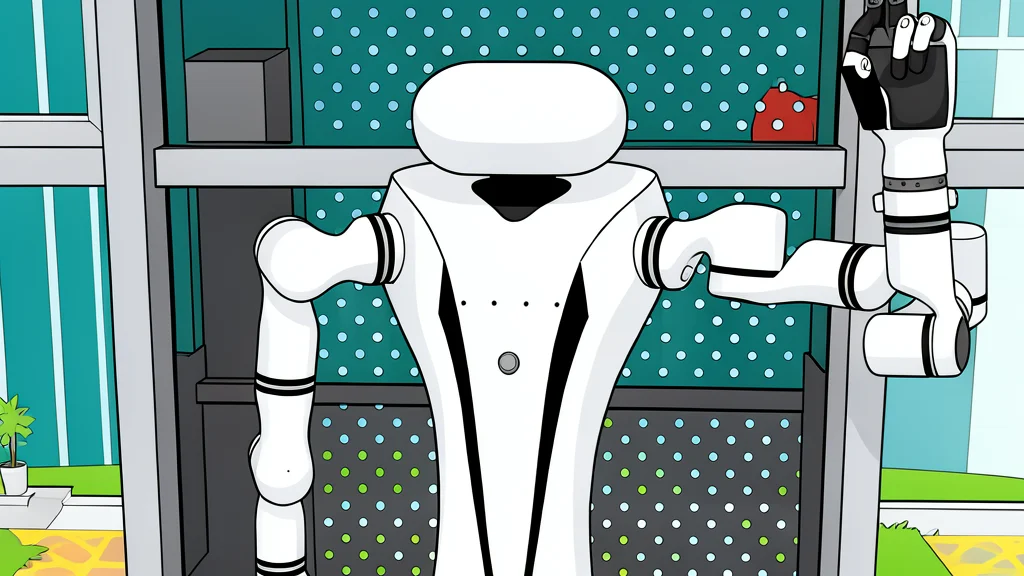
The robot at the center of this effort, named ELEY, is a 50-kilogram wheeled platform equipped with two-fingered grippers. It does not walk; it rolls. This is a deliberate engineering choice that sets Toyota apart from competitors like Tesla and Hyundai, who are pursuing bipedal designs. Toyota’s strategy relies on a fully in-house developed AI and hardware stack, asserting technological sovereignty in a field where many rivals depend on third-party robotics firms.
Wheels Offer Stability Over Legs
Toyota’s decision to use wheels stems from lessons learned with its previous humanoid robot, the Human Support Robot. Engineers found that the predecessor’s arm would damage itself when encountering unexpected external forces, a common occurrence in environments shared with humans. By choosing a wheeled base, Toyota prioritizes stability and reduces the complexity of balance maintenance, allowing the system to focus on precise manipulation rather than locomotion.
The core innovation lies in the arm’s actuator architecture, known as quasi-direct drive. Unlike traditional rigid industrial joints that fight against external forces, this system uses a low gear ratio that allows the joint to yield gracefully. This backdrivability means the robot can absorb contact events without breaking, making it safer and more durable for tasks involving physical interaction with objects and people.
Matching Human Proportions for Learning
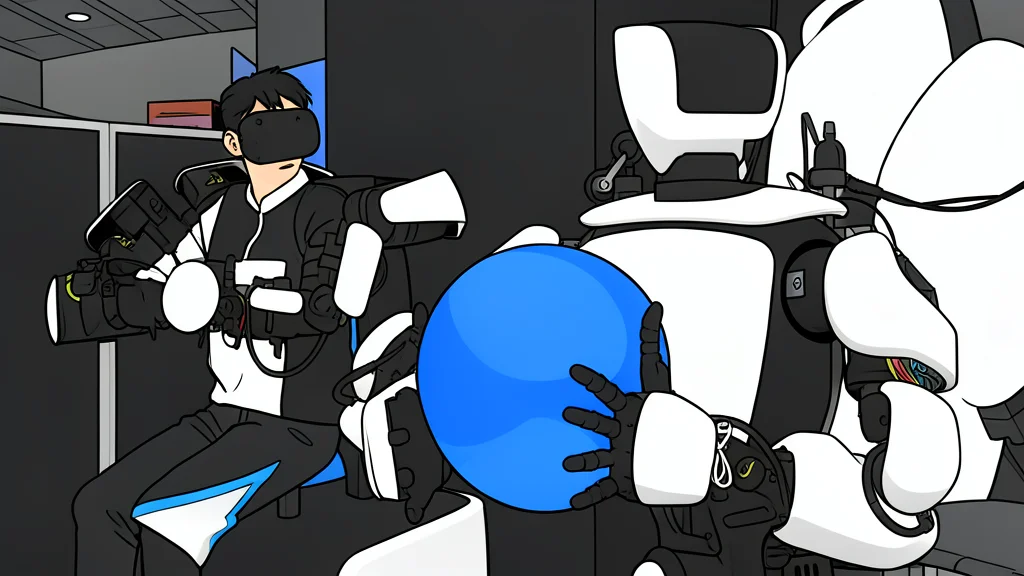
To learn from human demonstrations effectively, ELEY’s joints are sized to match the average dimensions of an adult Japanese male. This is a functional necessity rather than an aesthetic choice. When a robot’s body proportions differ significantly from a human’s, the data observed from human movements introduces systematic errors into the robot’s learning process. Matching the human form ensures that observation data translates directly into accurate robot movement.
Toyota also added a scapular axis, or shoulder blade joint, which was absent in earlier prototypes. Humans rely heavily on their shoulder blades for reach and force generation when pushing or opening objects. Without this joint, the robot lacked the range of motion required for many two-handed factory tasks. With it, ELEY can mimic the upper-body dynamics of a human worker, improving its ability to perform complex, coordinated movements.
AI Framework Powers Skill Transfer
The intelligence behind ELEY comes from the Toyota Research Institute, which developed Large Behavior Models. This framework uses diffusion policy to process visual and proprioceptive data, allowing the robot to learn complex behaviors from human demonstrations. The system is designed to inherit the nuanced skills of master craftspeople, such as the subtle adjustments needed for delicate assembly tasks, rather than just executing pre-programmed sequences.
The trade-off for this approach is the scale of the investment and the time required for deployment. While the technology promises to preserve critical industrial knowledge, it requires a massive infrastructure overhaul and a shift in how factories operate. Toyota is betting that the cost of developing this sovereign technology is worth the long-term benefit of retaining human-level dexterity in automated systems, a claim that remains to be proven at the scale of 60 global plants.