UBTech Opens Factory Producing a Robot Every Ten Minutes
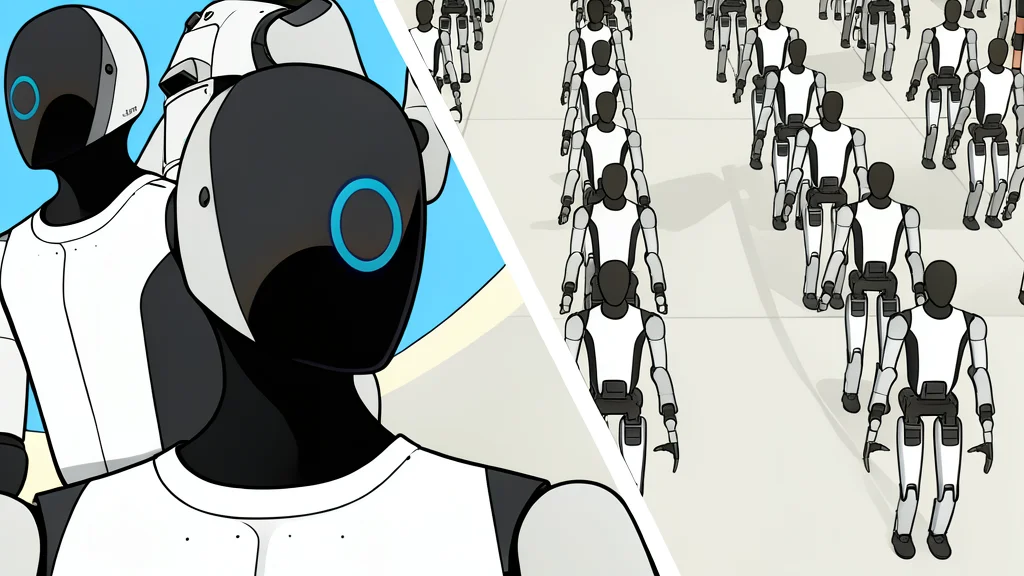
A new facility in Guangxi aims to output 10,000 humanoids annually, marking a significant shift in automated manufacturing.
UBTech has officially opened a manufacturing facility in Liuzhou, China, that it claims is the first of its kind in the world. The plant is designed to produce one humanoid robot every ten minutes, with an annual output capacity of 10,000 units. This facility focuses on manufacturing the company's Walker S and Cruzr series, representing a major step in the industrialization of autonomous robotics.
According to GN auto tech/robotics, the factory relies heavily on automation to achieve these speeds. Humanoid robots handle material unloading, stacking, and transport, while collaborative robots assist in final assembly alongside human operators. The company cites China’s established supply chain and decades of engineering infrastructure as the foundation for this rapid production capability.
Automated assembly drives production speed
The production line integrates various levels of robotic autonomy to streamline the build process. Cruzr Y1 and Cruzr S2 models are utilized to move heavy materials and manage logistics within the 14,000-square-meter plant. In the final stages, autonomous vehicles and rotating workbenches work in tandem with human technicians to finalize each unit.
The trade-off for this high-throughput model is a heavy reliance on proprietary robotic ecosystems. While the system reduces manual labor in repetitive tasks, it requires a complex network of driverless vehicles and collaborative arms to function. This creates a closed-loop manufacturing environment where the products themselves are used to produce more products.
Three-dimensional warehouse maximizes storage density
Alongside the assembly line, UBTech has launched what it describes as the industry’s first fully automated three-dimensional warehouse. This storage solution is designed to hold 112 robots within just 65 square meters of floor space. The company states that this vertical stacking method utilizes 50% more space than traditional facilities with similar footprints.
The primary benefit of this vertical storage is logistical efficiency in a dense manufacturing hub. However, the complexity of managing automated vertical retrieval systems introduces new technical challenges. Any malfunction in the robotic stacking arms could potentially halt the entire supply flow, making the system highly dependent on precise software coordination.
Rapid expansion in national robot output
This facility launch aligns with a broader trend in Chinese manufacturing. Data from the National Bureau of Statistics shows that robot output reached 98,677 units in July, a 30.2% increase from the previous year. Between January and July of the current reporting period, over 635,000 robots were created, indicating a sustained acceleration in the sector.
UBTech is not alone in this push. Competitors like Agibot are also expanding their production capabilities and deploying robots in real-world scenarios such as hotels and supermarkets. The combined effect of these expansions suggests that autonomous factories are moving from conceptual pilots to standard industrial infrastructure, fundamentally altering how physical goods are manufactured.