Analog Memory Chip Promises Major Efficiency Gains
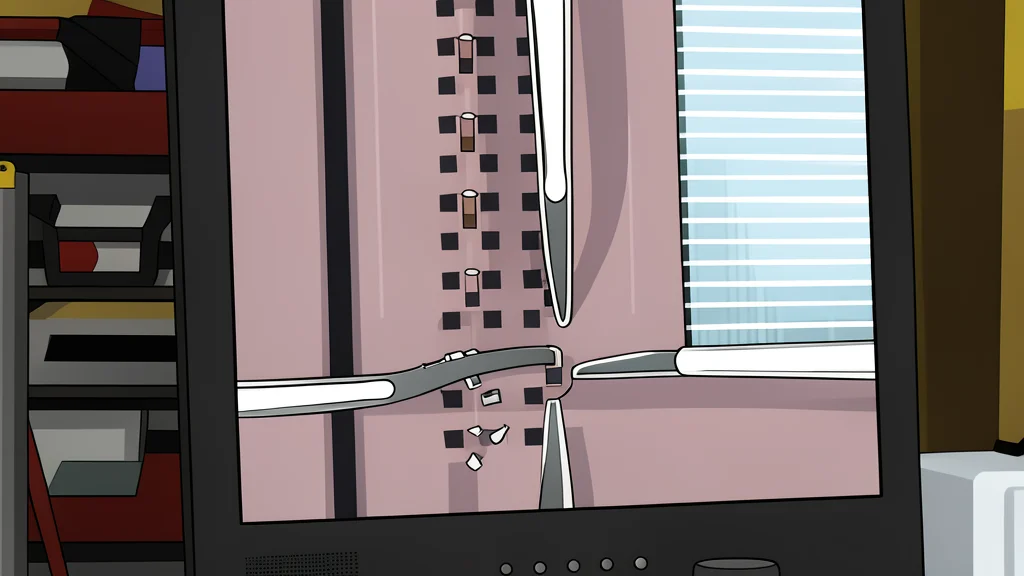
Sandia National Laboratories has introduced a new memory technology that stores data as continuous values rather than binary switches, potentially reducing energy consumption in data centers and smart devices.
Researchers at Sandia National Laboratories have unveiled a memory technology called ETCRAM that departs from the standard binary approach used in modern electronics. Instead of processing information strictly as ones and zeros, the device stores a continuous range of analog values. According to the team, this shift allows for significantly higher precision and greater dynamic range compared to existing state-of-the-art memory devices.
The technology uses localized heating and electrical pulses within materials such as tantalum and vanadium oxide to trap distinct physical states. This method is designed to overcome the power limitations of traditional silicon chips, which waste energy by forcing complex calculations through two-state pipelines. The goal is to create hardware that is both more precise and substantially more energy-efficient.
Analog storage mimics battery states
To explain the concept, researchers compared ETCRAM to a rechargeable battery. Just as a battery can be charged to a specific level and then used to store that energy state, ETCRAM traps specific analog values inside its material structure. This allows the device to hold data with much finer granularity than binary systems, which are limited to on or off states.
A key innovation in the design is the use of self-heating to speed up the process. Electrochemical reactions are typically slow, but by triggering micro-bursts of heat at the exact moment an electrical pulse is applied, the device locks in precise values quickly. This physics trick enables high-speed operation without requiring massive amounts of power.
Reducing power demand in data centers
The potential energy savings are significant as artificial intelligence and data processing expand rapidly. Federal estimates suggest that server electricity consumption in the United States could rise to roughly 800 billion kilowatt-hours annually by 2050. Replacing power-hungry silicon memory with analog components like ETCRAM could help bend that demand curve downward, offering a solution to the growing energy crisis in the tech sector.
This technology is particularly relevant for edge computing, where data is processed directly on the device rather than being sent to distant cloud servers. For example, a smart security camera or an autonomous vehicle could perform complex data analysis locally, reducing both energy use and latency. This capability allows for split-second decisions without the lag associated with transmitting data over long distances.
Trade-offs in analog precision
While the precision gains are substantial, the shift to analog memory introduces different engineering challenges. Analog systems can be more susceptible to noise and environmental fluctuations compared to the robust binary logic of digital chips. Researchers must ensure that the localized heating and electrical pulses remain consistent to maintain the high dynamic range claimed by Sandia.
According to GN technics/hardware, the technology represents a significant step forward in efficiency, but it is still in the development phase. The practical implementation of ETCRAM in consumer electronics will depend on how well these analog states can be stabilized over time. For now, the technology offers a promising path toward reducing the environmental impact of computing hardware.