New Experiment Set to Test Gravity with Exotic Muonium Atoms
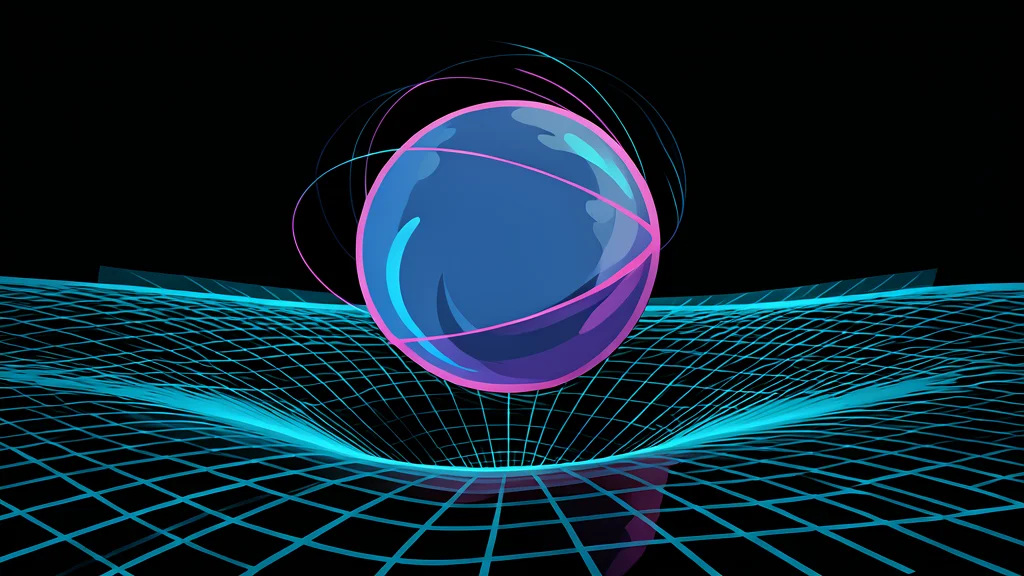
Researchers are preparing a test to see if Einstein's theory of gravity applies to heavier particles.
Physicists at ETH Zurich and the Paul Scherrer Institute are preparing to test a fundamental assumption about the universe: that gravity affects all matter in exactly the same way. For centuries, scientists have known that ordinary objects fall at the same rate regardless of their composition. Now, a new technique allows researchers to test this principle using muonium, an exotic atom made of a heavier cousin of the electron.
This experiment is significant because it targets particles from the second generation of matter, a category that includes muons. If gravity acts differently on these heavier particles than on ordinary electrons, it would signal a major deviation from Einstein’s general relativity and point toward new physics, potentially revealing a previously unknown fifth force of nature.
Challenges of measuring exotic particle gravity
Measuring gravity on such small, unstable particles is inherently difficult. Gravity is extremely weak compared to electromagnetism, so even tiny stray electric or magnetic fields can overwhelm the gravitational signal. To isolate the effect of gravity, the particles must be neutral. Muonium fits this requirement as it is a neutral atom formed when an antimuon binds with an electron.
The second major hurdle is time. Muons decay in just 2.2 microseconds, leaving researchers with a very short window to observe their motion. Previously, muonium atoms were produced with random speeds and directions, making precise gravity measurements impossible. The new method solves this by creating a 'cold' beam where atoms travel at similar speeds and in nearly parallel paths.
Superfluid helium enables controlled beam
According to ScienceDaily, the team achieved this control using superfluid helium. This technique allows the production of a stable, directed beam of muonium atoms. This advancement is crucial because it transforms a chaotic collection of short-lived particles into a manageable stream that can be tracked with high precision.
The researchers describe this as a critical step toward measuring the gravitational interaction of the muon. By ensuring the atoms move in a coordinated way, the experiment can finally isolate the pull of gravity from other electromagnetic interference. This setup provides the first opportunity to test the equivalence principle with second-generation particles.
Potential impact on physics standards
The Standard Model of particle physics does not explain why multiple generations of matter exist or why there are exactly three. If the experiment shows that muonium falls differently than ordinary matter, it would challenge the universality of free fall. Such a result would be a profound surprise, suggesting that our current understanding of gravity is incomplete.
Conversely, if the results align with Einstein’s predictions, it will strengthen the theory’s applicability to exotic matter. Regardless of the outcome, this experiment represents a significant leap in precision measurement. It moves the test of fundamental forces beyond ordinary matter and into the realm of heavier, less stable particles.