Boulder Opal Automates Quantum Hardware Calibration

Q-CTRL’s new software reduces the time required to tune quantum processors from days to hours, addressing a major bottleneck in scaling quantum computing infrastructure.
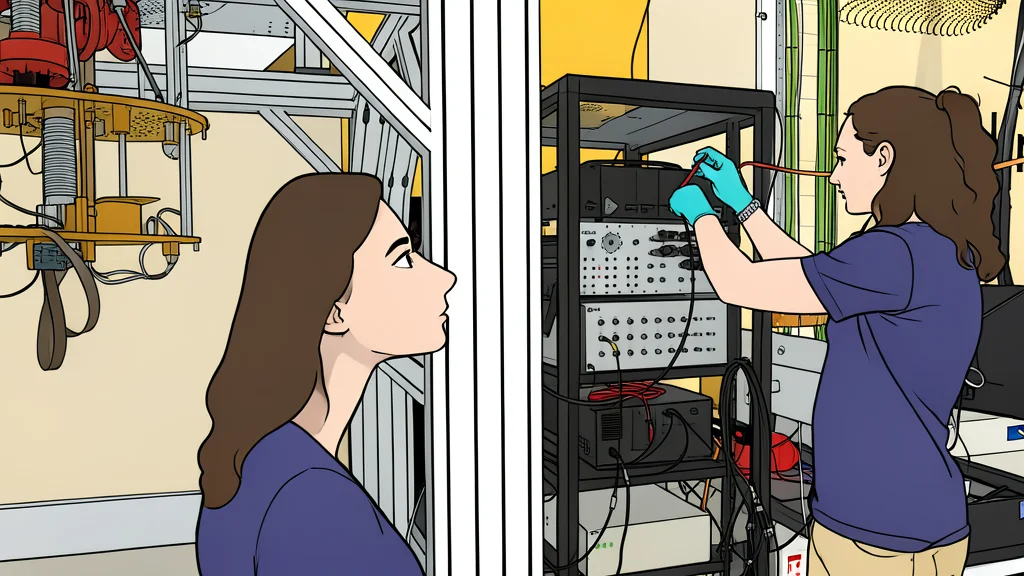
Researchers spending their entire workday just trying to get a quantum computer to function is no longer an unavoidable reality. Q-CTRL has released Boulder Opal, a software system that automates the intricate process of calibrating quantum processors. According to the company, the tool can bring a device to peak performance in under three hours, a task that previously consumed days of manual effort by expert technicians.
The technology targets a critical pain point in the quantum industry: the sheer complexity of tuning dozens of correlated parameters. As quantum systems scale, calibration shifts from a technical hurdle to an operational bottleneck. Boulder Opal addresses this by encoding architecture-specific workflows into an autonomous state machine that manages conditions and responds to anomalies without constant human oversight.
Automating Complex Parameter Tuning
Calibrating a quantum processor involves adjusting numerous settings where changing one often inadvertently impacts others. Boulder Opal handles this complexity by executing a repeatable bring-up process. This includes routines for cryogenic amplifier calibration, resonator mapping, and transmon discovery. The system does not merely follow a script; it evaluates results in real-time and determines subsequent actions, ensuring consistent performance even when unexpected issues arise during device characterization.
The software is specifically designed to work with QuantWare D-Line quantum processing units. It manages the fundamental building block of these devices, which is a feedline connected to five qubits. By automating these low-level tasks, the system frees up valuable time for researchers to focus on core scientific inquiry rather than hardware maintenance. This shift is crucial as the industry moves toward larger, more complex machines.
Transparency and Performance Metrics
A key feature of Boulder Opal is its commitment to complete transparency. Unlike black-box solutions, this software offers full visibility into every parameter, plot, and pulse generated during calibration. Users can access a web-based data visualization interface to explore device data, track performance over time, and review historical calibration records. This access ensures that the automation does not obscure the underlying physics of the device.
According to Q-CTRL, the system achieves a median fidelity of 99.95% on stable qubits during one-qubit gate calibration. The software also claims to restore qubits that experts previously considered unusable. Every calibration job generates valuable information about the quantum processing unit, which is readily accessible through the dashboard. This data-rich approach allows for continuous improvement and better understanding of device behavior.
Operational Trade-offs and Limitations
While the speed and automation are significant advantages, the solution is tightly coupled to specific hardware. Boulder Opal is designed to optimize QuantWare D-Line QPUs, meaning its benefits are most immediate for users of that specific architecture. The system relies on closed-loop procedures to manage conditions such as out-of-range frequencies, which requires robust underlying hardware stability.
The trade-off for this high level of automation is a dependency on the software’s predefined workflows. While the system can handle anomalies and unexpected issues, it operates within the constraints of the state machine designed by Q-CTRL. For researchers requiring highly custom, non-standard calibration routines that fall outside these defined parameters, the pre-built nature of the solution may present limitations. However, for the majority of standard bring-up and maintenance tasks, the reduction in time and the elimination of manual error offer a compelling value proposition.