NTU Partners Link AI Software to IBM Quantum Hardware
National Taiwan University has integrated Q-CTRL’s Fire Opal software with IBM Quantum systems, aiming to reduce the technical complexity that currently hinders enterprise adoption of quantum computing.
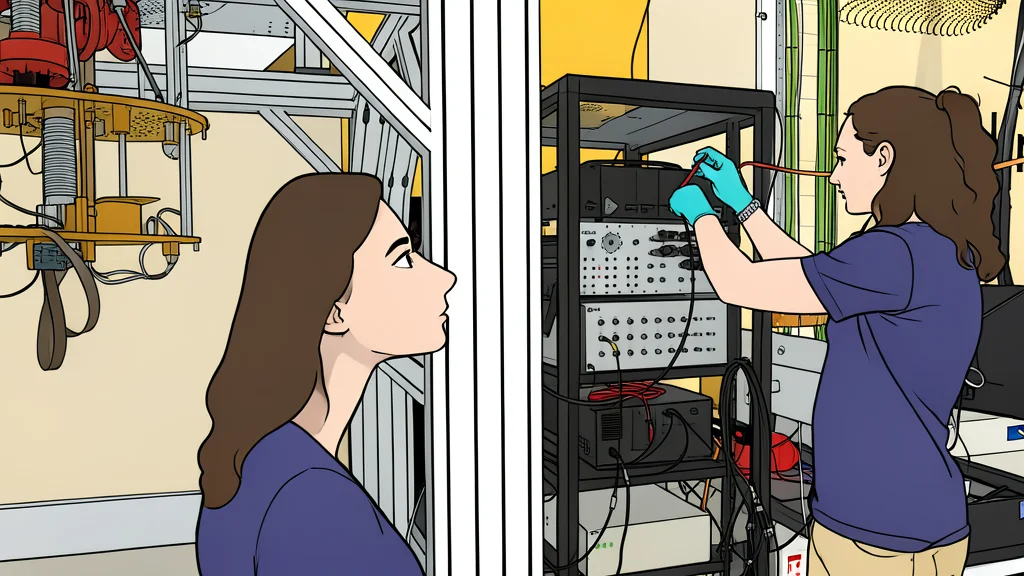
Researchers at National Taiwan University (NTU) have established a direct integration between Q-CTRL’s Fire Opal software and IBM Quantum hardware. This partnership, facilitated through the NTU-IBM Quantum Hub, seeks to solve a persistent problem in the industry: the fragmented nature of quantum tools. By combining hardware access with AI-driven error suppression, the system allows users to run high-fidelity simulations without needing to manage complex, low-level circuit design.
The primary goal is to simplify the procurement and usage process for organizations. As reported by GN auto tech/hardware: computing hardware, the integration offers a unified platform that consolidates multiple vendor requirements into a single contract and billing structure. This approach is designed to remove administrative overhead, allowing companies to focus on deriving value from quantum computing rather than wrestling with disparate software packages.
Reducing Technical Barriers for Users
Traditionally, accessing quantum computing power required deep expertise in circuit design, a skill set that is rare outside of specialized research teams. Fire Opal changes this dynamic by allowing users to execute complex optimization, material science, and chemistry simulations with minimal code input. According to Hiromichi Matsuyama, R&D Department Manager at NTU, this capability enables teams to unlock the full performance potential of IBM Quantum systems by relying on software optimization rather than manual circuit construction.
The trade-off for this simplicity is a reliance on the underlying AI algorithms to manage the hardware's quirks. While this lowers the entry barrier for non-specialists, it shifts the complexity from the user interface to the backend. Users must trust that the error suppression techniques are effectively mitigating the noise inherent in quantum systems, a task that Fire Opal performs by dynamically adjusting parameters during computation.
AI-Driven Error Suppression Mechanics
Quantum computers are notoriously sensitive to environmental noise, which leads to decoherence and unreliable results. Fire Opal addresses this by using AI algorithms to dynamically adjust parameters in real-time. This active management helps reduce the impact of noise sources, thereby improving the fidelity of the final output. The system essentially acts as a stabilizer, ensuring that the computational results are robust enough for practical application.
This functionality is particularly relevant for the 20-qubit IBM system operational at the NTU-IBM Quantum Hub since 2019. By integrating Fire Opal into existing workflows, such as those using the IBM Qiskit Functions catalog, the hub can offer a more reliable environment for staff, students, and partner organizations like the Institute for Information Industry and ITRI. This setup allows for rapid prototyping and validation of quantum solutions without the need for custom error correction code.
Streamlining Enterprise Procurement Processes
A significant hurdle for enterprises adopting quantum technology has been the administrative burden of managing multiple vendors. Organizations often face delays not because of hardware limitations, but due to the complexity of coordinating disparate software licenses and procurement contracts. The NTU-IBM partnership addresses this by offering a consolidated solution that includes both the computational resources and the necessary error mitigation tools under one roof.
This streamlined approach is intended to accelerate the deployment of quantum solutions across various industries. By reducing the financial and administrative friction, the partnership makes it easier for companies to justify the investment in quantum computing. The NTU-IBM Quantum Hub serves as a model for this ecosystem, providing a practical environment where the integration of software and hardware can be tested and refined, ultimately making the technology more accessible to a broader range of users.