Why Testing Individual Security Controls Misses the Bigger Threat

Security teams often validate individual tools in isolation, but real attackers chain multiple steps together. This disconnect leaves a dangerous gap in defense strategies.
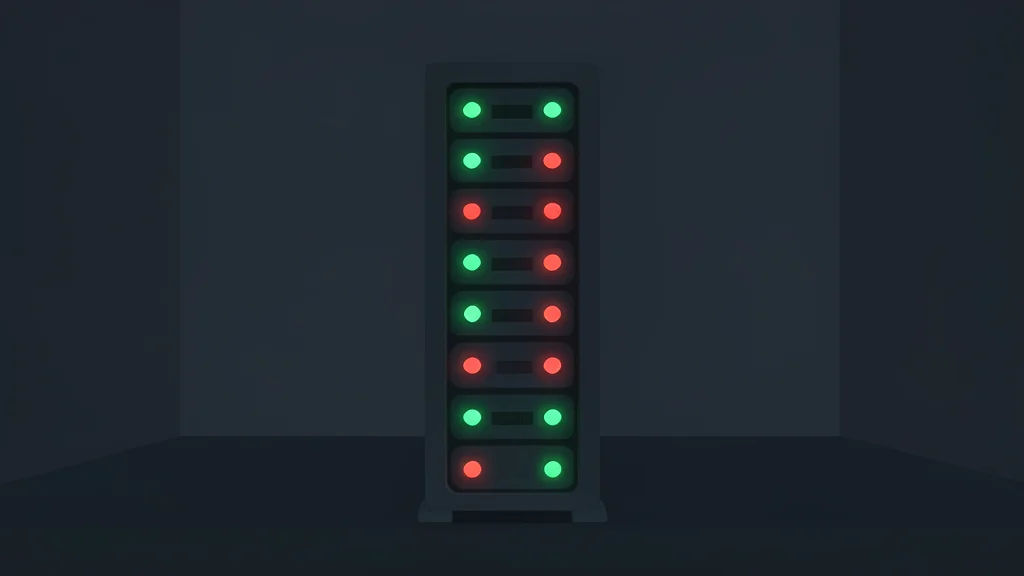
Security professionals have become proficient at verifying that specific defenses work against isolated threats. They check if endpoint detection software catches a known payload or if phishing simulations are blocked. However, this approach treats security as a series of disconnected checkpoints rather than a continuous journey. The core issue is that these tests are static and isolated, failing to capture the dynamic nature of modern intrusions.
Real adversaries do not attack single points of failure in a vacuum. They execute a coordinated sequence of actions, where the output of one step feeds directly into the next. A successful phishing email might lead to credential theft, which then enables privilege escalation and lateral movement. Even if each individual control is technically functional, the lack of coordination between them creates a path for attackers to slip through the gaps.
The gap between isolated tests and real attacks
Most current simulation programs rely on libraries of individual techniques mapped to frameworks like MITRE ATT&CK. Teams run a specific test, verify detection, and move on. This method provides a snapshot of capability but ignores the critical question of resilience under pressure. It does not reveal whether an adversary who adapts their strategy in real-time can navigate through the environment while every individual tool reports no issues.
Data supports the urgency of this shift. According to Filigran's State of Threat Management report, 93% of security leaders reported a business-impacting cyberattack in the past year, despite having validated their defenses. The report highlights that 88% of leaders believe AI is accelerating attacker speed, while 84% cite siloed tools and disconnected testing as primary reasons for overlooked exposures. This indicates a significant disconnect between theoretical preparedness and actual operational resilience.
The breach of France's tax authority, the DGFiP, in 2025 illustrates this reality. The intrusion did not rely on exotic or unknown exploits. Instead, it succeeded because of the coordinated sequence of initial access, credential abuse, and data exfiltration. Each step was individually survivable, but the chain allowed the attacker to maintain momentum and achieve their objective before the organization could respond effectively.
Chaining tests to mirror attacker behavior
To address this, the industry is moving toward attack chaining, a method that automates multi-stage attack paths end-to-end. Unlike isolated tests, this approach links actions into a live sequence. The output of one step, such as a harvested credential or an open port, is automatically captured and used to determine the next move. This mirrors how red teams operate, but with continuous execution and lower cost.
This method allows security teams to see how their environment reacts to a dynamic, branching intrusion. Instead of checking if a single door is locked, it tests whether the entire building is secure when an intruder is actively moving from room to room. The trade-off is complexity; setting up these chains requires a deeper understanding of how tools interact, but it provides a far more accurate picture of true risk than isolated checks can offer.
The cost of disconnected security tools
The reliance on isolated testing often stems from the structure of security teams themselves. Tools are purchased and managed in silos, with limited communication between them. When an alert fires in one system, it may not trigger a corresponding response in another. This fragmentation means that even if 90% of defenses are working, the remaining 10% of gaps can be the weak link that an attacker exploits to break through.
As reported by The Hacker News, the focus is shifting from merely detecting individual techniques to understanding the flow of an entire intrusion. The goal is to ensure that the sequence of events is caught, not just the individual components. This requires a fundamental change in how security is tested and validated, moving from a checklist mentality to a narrative one that reflects the reality of persistent, adaptive threats.