AstroForge to Fly Fully Autonomous Spacecraft in 2027
A California startup will launch a probe that operates without ground commands, marking a first in spaceflight autonomy.
Key points
- Autonomy-1 will be the first mission to finish its flight without ground commands.
- The spacecraft uses a new Solo model to make real-time decisions independently.
- The probe will fly on Stoke Space's first rocket launch in early 2027.
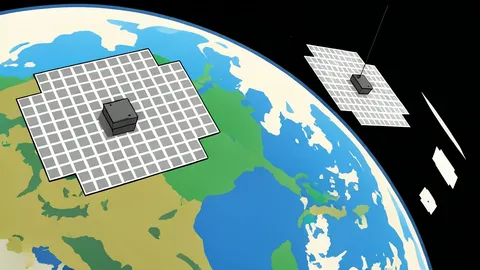
AstroForge, a California-based company, plans to launch its Autonomy-1 spacecraft in early 2027. This mission will be the first to complete its entire journey without receiving any commands from Earth.
The probe will fly on Stoke Space’s Nova Pathfinder rocket. AstroForge aims to remove human operators from the loop using its new Solo intelligence model. This approach is designed to make spaceflight cheaper and easier to manage.
Solo model handles real-time decisions
Solo is an intelligence model built to control spacecraft functions. It sits on top of existing flight software to make instant choices. This allows the probe to react to its environment without waiting for instructions.
This technology is crucial for AstroForge’s goal of mining asteroids. Controlling many probes manually is costly and difficult. Autonomy lets a fleet of spacecraft operate independently in deep space.
Previous tests showed communication limits
AstroForge has launched two missions since its founding in 2022. Its 2023 prototype failed to activate its mining technology. In February 2025, its Odin spacecraft was lost due to communication problems.
These setbacks highlight the need for better autonomy. The company learned that relying on ground control is risky. Solo is intended to fix these issues by handling operations onboard.
Mission will carry NASA instrument
The Autonomy-1 probe will carry a NASA instrument called COMPASS. This device studies the sun’s influence on space weather. The spacecraft will send data back to Earth for scientists to analyze.
Data will flow one way only, from the probe to the ground. Engineers will watch the results to understand how Solo makes decisions. This test is a step toward fully independent space operations.