Mae Jemison's 1992 Flight Broke Barriers in Space
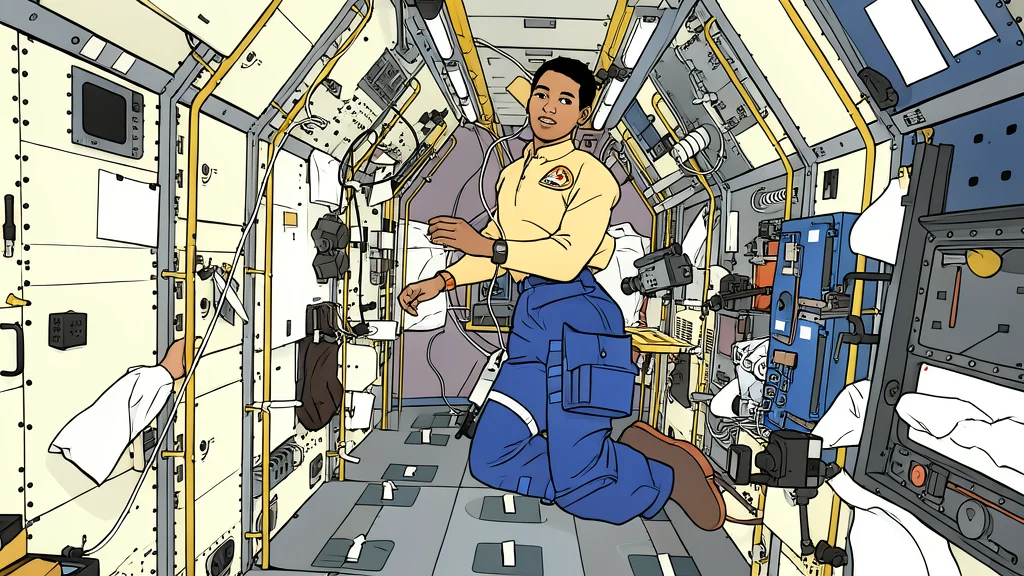
Thirty-two years ago, NASA astronaut Mae Jemison became the first Black woman to orbit Earth, a milestone that highlighted the long gap in diversity within the space agency.
On September 12, 1992, Mae Jemison launched aboard the space shuttle Endeavour, becoming the first African American woman to travel to space. This achievement came nine years after the first Black man flew and a decade after the first woman, marking a significant shift in NASA’s crew selection history.
Jemison was not just an astronaut; she was a licensed physician and chemical engineer. Before joining the astronaut corps in 1987, she served as a medical officer in West Africa and held degrees from Stanford and Cornell. Her multidisciplinary background allowed her to oversee 44 scientific experiments during her eight-day mission.
A delayed path to diversity
For much of its early history, NASA excluded women and people of color from its flight crews. The first woman did not fly until 1983, and the first Black astronaut, Guion Bluford, flew the following month. It took until the 50th shuttle mission for a Black woman to finally reach orbit.
This gap represented a structural barrier rather than a lack of qualified candidates. Jemison’s selection signaled a broader effort to diversify the agency, though the wait of nearly a decade underscores how slowly institutional change occurred in the space sector.
Science and inspiration in orbit
During the STS-47 mission, Jemison spent over 190 hours in space, conducting bone cell studies and managing experiments for the United States and Japan. Her presence in orbit served as a powerful symbol, echoing the fictional Lt. Uhura from Star Trek, whom Jemison cited as a childhood inspiration.
The mission had a full-circle moment a year later when Jemison appeared as a character in a Star Trek episode. Her visibility helped bridge the gap between science fiction and reality, showing young people that space was a destination for diverse individuals.
Life after the final flight
Jemison retired from NASA in 1993 after her single mission, a common pattern among shuttle astronauts who rarely flew more than once or twice. She founded the Jemison Group, a technology consulting firm, and later led projects focused on long-term space exploration.
Her legacy extends beyond the single flight, influencing both public perception of who belongs in space and the practical development of space technology. Reporting from GN auto tech/science: space discovery highlights how her career continues to shape conversations about inclusion and innovation in the industry.