NASA Intern's Surplus Tape Purchase Yields Moon Landing Footage
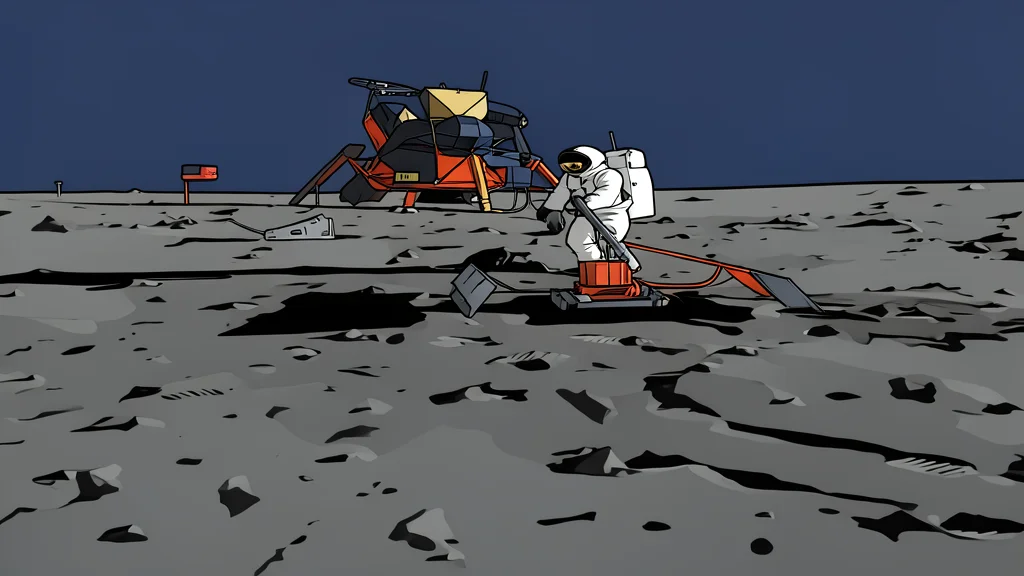
A chance purchase at a government surplus auction in 1976 led to the discovery of pristine Apollo 11 footage that had been lost to history for decades.
In 1976, Gary George, a NASA intern and engineering student, spent just $217.77 on a massive lot of surplus magnetic tapes. Among the 1,150 reels, which were mostly destined for resale to local TV stations, sat three specific cassettes labeled with a date that would later prove historic. George did not realize their significance at the time, and for over forty years, they sat in a box, nearly forgotten.
The value of these tapes stems from the technical limitations of the era. The live broadcast of the moonwalk seen by the world was a converted signal that suffered from significant loss of sharpness. The original high-quality footage was recorded at tracking stations, but NASA’s Houston control room recorded a lower-fidelity version. It was this specific Houston recording, not the raw feed, that ended up in George’s surplus lot, creating a unique historical artifact that no one at the agency knew they had lost.
The Origin of the Footage
To understand why these three reels were so rare, one must look at how the Apollo 11 broadcast was technically handled. Cameras on the lunar surface transmitted video to tracking stations, which then relayed the signal to Houston. According to NASA documentation, the signal arriving in Houston had already been downconverted from the astronauts' original slow-scan format. This process degraded the image quality compared to the raw data captured at the stations. The tapes George bought contained this specific Houston recording, which was considered a working copy and subsequently discarded by the agency.
George’s father noticed the labels on the three reels and advised him to keep them safe rather than selling them. This simple act of preservation prevented the tapes from being erased or reused by television stations. For decades, George stored them without ever playing them back, unaware that he was holding one of the few existing copies of the high-quality moonwalk footage.
Rediscovery and Digitization
The situation changed in early 2008 when George learned that NASA was actively searching for its original Apollo 11 EVA recordings ahead of the mission's 40th anniversary. The agency had lost track of the material, a common occurrence in large institutional archives. Prompted by this news, George had his tapes examined and digitized. The results confirmed that the reels contained a contemporary copy of the broadcast with unusually high image quality, far superior to the standard copies available to the public.
Auction Price and Historical Impact
The significance of the discovery was cemented on July 20, 2019, when Sotheby’s auctioned the three reels in New York. The date was chosen to coincide with the 50th anniversary of the moon landing. After a competitive bid from three parties, the lot sold for $1.82 million. This final price was more than eight thousand times the amount George had paid for the entire lot of 1,150 tapes in 1976.
The story serves as a cautionary tale about archival management. It highlights how even diligent organizations can lose track of irreplaceable materials. The incident also underscores the fragility of historical records; one of the most important visual documents of the 20th century was preserved not by an institution, but by a student who happened to be in the right place at the right time. As reported by GN auto tech/science: space discovery, this event remains a striking example of how value can be hidden in plain sight for decades.