US Space Academy Proposal Risks Merging Civilian and Military Roles
A new executive order proposes a federal space academy, raising questions about the separation between NASA and the Space Force.
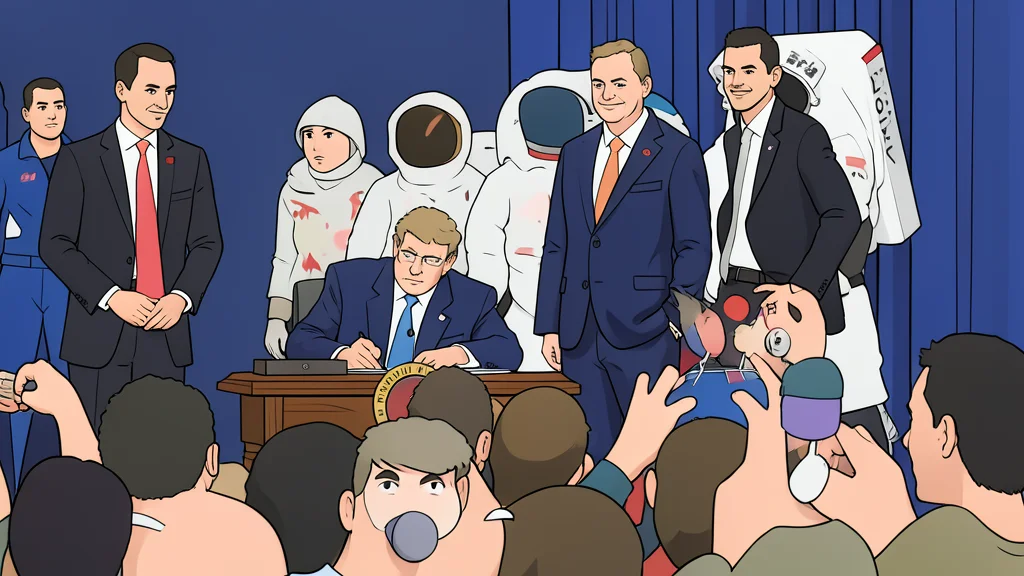
President Donald Trump has signed an executive order directing a commission to study the feasibility of creating a United States Space Academy. The proposal envisions a NASA-led institution modeled after traditional military service academies like West Point, aiming to train leaders for both civilian and military space operations.
This move has sparked immediate concern among former agency leaders and congressional members. The core issue is the potential blurring of lines between the civilian space program and the military branch, a distinction that has defined US space policy since the 1950s.
Commission to assess academy feasibility
The executive order does not immediately create the academy. Instead, it mandates a 120-day review by a commission led by NASA Administrator Jared Isaacman. The group includes high-ranking officials from the Department of Defense and the Office of Management and Budget, tasked with reporting on the institution's viability and structure.
According to the order, the academy would develop a professional corps of leaders prepared to advance American interests in the space domain. However, the specific curriculum and operational details remain undefined, leaving stakeholders uncertain about the balance between scientific exploration and military readiness.
Civilian and military roles clash
Critics point out a fundamental contradiction in the proposal. While the executive order describes the academy as NASA-led, the President’s remarks compared it directly to military academies and cited the Space Force as a justification. This creates ambiguity regarding the institution's ultimate allegiance and operational control.
For decades, US policy has maintained a clear division between civilian agencies like NASA and military branches. The proposed academy challenges this separation, raising questions about whether students would be obligated to serve in the Space Force or receive specific military training alongside scientific education.
Congressional oversight remains uncertain
The path to establishing a new federal bureaucracy involves significant legislative hurdles. Congress holds the power to create new government organizations and must approve any funding for such an academy. The involvement of defense and budget officials in the commission suggests that military interests may heavily influence the final design of the institution.
As reported by GN auto tech/science: space discovery, the proposal sits at a critical juncture. The outcome of the commission's report will determine whether the US continues to keep its space programs strictly civilian or begins integrating them into a broader national security framework.