NASA Identifies Largest New Lunar Crater in Solar System History
A massive impact event has been confirmed on the Moon, creating a crater that dwarfs all previously recorded recent strikes. While the event itself was not dangerous to Earth, it highlights the constant bombardment our planet avoids thanks to its atmosphere.
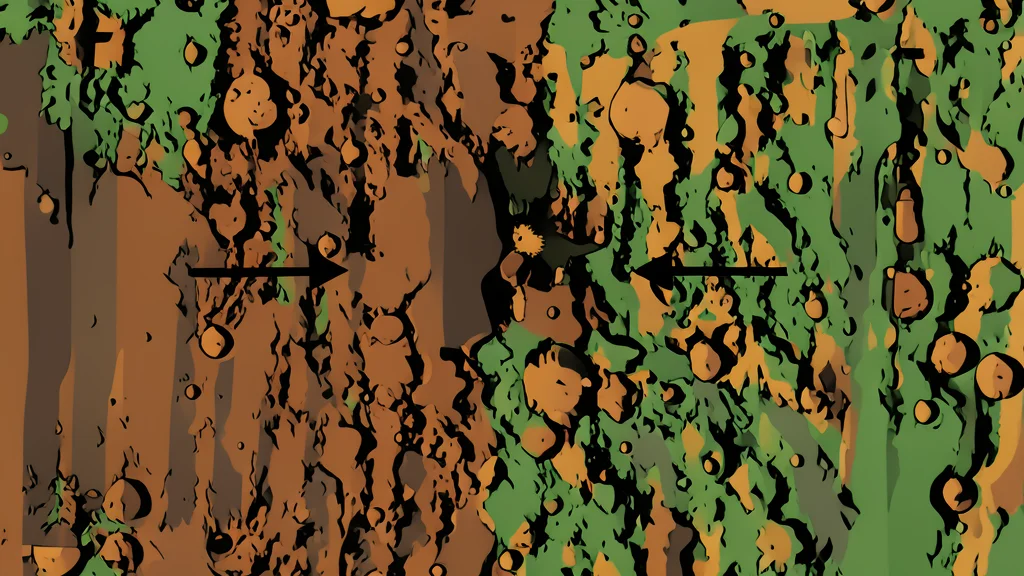
Scientists have confirmed the discovery of the largest newly formed crater ever recorded in our solar system. The impact occurred on the Moon's eastern edge between April and May 2024, leaving a distinct mark that was identified by Robert Wagner, a scientist working with NASA’s Lunar Reconnaissance Orbiter. Wagner noticed an unusual bright spot surrounded by a dark circle while reviewing surface maps, leading to a detailed comparison of before-and-after imagery that revealed the scale of the event.
The resulting feature, named McGetchin after lunar scientist Tom McGetchin, is 222 meters wide and 43 meters deep. Researchers estimate that the object responsible for this strike was roughly the size of a three-to-six-story building. According to reports from GN technics/space, such a significant impact is a rare occurrence, happening at least once a century. This discovery serves as a stark reminder of the debris field surrounding Earth, even though the Moon lacks the protective shield that keeps our own surface safe.
Lack of atmosphere exposes lunar surface
The reason for this clear evidence of impact is the Moon's lack of a substantial atmosphere. On Earth, most space rocks burn up during entry into the dense air layer, creating meteors that disintegrate before reaching the ground. The Moon, however, has no such buffer. Consequently, asteroids and comets strike the surface directly, leaving permanent scars. Since 2009, NASA’s orbiter has cataloged over 1,000 new craters and 100,000 surface changes, illustrating that the lunar surface is a dynamic and constantly changing environment.
Thermal data reveals impact aftermath
Beyond simple visual confirmation, scientists used the Diviner thermal instrument to analyze the area around McGetchin. They found that a region approximately 6.5 kilometers wide is about 9 degrees Celsius cooler at night than its surroundings. This temperature difference is caused by the impact ejecting and redistributing lunar dust and regolith. The disturbed material is less dense than the surrounding terrain, which reduces its ability to retain heat. This thermal signature provides additional proof of the recent impact and helps researchers understand the physical properties of the lunar soil.
Continuous monitoring of lunar changes
The ability to detect such events quickly relies on the constant data stream from the Lunar Reconnaissance Orbiter. The spacecraft orbits 50 kilometers above the Moon, allowing it to capture images detailed enough to resolve craters as small as 10 meters wide. This resolution is achieved by imaging debris from rocks as small as 110 centimeters. While these smaller impacts are common, the McGetchin crater stands out due to its size and the clarity with which it was documented. This ongoing surveillance supports both scientific understanding and the planning for future human activities on the lunar surface.