Spirit AI Predicts Robot Intelligence Shift by 2027

A Chinese robotics firm claims its software will soon match major AI milestones, yet home adoption remains years away due to data limitations.
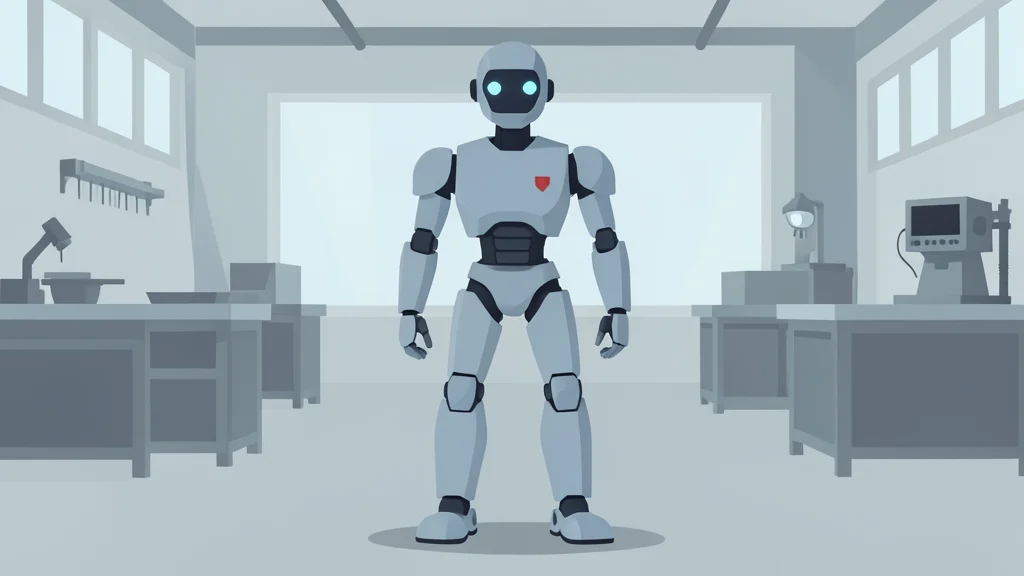
Gao Yang, co-founder of Spirit AI, stated that a significant leap in robot intelligence is expected by mid-2027. This prediction positions the company's progress alongside major milestones in large language models, suggesting that humanoid robots will soon handle complex workflows with greater reliability than before.
Despite these optimistic timelines for industrial use, Gao cautioned that bringing these machines into private homes will take at least eight years. The primary obstacle is a data bottleneck. Current systems struggle with unpredictable household environments, making the transition from factory floors to living rooms a much harder technical challenge.
Software remains the critical weakness
While recent hardware improvements have allowed robots to perform physical feats like backflips, Gao described the software as the weakest link in the robotics stack. The focus of the industry is shifting from impressive physical displays to economic productivity. The goal is to create machines that can reliably execute continuous, complex tasks in real-world settings rather than just isolated actions.
Spirit AI’s wheeled humanoids have achieved a 90% success rate on simple tasks in controlled environments. However, fine-motor skills, such as unscrewing a bottle cap, remain difficult. The company expects to see these robots deployed in commercial service settings within two years, marking the initial window for practical industrial applications.
Real-world data drives training
Unlike many competitors who rely on virtual simulations to lower costs, Spirit AI predominantly uses real-world data to train its models. Gao explained that simulators handle rigid objects well but struggle with flexible items like deformable cables. By collecting data from actual interactions, the company aims to build models that better understand the nuances of the physical world.
To gather this data, the firm employs around 1,000 contractors who use wearable sensors in homes and factories. These individuals repeat motions like opening fridges or cutting vegetables to teach the robots. Interestingly, the company found that using diverse, imperfect data allowed its models to improve faster than using only perfectly executed movements, a trade-off that prioritizes adaptability over precision.
Rapid growth and industrial deployment
Founded in 2024, Spirit AI has raised over $670 million and is currently valued at $2.9 billion. The company is one of China’s most rapidly capitalized embodied intelligence firms. Its robots are already deployed on production lines at major clients like battery maker CATL and retailer JD.com, which is also an investor.
The startup has grown quickly, with robots now operating across large spatial areas. While Gao declined to comment on potential initial public offering plans, the rapid capitalization highlights the market's confidence in embodied AI. The next few years will determine whether the promised 2027 breakthrough translates into widespread economic utility.