Moldova Plans Second Satellite Launch After First Success
Building on the success of its first nanosatellite, the Technical University of Moldova is preparing a new mission for next year, aiming to expand its capabilities in space technology and training.
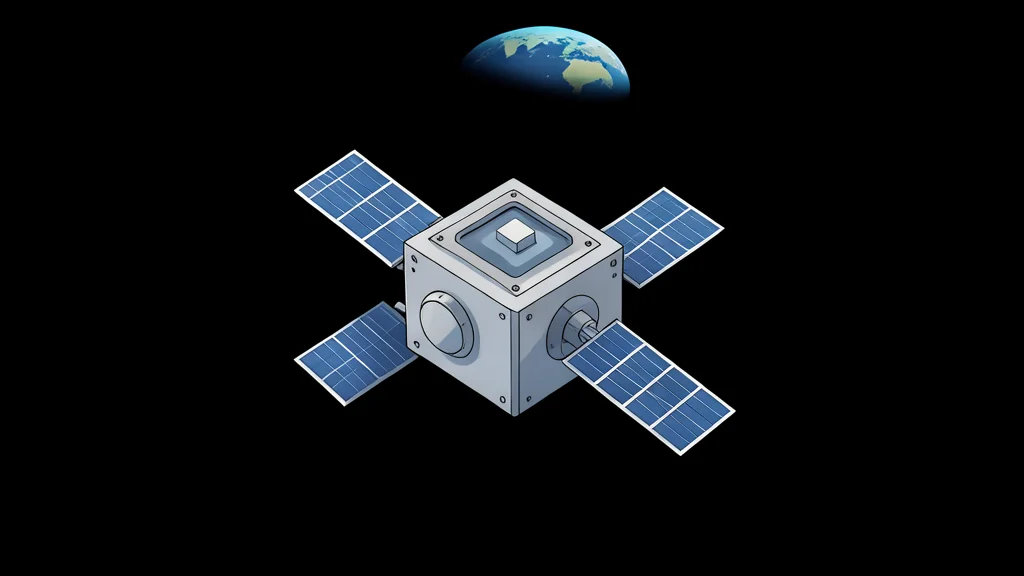
The Technical University of Moldova (UTM) is preparing to launch a new satellite into orbit, following the successful deployment of TUMnanoSAT. This small, cube-shaped spacecraft was the first satellite built by a Moldovan team and remained in orbit for nearly six months after its August 2022 launch. The mission served as a critical proof of concept, demonstrating that the university’s researchers could build and operate space hardware independently.
According to GN auto tech/space: satellite deployment reports, the university is now working on a follow-up mission scheduled for next year. This effort builds on the infrastructure and team developed over the last decade. While the first satellite validated basic systems, the next step involves more complex operations, aiming to solidify Moldova’s position in the international space sector despite its lack of a traditional aerospace industry.
Overcoming legal and bureaucratic hurdles
Launching a satellite from a country without a space program is not just a technical challenge; it is a legal one. Moldova had not signed the post-1991 international treaties on outer space, which initially meant it lacked the official right to launch objects under its own flag. The team resolved this by participating in educational programs organized by the UN Office for Outer Space Affairs. This route provided a legal exception that allowed the launch to proceed, bypassing the need for a national space agency.
The process also required navigating significant bureaucracy and cost constraints. Vladimir Melnic, Deputy Director of UTM’s National Center for Space Technologies, explained that independent launches are prohibitively expensive and complex for a single university. By entering international competitions, the team secured the necessary approvals and support. This approach turned a potential barrier into a pathway, allowing a smaller nation to participate in global space activities.
International partnerships eased the path
The launch relied heavily on international collaboration, particularly with the Japan Aerospace Exploration Agency (JAXA). After an initial attempt in 2017, the team succeeded in 2019 with JAXA’s support. The satellite, weighing about 1.15 kilograms, underwent rigorous safety checks by both JAXA and NASA. These agencies reviewed the technical documentation and guided the team through the necessary tests to secure launch approval from the International Space Station.
This partnership was crucial for a team that lacked its own launch infrastructure. JAXA supervisors assisted at every stage, from design to deployment. The satellite was launched using the KiboCube module, a system that allows small payloads to be carried into space. This reliance on international partners highlights a key trade-off: while it enabled the launch, it also meant the team had to meet strict external standards and schedules, limiting their autonomy in the process.
Building a domestic space capability
The project was the result of over a decade of preparation. The National Center for Space Technologies at UTM was established in 2008, with the explicit goal of building and launching a satellite. The team assembled gradually, developing the necessary infrastructure and expertise year by year. Academician Ion Bostan founded the laboratory, while Rector Viorel Bostan led the project, ensuring that the university remained committed to the long-term effort.
The primary goal of the first mission was to train young specialists and validate the functionality of various subsystems in actual flight conditions. The team successfully decoded data from the onboard computer and confirmed that the radio communication system and antenna deployment mechanisms were working. This success proves that the team can operate a satellite in orbit, a skill that is essential for the next phase of their space program.