Roman Telescope Fuel Reserve Exceeds Projections by Double
NASA's latest flagship observatory has arrived at its destination with significantly more fuel than planned, securing a longer operational window for deep-space research.
NASA’s Nancy Grace Roman Space Telescope has confirmed a fuel reserve that lasts approximately 22 years, double the minimum expectation set during the design phase. This surplus provides a substantial buffer for the observatory’s scientific operations, allowing for extended data collection beyond the initial ten-year mission goal. The agency announced this update on Monday, highlighting the precision of the launch and subsequent orbital maneuvers.
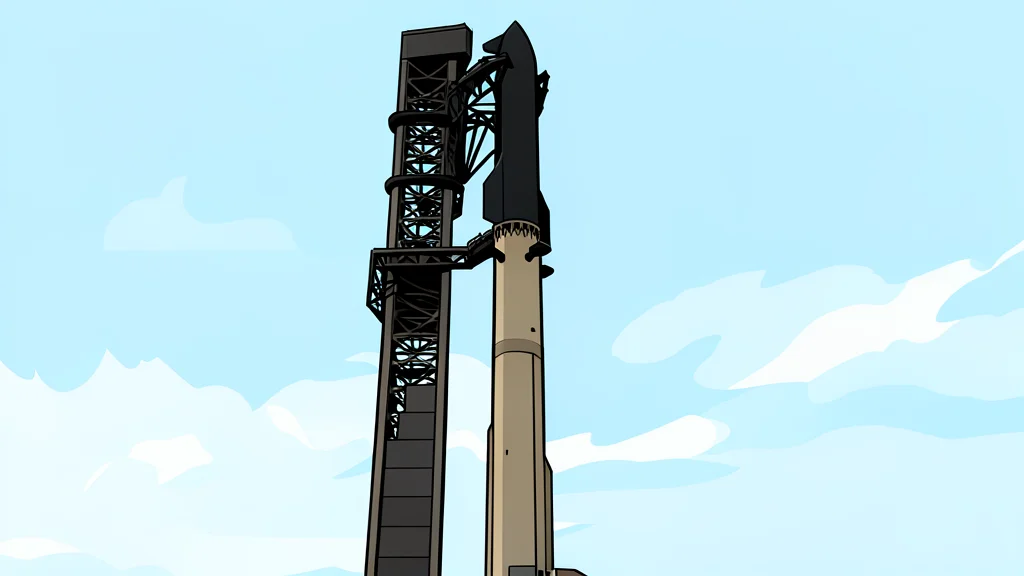
The spacecraft launched on August 30 aboard a SpaceX Falcon Heavy rocket. Engineers had originally calculated propellant needs for a five-year primary mission with a potential five-year extension. However, the accuracy of the launch trajectory and the efficiency of the first course correction maneuver resulted in a much larger remaining fuel load. This outcome mirrors a similar positive variance seen with the James Webb Space Telescope, which also benefited from an exceptionally precise launch.
Precision Launching Reduces Fuel Consumption
The extended fuel life is a direct result of what NASA describes as exquisite planning and brilliant execution. The orbital dynamics team designed a trajectory that minimized the amount of propellant required to reach the telescope's observation post. The operations team then executed the necessary adjustments with high accuracy, ensuring that the spacecraft did not waste fuel on unnecessary corrections. This efficiency is critical for deep-space missions where refueling is impossible and every kilogram of propellant counts toward the mission's longevity.
Wider View Enhances Cosmic Mapping
The Roman telescope is designed to provide astronomers with images at the same resolution as the Hubble Space Telescope but with a field of view 100 times larger. This capability allows the observatory to capture vast areas of the sky in a single exposure. While Hubble would take a century to observe the same volume of space, Roman can achieve this in roughly a month. This broad vision is intended to help map galactic clusters and the structures of dark matter that permeate the universe.
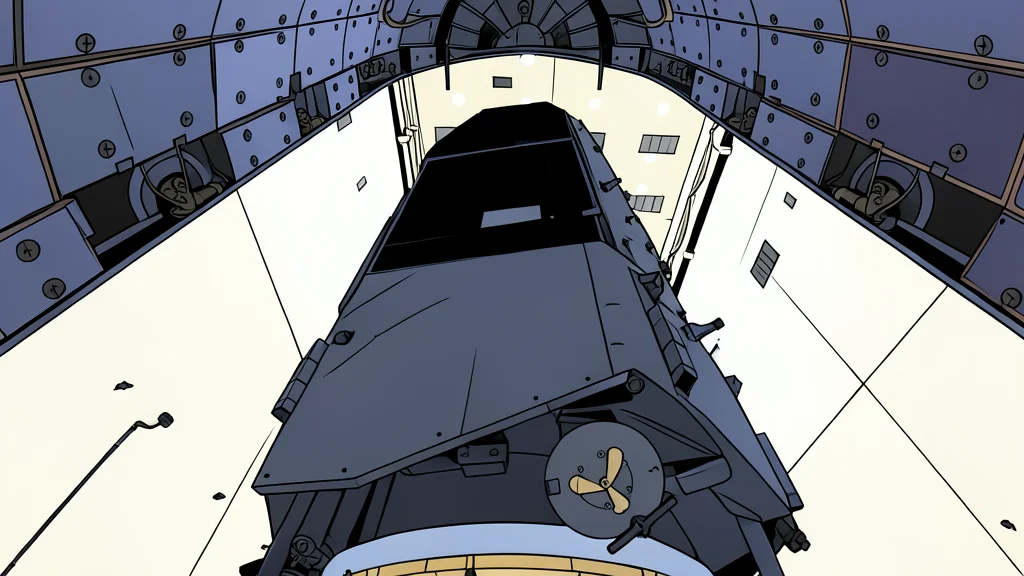
According to GN auto tech/space, the telescope’s Wide Field Instrument includes 18 near-infrared detectors that function similarly to a high-resolution camera. This setup is particularly useful for studying dark energy, the mysterious force driving the accelerated expansion of the universe. By observing more of the sky over a longer period, scientists hope to gather enough data to better understand these fundamental cosmic forces. The longer fuel life ensures that these observations can continue for over two decades, providing a richer dataset for analysis.