Samsung Patent Outlines Wearable Glucose Calibration Method
A new Samsung filing suggests a path for watches to estimate blood sugar by calibrating against external readings, though no standalone device is imminent.
Samsung has published a patent describing a method for wearables to estimate blood glucose levels by calibrating biometric signals against data from an external device. The filing, released in Europe on September 9, outlines a system where a smartwatch collects physiological signals and pairs them with a known glucose value from a separate source to create a personalized calibration profile.
This approach does not imply that the watch can measure blood sugar independently from the start. Instead, it relies on an initial external measurement to teach the wearable how to interpret its own sensor data. While Samsung has confirmed that noninvasive glucose monitoring remains a research priority, the company has not announced a specific product or timeline for this technology.
Calibration relies on external reference data
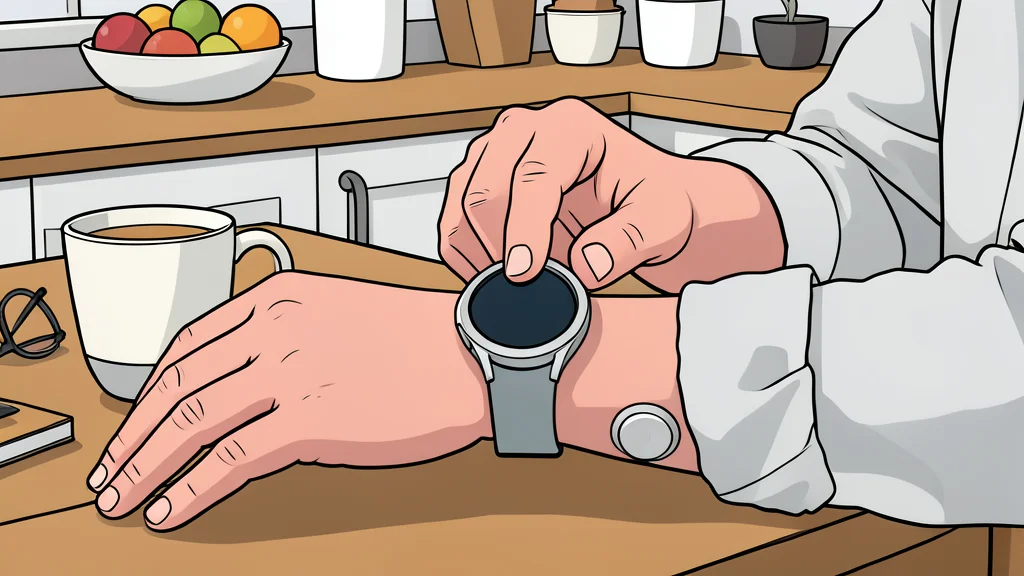
The core of the patent involves a two-step process. First, the wearable prompts the user to perform a glucose test using an external device, such as a finger-prick meter. Simultaneously, the watch captures biometric signals from the user. The system then uses the externally verified glucose value to adjust its interpretation of those signals, generating calibration data.
Once calibrated, the wearable can use this data to estimate subsequent glucose levels from its own biometric readings. This method acknowledges that raw biometric signals are not directly convertible into accurate glucose values without a reference point. The patent traces its origins to a 2023 application, with later publications in Korea and internationally in 2025, indicating a multi-year development cycle.
Samsung confirms ongoing research efforts
Coinciding with the patent publication, Samsung executives reaffirmed that noninvasive continuous glucose monitoring is an active area of development. Jong-min Choi, an executive vice president on the Digital Health Team, stated that the company is pursuing a multifaceted approach involving internal research and collaborations with external startups. He emphasized that improving the reliability of these measurements remains a key focus.
Samsung is also exploring broader ecosystem integration, suggesting that combining devices like the Galaxy Ring and Galaxy Watch can enhance measurement accuracy. The company’s long-term vision involves connecting watches, rings, smartphones, and earbuds to create a personalized healthcare platform. However, these comments confirm active research rather than immediate commercial availability.
Significant gap remains before market release
Despite the patent details, there is no indication that a Galaxy Watch capable of independently measuring blood glucose is imminent. Samsung has not provided a launch date or confirmed that the specific method in the filing will appear in a consumer product. The technology described is a component of a larger research effort, not a finished feature.
For consumers, the trade-off is clear: while the technology could eventually reduce the need for frequent finger pricks, it currently depends on external validation. As reported by GN auto tech/wearables, the distance between a patent filing and a reliable, user-ready product remains substantial, requiring further refinement in accuracy and consistency.