Buganda's Enduring Monarchy Within Modern Uganda
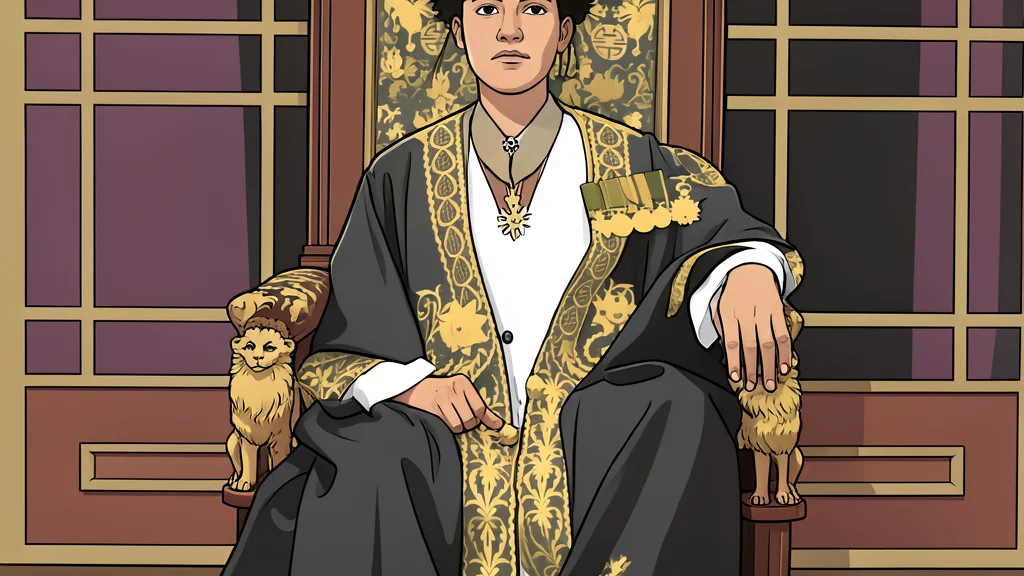
Uganda’s Buganda Kingdom maintains distinct traditional institutions that operate alongside the modern state, a structure that has persisted through colonialism and independence.
In Kampala, the boundaries between ancient tradition and modern governance remain visibly intertwined. While Uganda gained independence from British colonial rule in 1962, the nation did not dismantle its pre-existing monarchical structures. Instead, the new republic inherited a complex political landscape where centuries-old monarchies and the modern state have had to coexist. More than six decades later, this duality is most prominently visible in Buganda, where a traditional monarchy continues to function within the framework of a constitutional republic.
The Buganda Kingdom is led by a monarch known as the Kabaka and maintains its own distinct administrative apparatus. This includes the Great Lukiiko, described by the kingdom as its parliament, and a government headed by the Katikkiro, or prime minister. According to Uganda’s constitution, these traditional leaders are barred from exercising executive, legislative, or administrative powers of the national state. Nevertheless, the kingdom asserts jurisdiction over a traditional territory spanning approximately 61,000 square kilometres, a region home to roughly 12 million people.
Origins in Oral Tradition
The historical timeline of Buganda’s unification remains a subject of interpretation due to the lack of written records from the early period. Oral traditions trace the kingdom's origins to the 13th century and the figure of Katu Kintu, though historians note that his historical existence remains unverified. Semakula Kiwanuka, a Ugandan historian, suggests that the kingdom emerged as local clan structures transitioned from fragile entities toward centralized authority. This consolidation, Kiwanuka noted, was likely driven by the strongest chiefdom bringing neighboring groups under its influence rather than purely economic motives.
Official accounts from the kingdom offer a slightly different narrative. Owek Israel Kazibwe Kitooke, Buganda’s minister of information, stated that Kabaka Chwa I formed an alliance of five clans in the early 14th century. As the kingdom expanded, six additional clans joined this coalition. Kitooke explained that Kabaka Chwa united these groups through a council of clan leaders who served as royal advisers, a system whose principles later evolved into the kingdom’s modern constitutional framework.
Pillars of Traditional Governance
According to Kitooke, the kingdom’s governance rests on three primary pillars: royal lineage, the clan system, and the people. The royal lineage involves the selection of an heir by the reigning Kabaka, who is then tutored by senior elders in diplomacy and statecraft. The clan system is identified by traditional totems drawn from the local environment, such as the civet or squirrel, reflecting a deep cultural respect for the surrounding ecosystem.
The third pillar emphasizes the inclusion of the general population in the kingdom’s institutions. Rather than excluding citizens, the Kabaka appoints ministers and officials from among the wider community. This allows subjects to serve the monarchy in leadership roles, creating a system where traditional authority is maintained through broad participation rather than exclusion. This structure distinguishes Buganda’s internal governance from the national government, where traditional leaders hold no formal state power.
Interaction with Global Faiths
The kingdom’s history also reflects its interactions with external religious and trade networks during the 19th century. According to historical accounts, Islam reached Buganda under Kabaka Muteesa I, who welcomed Arab traders from the north. Reports indicate that the Kabaka regularly hosted these traders at his palace and observed Ramadan after adopting certain practices in 1877. This period of openness highlights how the kingdom navigated external influences while maintaining its internal structures.
As reported by Al Jazeera English, the persistence of these institutions raises questions about the future of traditional power in East Africa. The ability of Buganda to maintain its distinct identity within a modern republic offers a unique case study in political pluralism. Observers will likely watch how the kingdom continues to balance its ancient protocols with the evolving realities of a modern African state, particularly as younger generations engage with both traditional and modern identities.