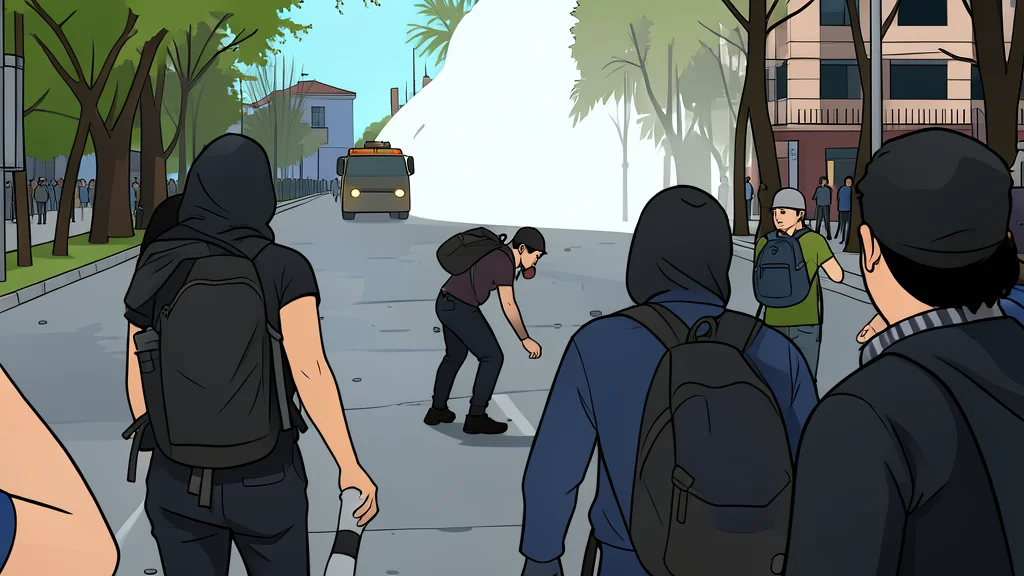
Chile Detains 300 as Pinochet Anniversary Protests Reignite

Security forces in Santiago detained nearly 300 individuals during annual demonstrations marking the 53rd anniversary of the 1973 coup, a day characterized by heightened tensions and a notable absence of official state ceremonies.
The Chilean government reported that 284 people were arrested on Saturday during widespread protests commemorating the victims of the military dictatorship led by Augusto Pinochet. These demonstrations, which have become a fixed point in the country’s annual calendar, coincide with the 53rd anniversary of the September 11, 1973 overthrow of President Salvador Allende. According to authorities, the crowds gathered to denounce the regime that left more than 3,200 people dead or disappeared, resulting in significant friction with law enforcement.
In a marked departure from tradition, the current administration did not organize any official commemorative events, a first since the return to democracy in 1990. This decision has intensified the political stakes surrounding the anniversary. Security Minister Martín Arrau stated that while there were 198 violent incidents, a figure 34 percent lower than in 2025, the number of arrests surged by 80 percent to 284. He emphasized that no civilians were injured and public transport remained undamaged, framing the police response as a necessary measure to protect public order.
Political Tensions Surround the Anniversary
The absence of state-led rituals reflects the complex political landscape under President José Antonio Kast, whose election earlier this year has been interpreted by some as a shift in how the nation addresses its recent past. In a speech in the southern Los Ríos region, Kast defended his decision to skip official ceremonies, arguing that erasing history is impossible, but the nation must not be condemned by its past in a way that prevents it from looking toward the future. This stance contrasts sharply with the annual mobilization of opposition figures and human rights advocates.
Prominent political figures attended the gatherings to signal solidarity with the victims. Isabel Allende, daughter of the late president and a former senator, was present at the main site, alongside Gabriel Boric, the former left-wing president who preceded Kast. Their participation underscored the enduring divide in Chilean society regarding the legacy of the 1973-1990 dictatorship. According to reports from GN geopolitics/coup, the demonstrations were not merely symbolic but represented a continued demand for accountability and remembrance.
Sites of Memory and Conflict
The focal point of the protests was Santiago’s General Cemetery, specifically the mausoleum of the Allende family. This location serves as a powerful symbol of the regime’s human rights abuses. Demonstrators also gathered at the La Moneda presidential palace, where Salvador Allende died, and the National Stadium, a site historically used for detention and torture. The choice of these locations highlights the physical and emotional landscape of Chilean memory, where public spaces remain charged with the trauma of the dictatorship era.
Clashes between protesters and police erupted in several areas, with demonstrators throwing stones and sticks at security forces. In response, police deployed tear gas and water cannon vehicles to disperse the crowds. Among those detained were 16 foreigners and 31 minors, figures that have drawn attention to the broad demographic reach of the protests. The security forces maintained that their actions were proportional and aimed at preventing further violence, although critics argue that the heavy-handed approach stifles legitimate expression of grief and dissent.
Forward Watch on National Unity
As the anniversary concludes, the focus shifts to how the Chilean government will manage the ongoing polarization surrounding its historical narrative. The significant increase in arrests compared to previous years suggests a more confrontational dynamic between the state and civil society. Observers will be watching for any subsequent legal actions against detainees and whether the administration will introduce new policies regarding the recognition of victims. The next few weeks may reveal whether this anniversary marks a definitive break with past commemorative traditions or a temporary escalation in a longer struggle for national reconciliation.