China Coast Guard Intercepts 198 Ships in Philippine Sea
A new study indicates a significant increase in maritime enforcement actions by Chinese authorities following recent diplomatic shifts between Tokyo and Manila.
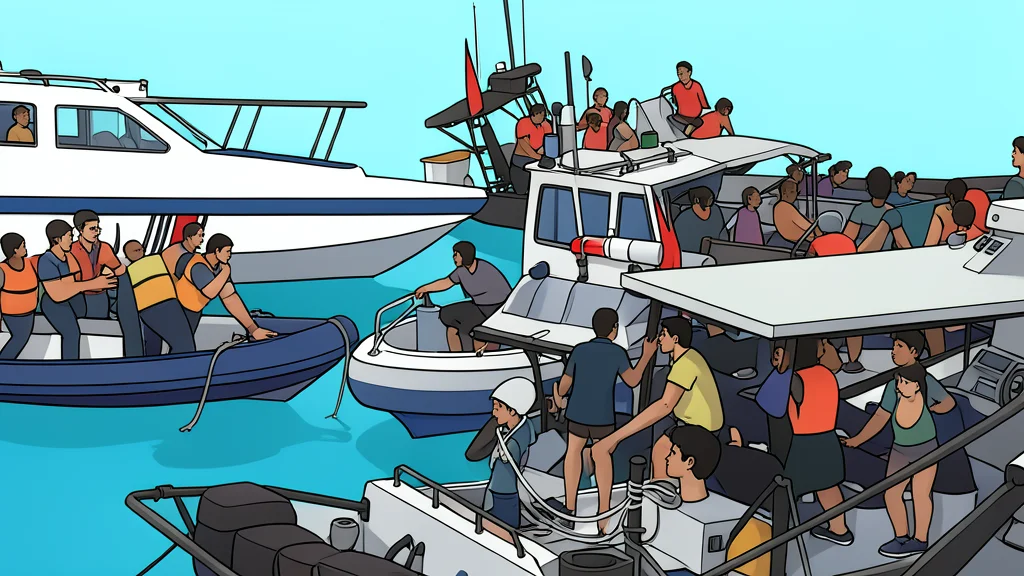
According to a report from the Asia Maritime Transparency Initiative (AMTI), Chinese Coast Guard vessels have questioned the crews of nearly 200 commercial ships transiting the Philippine Sea. This surge in activity marks a notable departure from previous patterns, as the report notes that such enforcement measures were virtually absent in the five months preceding the recent diplomatic announcements between Japan and the Philippines.
The escalation coincides with the agreement reached in May 2026 by Japanese Prime Minister Sanae Takaichi and Philippine President Ferdinand Marcos Jr. to begin negotiations on overlapping exclusive economic zone boundaries. The two nations also initiated discussions regarding defense cooperation, including the potential sale of destroyers and the sharing of classified military information. Beijing has described these bilateral talks as illegal, asserting its own claims over the maritime area east of Taiwan.
Coast Guard Activity Surges
Between June and August, AMTI documented a dense concentration of Chinese Coast Guard and survey vessels in the waters where Manila and Tokyo hold overlapping claims. The think tank characterizes the questioning of ship operators as unlawful, even if it were to occur within China’s own exclusive economic zone. The report suggests that the scale of these operations indicates a strategy aimed at establishing a semi-permanent presence and exercising jurisdiction in the region.
Beijing has denied these characterizations, maintaining that the Philippine Sea is subject to maritime claims by Taiwan, which it seeks to annex. The AMTI report argues that the timing of the deployments suggests a direct response to the Japan-Philippines partnership. By increasing visibility and enforcement in these specific waters, Chinese authorities may be attempting to alter the status quo and assert a broader sphere of influence.
Survey Vessels Near Taiwan
In addition to Coast Guard patrols, Chinese civilian research missions have expanded their scope. According to the South China Morning Post, the Natural Resources Ministry conducted a marine environmental survey east of Taiwan in June, describing it as part of an annual mission rather than a one-off event. These operations have frequently taken place within 50 nautical miles of the island, an area that AMTI notes is largely irrelevant to the specific boundary delimitation talks between Japan and the Philippines.
The proximity of these survey vessels to Taiwan suggests a dual purpose for the data collection. While framed as environmental research, the activities could gather intelligence on subsea environments that are critical for undersea warfare capabilities. The report warns that this pattern of behavior could serve as a rehearsal for broader commercial quarantine strategies, effectively testing the limits of international maritime law.
Strategic Implications for the Region
The developments described in the GN auto geopolitics/asia-pacific: South China Sea report highlight a complex interplay of diplomatic and military posturing. As Japan and the Philippines deepen their strategic ties, China’s response appears to be multi-faceted, combining legal challenges with physical presence. The ability of Beijing to project power into waters it does not exclusively control raises questions about the future stability of the region.
Observers are now watching to see if this increased activity persists beyond the initial period of heightened tension. The potential for the Philippines to acquire advanced Japanese naval assets could further complicate the maritime balance. For now, the focus remains on how these coastal states navigate their overlapping interests in a sea that is becoming increasingly contested.