India Streamlines VIP Movement for BRICS Summit Logistics

New Delhi officials are consolidating ministerial transport to minimize traffic disruption during the upcoming BRICS Summit, balancing high-level security with urban mobility.
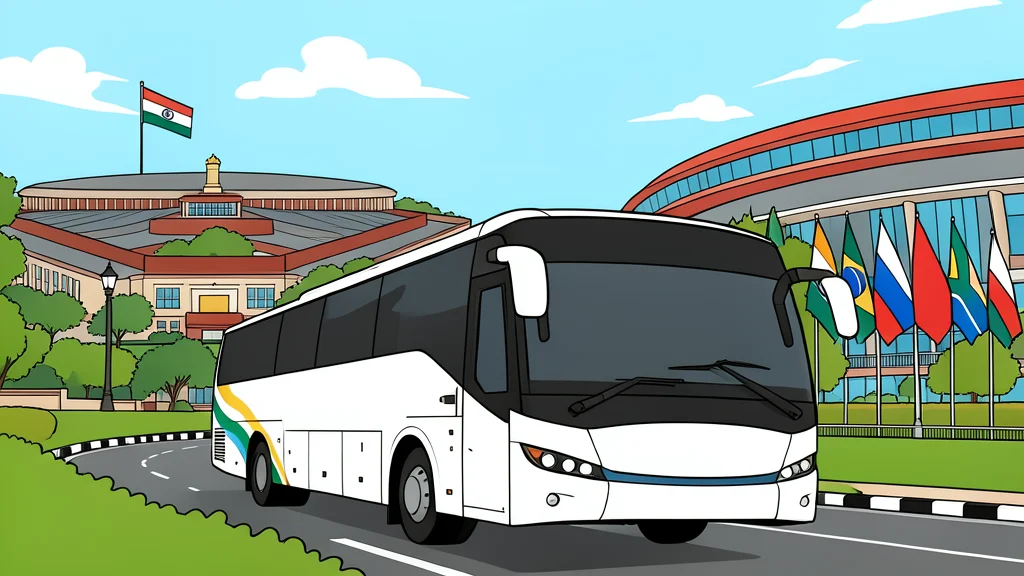
In a notable adjustment to traditional diplomatic logistics, Indian Union Ministers and Chief Ministers are expected to travel together in a single bus rather than separate VIP convoys during the BRICS Summit 2026. This coordinated movement from Parliament to the Bharat Mandapam venue aims to reduce the number of security escorts and traffic stoppages in New Delhi, reflecting a government priority to limit inconvenience to ordinary commuters while maintaining strict security protocols for the international gathering.
According to sources cited by GN auto geopolitics/global: international summit, the decision represents a practical shift in how high-level official movements are managed. By consolidating several separate convoys into one unified route, traffic authorities can regulate the corridor more efficiently. This approach is designed to ease pressure on Delhi’s roads, reducing the duration and frequency of restrictions that typically accompany major state events.
Balancing Security and Urban Mobility
The initiative aligns with Prime Minister Narendra Modi’s emphasis on minimizing interference with daily life during major government programmes. While the exact timing of the assembly and departure remains to be finalized, the underlying strategy is clear: to balance the inherent security demands of hosting a summit with the transportation needs of the city’s residents. Delhi Traffic Police have already prepared comprehensive diversion plans and advised the public to allow extra travel time, but the single-bus strategy offers a more streamlined alternative to the usual gridlock caused by multiple independent motorcades.
This logistical precision is part of a broader effort to present India as a host that respects both diplomatic protocol and civic convenience. The move underscores a government approach that prioritizes efficient coordination, ensuring that the security apparatus functions without creating unnecessary chaos in one of the world’s most densely populated cities. It is a subtle but significant signal of administrative maturity in handling high-stakes international events.
India’s Evolving BRICS Chairship Agenda
The summit, scheduled for September 12 and 13, marks India’s fourth chairship of the bloc. Held under the theme “Building for Resilience, Innovation, Cooperation and Sustainability,” the event places development, institutional effectiveness, and the aspirations of the Global South at the center of the agenda. As BRICS has evolved since 2021 into a more robust platform for coordinating on finance, technology, and global governance, India’s 2026 leadership seeks to reinforce the group as a solutions-oriented forum.
The domestic logistical planning, including the streamlined transport of leaders, serves as the operational backbone for this ambitious international dialogue. By managing the physical footprint of the summit efficiently, India aims to project an image of order and cooperation, mirroring the thematic focus on resilience and sustainability. The careful orchestration of movement and security reflects the broader diplomatic goal of showcasing a stable, capable host.
Forward Focus on Summit Outcomes
Attention now turns to how these logistical efficiencies translate into diplomatic outcomes. With leaders from emerging economies gathered in New Delhi, the success of the summit will depend not only on the thematic discussions but also on the seamless execution of its various components. Observers will watch whether the streamlined approach to security and transport sets a new standard for future international gatherings in the Global South.