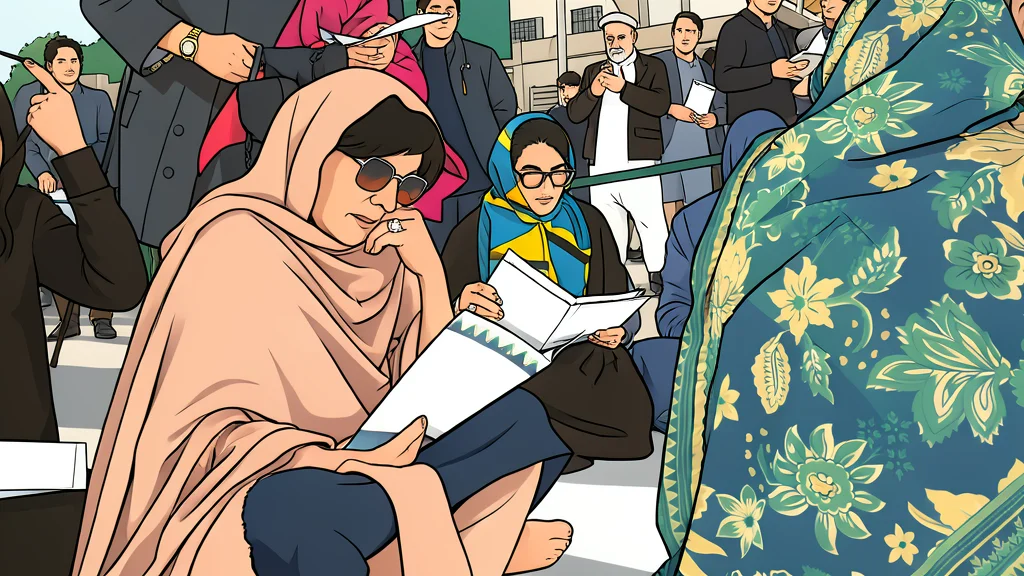
Pakistan Lawyers Re-Arrested Hours After Supreme Court Bail
Two human rights advocates in Pakistan were taken into custody again shortly after the Supreme Court suspended their sentences, prompting international condemnation over the use of legal mechanisms against critical voices.
Imaan Mazari-Hazir and Hadi Ali Chattha were re-arrested in Rawalpindi just hours after the Supreme Court of Pakistan granted them bail and suspended their prison sentences. The incident, which occurred on the evening of September 17, has drawn sharp criticism from international observers who view the move as a continuation of pressure on legal professionals representing vulnerable groups.
According to a report by GN geopolitics/rights (en-US), the two lawyers had been held in custody for nearly eight months following their initial arrest in late January. Their original convictions were based on social media posts deemed critical of the state, leading to charges under Pakistan’s Prevention of Electronic Crimes Act. The recent re-arrest appears linked to a separate case registered in March, alleging their participation in a protest.
Legal Challenges and International Response
Amnesty International has strongly condemned the latest developments, with Deputy Regional Director for South Asia Babu Ram Pant describing the actions as politically motivated. Pant stated that the re-arrest dispels any pretense that the charges are not aimed at punishing the lawyers for their human rights work. He urged the Pakistani authorities to stop misusing the justice system to target Mazari-Hazir and Chattha, calling for their immediate and unconditional release without further charges.
The organization argued that the legal system is being weaponized against critical voices, particularly those representing victims of rights violations. The new charges, which include allegations of blocking roads and chanting slogans, have been characterized by rights groups as unjustified attempts to prolong detention rather than legitimate criminal proceedings. The international community continues to monitor the situation, emphasizing the need for fair judicial processes.
Specific Charges and Detention Details
The lawyers were initially sentenced to prison terms ranging from 10 to 17 years under Sections 9, 10, and 26-A of the Prevention of Electronic Crimes Act. These sections cover offenses such as cyber terrorism and the dissemination of false information. Despite the Supreme Court’s order suspending these sentences, the release was not immediately executed, leading to their continued custody.
The subsequent arrest on the night of September 17 saw the lawyers taken into police custody inside Adiala Jail. An anti-terrorism judge then remanded them to the facility for 14 days based on new charges. These include multiple sections of the Pakistan Penal Code related to disobedience of lawful orders and criminal intimidation, as well as a charge under the Anti-Terrorism Act. The rapid succession of legal actions has raised questions about the procedural integrity of their case.
Future Judicial Proceedings and Watchpoints
As the case moves forward, attention will turn to whether the authorities bring additional charges to maintain the lawyers' detention. Amnesty International has warned that the current proceedings should not be used as a tool to extend their time in custody. The next legal hearings will be crucial in determining if the judicial system upholds the Supreme Court's previous ruling or if the new charges succeed in overriding the bail order.
Observers are watching closely for any further legal maneuvers that could restrict the lawyers' ability to meet with families or continue their professional work. The situation underscores broader concerns about the safety and legal protections afforded to human rights defenders in Pakistan. The outcome of these proceedings may set a precedent for how the state handles legal professionals who advocate for marginalized communities.