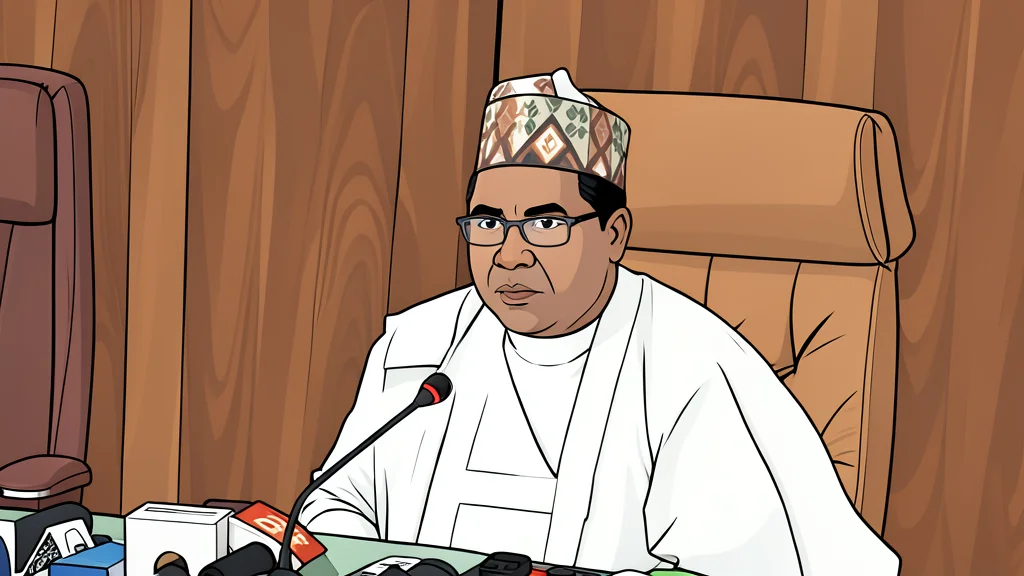
Sudanese Committee Seeks Inclusive Dialogue Framework

A Cairo-based seminar highlighted efforts to prepare the political climate for national dialogue, emphasizing inclusivity and the removal of obstacles for willing parties.
In Cairo, the Al-Sharif Center for Studies, Media, and Training hosted a seminar focused on the prerequisites for national dialogue in Sudan. The event brought together political figures and experts to discuss how to create a conducive environment for negotiations, a critical step given the ongoing humanitarian and political crises in the region. According to the GN geopolitics/rights (en-US) reporting, the central theme was the establishment of guarantees that could foster trust among fragmented political actors.
Nabil Adib, the Political Liaison Coordinator for the Sudanese Dialogue Preparation Committee, served as the keynote speaker. He described the committee as a spontaneous body that formed to bridge the gap between various factions and the state authorities. Adib stated that the group derives its mandate from the willingness of parties to engage, with its primary role being to facilitate discussions and remove structural obstacles. He clarified that their mission is not to dictate outcomes but to enable a dialogue that is comprehensive and inclusive of all civil forces.
Historical Context of Conflict
Adib contextualized the current crisis by noting that internal conflicts in Sudan have roots dating back to the country's independence. He argued that the present situation is an extension of these long-standing tensions rather than an isolated event. Furthermore, he distinguished the current conflict from a traditional civil war, asserting that the Rapid Support Forces do not represent a specific communal group. This perspective suggests that the conflict is driven by complex political and military dynamics that transcend ethnic or regional lines.
Inclusive Dialogue Principles
The seminar emphasized the importance of inclusivity, with Adib noting that past exclusions of political groups, such as the Communist Party and Islamists, contributed to subsequent coups. Consequently, the committee is working on preliminary arrangements to include diverse factions, including the 'Sumoud' group, despite the complexities arising from their military leadership. Adib stressed that while the committee works to bring parties to the table, it has no authority to compel participation. The overarching principles agreed upon include the unity of Sudan, its cultural diversity, decentralized governance, and a democratic system.
Path Forward for Negotiations
Dr. Shatha Othman Al-Sharif, Director General of the Al-Sharif Center, highlighted the urgency of moving beyond slogans to tangible outcomes. She stressed that Sudan cannot afford further delays in addressing its political and humanitarian challenges. Participants in the seminar, including several ambassadors and political experts, agreed that building trust is the cornerstone of any successful dialogue. The forward question remains how these preliminary arrangements will translate into a sustainable political process that addresses the diverse needs of the Sudanese population.