Strategic Guessing Risks Misreading Intentions in the Taiwan Strait
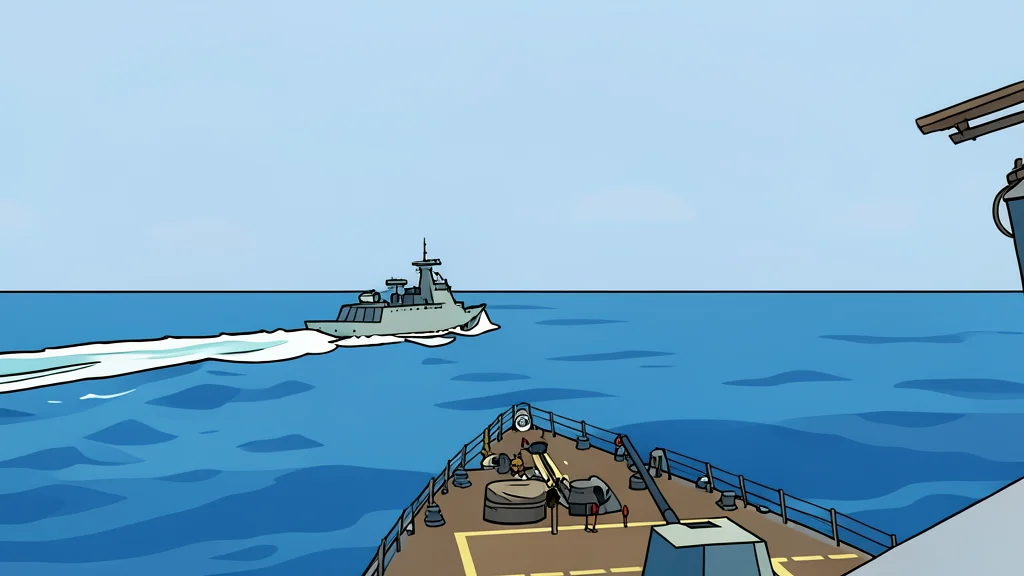
As high-level talks approach, the lack of sustained dialogue between Beijing and Washington has turned the Taiwan issue into a high-stakes exercise in interpreting intentions rather than clarifying them.
Tensions in the Taiwan Strait have intensified in the lead-up to a significant summit between Chinese President Xi Jinping and U.S. President Donald Trump. Reports indicate that Beijing signaled it could cancel the planned meeting if the United States proceeds with further arms sales to Taiwan. This threat underscores a fragile diplomatic environment where public posturing often substitutes for direct communication.
According to The Diplomat, this recent exchange highlights a persistent structural weakness in U.S.-China relations: the thinness of sustained dialogue on the island. While both capitals claim to practice strategic ambiguity, the practical result is that much of their interaction occurs at arm's length. Consequences are measured through military exercises, arms transfers, and public statements, forcing both sides to rely heavily on interpreting the other's intentions rather than confirming them.
American Friction Fuels Chinese Calculations
Beijing appears to hold an informational advantage in this dynamic due to the transparency of American domestic politics. Unlike China, the United States openly debates defense spending, industrial capacity, and political divisions. Observers in Beijing may interpret these internal frictions as evidence of declining power or an inability to mobilize quickly. Such perceptions could lead Chinese strategists to underestimate the speed and scale of a potential U.S. response to a crisis.
However, historical precedent suggests that visible constraints do not always predict actual behavior. During the 1995-96 crisis, Washington initially appeared restrained, leading Beijing to expect only diplomatic protests. In reality, the Clinton administration rapidly escalated its posture by deploying two carrier battle groups, a move that reportedly surprised Chinese leadership. This precedent serves as a cautionary tale: familiar patterns of restraint may not hold when political stakes are raised.
Washington Grapples With Uncertain Timelines
Washington faces its own challenges in reading Beijing's intentions, particularly regarding the timeline for potential actions against Taiwan. Analysts have proposed various dates, ranging from 2027, linked to military modernization goals, to 2028, coinciding with a local election cycle, or even 2049, tied to broader national rejuvenation targets. The proliferation of these competing estimates highlights the deep uncertainty surrounding the internal logic driving Chinese decision-making.
This uncertainty pushes U.S. policymakers to rely on observable indicators, such as military deployments and public rhetoric, to gauge Beijing's resolve. Yet, relying on external signals in the absence of direct dialogue increases the risk of miscalculation. Without a channel for sustained communication, both sides remain vulnerable to hardening assumptions that could escalate a manageable dispute into a broader conflict.
The Danger of Assumed Intentions
The core peril of this situation is not the existence of strategic differences, but the mechanism by which those differences are managed. When communication is limited to public signals, both sides are forced to guess at the other's red lines and capabilities. This constant state of speculation can harden preconceived notions rather than sharpen judgment, creating a feedback loop where misreadings drive actions that further validate the initial fears.
Looking ahead, the focus will likely shift to whether the upcoming summit can establish a more robust framework for dialogue. Until then, the risk remains that both Beijing and Washington will continue to navigate the Taiwan Strait through a haze of inference, with each side vulnerable to the other's unexpected moves.