Canada and EU Explore Associate Membership Amid Transatlantic Strain
Prime Minister Mark Carney responded warmly to a proposal for Canada to become the EU's first associate member, a move designed to foster strategic autonomy but complicated by significant legal hurdles and US opposition.
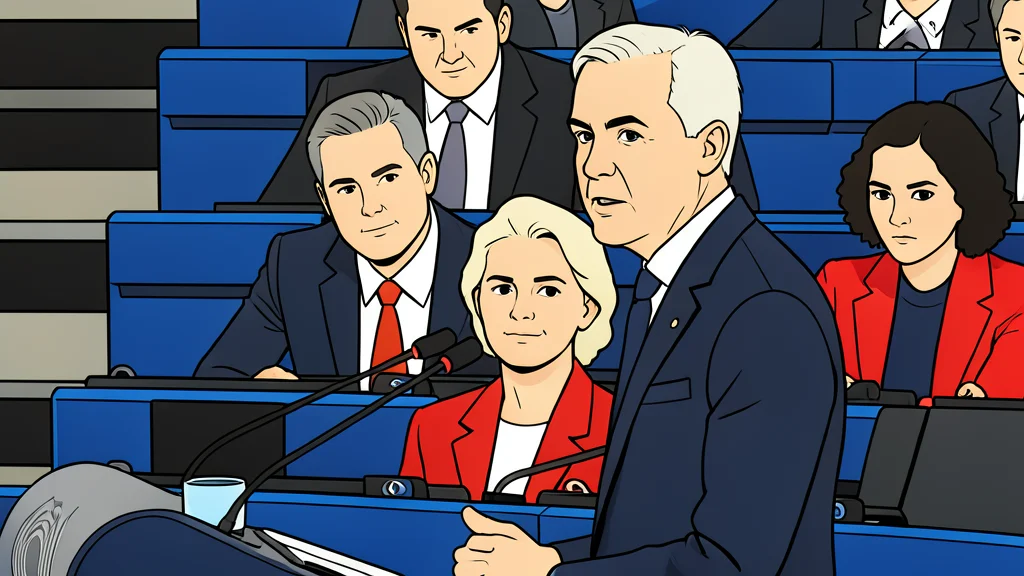
European political leaders have responded with considerable enthusiasm to the idea of granting Canada a special associate status within the European Union. During a speech to the European Parliament, Canadian Prime Minister Mark Carney emphasized the need for deep cooperation in strategic capabilities to secure mutual autonomy. This proposal serves as a direct response to an invitation issued by European Commission President Ursula von der Leyen, suggesting a new framework for engagement that goes beyond existing trade agreements.
According to BBC Business, the initiative is framed not as a move toward full membership, which is constitutionally barred for non-European nations, but as a mechanism to strengthen ties in areas such as energy, defense, and technology. Carney stressed that this partnership aims to create a new form of multilateral governance rather than forming a bloc against other powers. The proposal appears to be driven by a shared concern among Ottawa and Brussels regarding the unpredictability of their traditional security and trade partners.
Strategic Autonomy and Multilateral Goals
The core of Carney’s argument rests on the necessity for like-minded nations to close capability gaps and build collective strength. He suggested that by shunning isolationism, Canada and the EU can better safeguard their national sovereignty in a turbulent global landscape. This rhetoric appears to address the growing influence of nationalist politicians across Europe, whose agendas often prioritize domestic interests over international cooperation. The Prime Minister positioned the associate membership as a way to ensure that might does not dictate right, offering a stable alternative in a world where traditional alliances are being tested.
This diplomatic pivot is part of a broader trend where European allies are seeking to diversify their relationships. Nations such as Japan and South Korea are reportedly exploring similar pathways to shelter under the EU’s umbrella, reflecting a desire to reduce reliance on a single superpower. For the EU, this approach aligns with its recent efforts to secure trade deals with various partners, aiming to build a more resilient and diversified economic network. The goal is to create a robust framework that allows for collaboration without the complexities of full institutional integration.
Transatlantic Friction and US Opposition
The reception of this proposal has been sharply divided across the Atlantic. While European applause was described as rapturous, the United States has reacted with hostility. According to reports, President Donald Trump dismissed the idea, warning of severe tariffs and suggesting he might view the agreement as a hostile act. This reaction highlights the ongoing tension between Washington and both Ottawa and Brussels, which have faced what they describe as a weaponization of trade policies. The US stance underscores the difficulty of deepening EU-Canada ties without provoking a strong response from the traditional dominant partner in transatlantic relations.
Despite the warm rhetoric, the practical implementation of associate membership faces significant obstacles. There is no legal precedent for such a status, meaning negotiations would likely be lengthy and complex. Furthermore, any final deal requires the approval of all 27 EU member states, a process fraught with potential conflicts of interest. Issues such as steel tariffs and differing regulatory standards could complicate discussions, making it uncertain whether the proposal will ever move beyond the conceptual stage. The lack of a clear blueprint adds to the skepticism surrounding the long-term viability of this arrangement.
Uncertain Path Forward for Alliance
The future of this initiative remains uncertain, with analysts noting that while the political will is present, the structural and diplomatic challenges are substantial. The proposal serves as a test case for how the EU can engage with major external powers without compromising its internal cohesion. As Europe navigates a period of geopolitical realignment, the outcome of these discussions will signal the direction of transatlantic relations. Observers will be watching closely to see if these warm words translate into concrete policy or remain a symbolic gesture in a shifting global order.