Carney Seeks EU Partnership Amidst US and Domestic Criticism
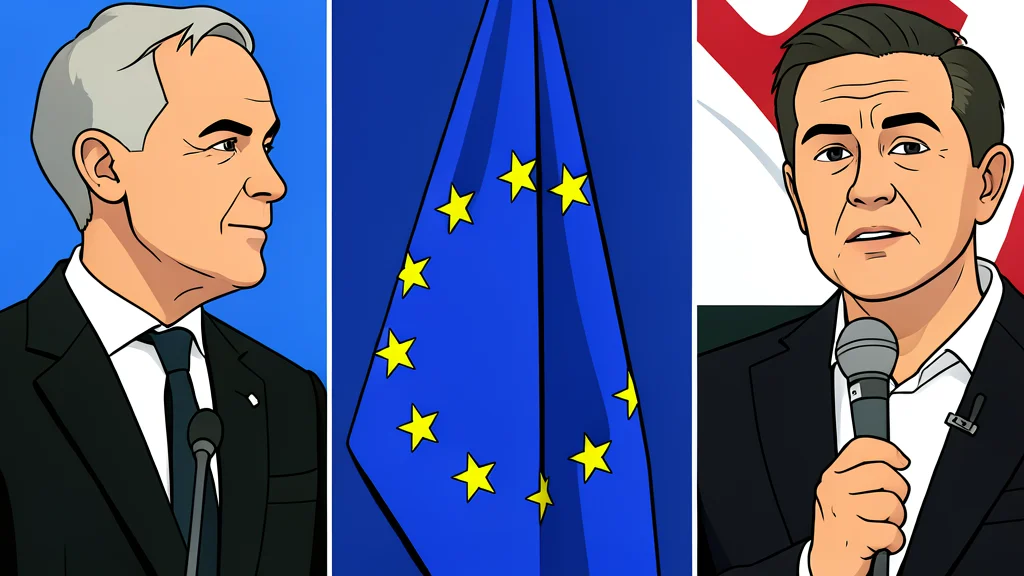
Prime Minister Mark Carney has moved to formalize a deeper alliance with the European Union, a step that has triggered immediate backlash from Washington and opposition leaders at home.
Speaking from Strasbourg, Prime Minister Mark Carney expressed support for Canada’s potential status as the first associate member of the European Union. According to the GN auto geopolitics/europe desk, this enhanced partnership is intended to be debated and voted upon by the Canadian Parliament. Carney emphasized that the move is grounded in shared democratic values and a commitment to the rule of law, rather than purely economic calculation. He noted that Canada and the EU are not fair-weather allies, suggesting a long-term strategic alignment that transcends short-term trade disputes.
The proposal has immediately drawn sharp criticism from both sides of the 49th parallel. President Donald Trump characterized the potential association as a hostile act in the context of ongoing trade tensions, warning of further tariff measures against Europe. Domestically, Conservative Leader Pierre Poilievre accused the Prime Minister of inconsistency, pointing to previous statements where Carney suggested Canada was not seeking full membership. This divergence in messaging has sparked a debate over the clarity of Canada’s foreign policy objectives and the reliability of its diplomatic commitments.
Diplomatic Rhetoric in Strasbourg
During his address to the European Parliament, Carney framed the relationship as a sharing of choice rather than coincidence. He highlighted common grounds in the defense of individual freedom and human dignity. The Prime Minister stated that a strong economy serves as a means to a just society, a sentiment that resonated with the assembly. Although the formal name of the agreement is still being finalized, officials have downplayed the characterization of this as full membership, focusing instead on the depth of regulatory and political cooperation.
Reactions from Washington and Ottawa
The United States has responded with alarm, viewing the deepening ties with Brussels as a potential threat to its leverage in trade negotiations. According to reports, the White House sees this association as an attempt to circumvent bilateral agreements, leading to threats of increased tariffs. In Ottawa, the opposition has seized on the discrepancy between Carney’s domestic and international statements. Poilievre argued that such contradictions undermine public trust in the government’s diplomatic strategy, questioning how Canadians can rely on a leader who appears to present different positions depending on his audience.
Path to Parliamentary Vote
The next step involves a formal debate in the House of Commons, where the details of the enhanced partnership will be scrutinized. Carney has indicated that this process will allow for a thorough examination of the benefits and implications for Canadian sovereignty and trade. Observers note that while the EU has been praised for enabling trade flows, critics also cite concerns over over-regulation. The final outcome will depend on whether the government can reconcile the strategic appeal of a European alliance with the economic pressures exerted by its largest trading partner.