Danish F-35s Land in Greenland for First NATO Arctic Sentry Mission
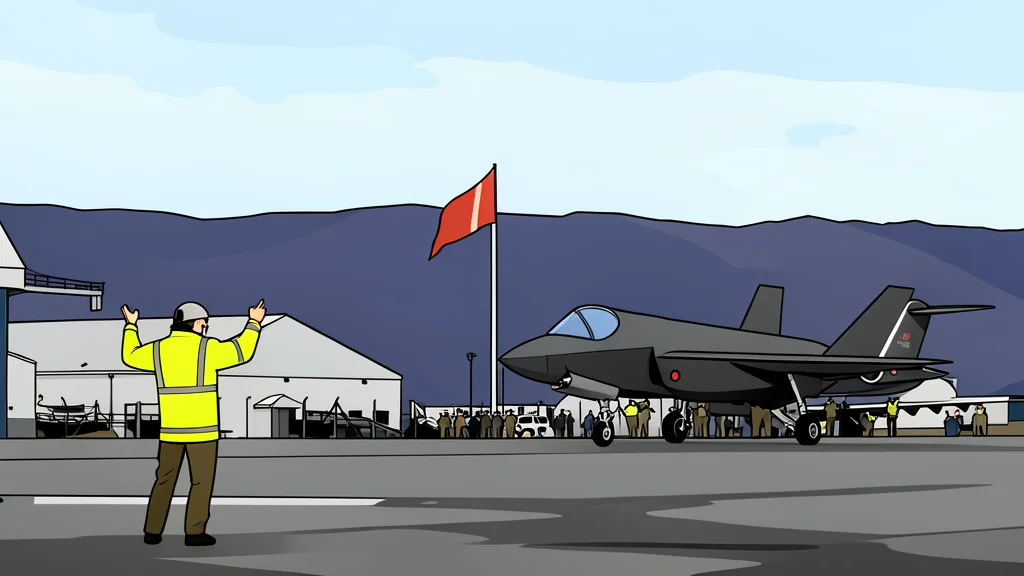
Royal Danish Air Force F-35As made history at Kangerlussuaq Airport, marking a shift in NATO's Arctic defense posture with multi-nation support.
Key points
- Danish F-35A fighters landed at Kangerlussuaq Airport in Greenland for the first time on September 16, 2026.
- The mission was supported by U.S. F-16s, Canadian CF-18s, and a French A330 Phénix for aerial refueling.
- This deployment is part of NATO's Arctic Sentry initiative, launched in February 2026 to strengthen regional deterrence.
Royal Danish Air Force F-35A Lightning II stealth fighters landed at Kangerlussuaq Airport in Greenland on September 16, 2026, marking the first time this fifth-generation aircraft has touched down on the island. According to Aviation News.eu, the event represents a significant milestone for NATO’s Arctic security framework, transitioning from surveillance passes to full operational deployments in the high north.
The deployment is a core component of the Arctic Sentry initiative, launched in February 2026 to strengthen regional deterrence and reinforce sovereignty across North Atlantic and Arctic corridors. By integrating advanced stealth capabilities with existing allied infrastructure, the move signals a deeper commitment to securing polar airspace amidst intensifying geopolitical competition.
Multi-Nation Support in the High North
The Danish jets operated alongside U.S. Air Force F-16s and Royal Canadian Air Force CF-18s, demonstrating seamless interoperability among allied forces. The mission was supported by a complex network of assets, including a French Air and Space Force A330 Phénix for aerial refueling and a NATO E-3 AWACS providing airborne early warning coverage overhead.
A Danish CL-604 Challenger aircraft also participated in dedicated search and rescue support, ensuring operational safety over the remote and challenging terrain. This coordinated effort highlights the logistical and tactical integration required to project air power effectively in the Arctic region.
Shift in Nordic Defense Posture
The deployment builds on earlier Danish Defence Command operations over Greenland, which previously focused on single-aircraft surveillance and joint training exercises. A Danish Defence Command representative stated that the coordinated deployment validates the alliance's capability to project air power anywhere in the Arctic region on short notice, reinforcing northern sovereignty.
This mission establishes a precedent for rapid fifth-generation air power projection in northern polar airspace. By combining advanced stealth technology with multi-nation tanker and radar support, allied air forces are positioning themselves to secure critical international routes and maintain operational readiness in the face of emerging challenges.
Future Implications for Arctic Security
As geopolitical competition intensifies across Arctic flight corridors, NATO continues to integrate advanced air defense infrastructure to safeguard these critical routes. The successful landing at Kangerlussuaq suggests that frequent joint Arctic maneuvers will likely become a standard component of future defense strategies to maintain deterrence and operational readiness.