UN General Assembly Opens Amid Active Conflicts and AI Concerns
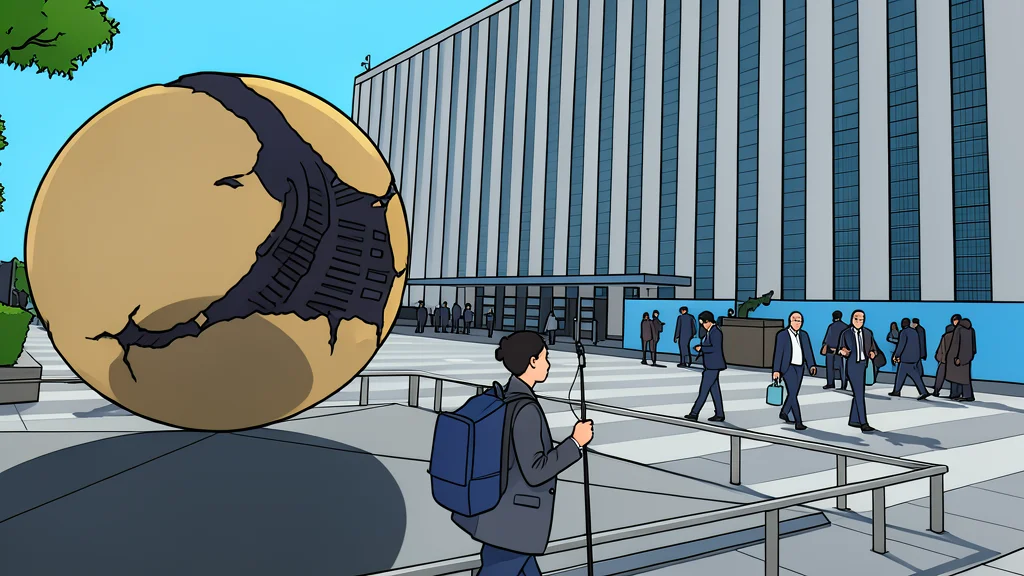
Leaders gather in New York to address global wars and technological risks, though several major powers have sent delegates instead of heads of state.
Key points
- The UN General Assembly convenes with speeches from leaders of the US, France, Ukraine, and Iran amidst ongoing global conflicts.
- China, Russia, and India are not sending their heads of state, with Beijing opting to send a vice president instead of President Xi.
- Debates center on Security Council reform and the succession of Secretary-General Antonio Guterres, whose term ends in December.
World leaders have convened in New York for the annual United Nations General Assembly, arriving against a backdrop of ongoing conflicts in the Middle East, Europe, and Africa. According to inkl.com, the gathering is framed by rising anxieties over artificial intelligence and intensifying economic pressures that are affecting hundreds of millions of people globally.
The session serves as a critical test for the 193-member body, which faces scrutiny over its ability to foster cooperation in an era marked by deep geopolitical divisions. While the organization remains the primary forum for multilateral dialogue, its efficacy in managing crises that transcend national borders is increasingly questioned by observers and member states alike.
Leadership dynamics shape agenda
The high-level week features speeches from numerous heads of state, including U.S. President Donald Trump and French President Emmanuel Macron, who are scheduled to address the assembly early in the week. Ukrainian President Volodymyr Zelenskyy and Iranian President Masoud Pezeshkian are also expected to speak, highlighting the direct confrontation between nations engaged in active hostilities.
Notable absences underscore the current diplomatic tensions. Chinese President Xi Jinping is reportedly skipping the event to meet with President Trump in Washington, sending a vice president in his place. Russian President Vladimir Putin and Indian Prime Minister Narendra Modi have also declined to attend, while Palestinian President Mahmoud Abbas will address the assembly by video due to visa restrictions imposed by the United States.
Institutional reform remains elusive
The future structure of the United Nations is a central topic of discussion, particularly regarding the Security Council. Member states have agreed to a reform package aimed at updating key institutions, yet implementation remains stalled. The current power dynamic, where five permanent members hold veto power, continues to reflect post-World War II realities rather than contemporary global influence.
Additional speculation surrounds the leadership of the organization, as Secretary-General Antonio Guterres’ second term concludes at the end of the year. With no clear successor emerging, the transition process adds another layer of uncertainty to the institution’s immediate future and its capacity to lead in a fragmented world.
Multilateralism faces renewed pressure
French Ambassador Jerome Bonnafont described the week as extremely critical for reaffirming commitment to dialogue over confrontation. He emphasized that the United Nations remains the essential gathering place for nations to pursue cooperation, particularly as polarization threatens to erode the foundations of international stability.
Despite recent setbacks in maintaining peace and security, the assembly continues to serve as a vital platform for diplomatic engagement. The coming days will reveal whether leaders can find common ground on pressing issues, from climate change to economic shocks, or if the division among major powers will further isolate the organization from its core mandate.