NATO Chiefs Signal Shift Toward Industrial Scale in Defense
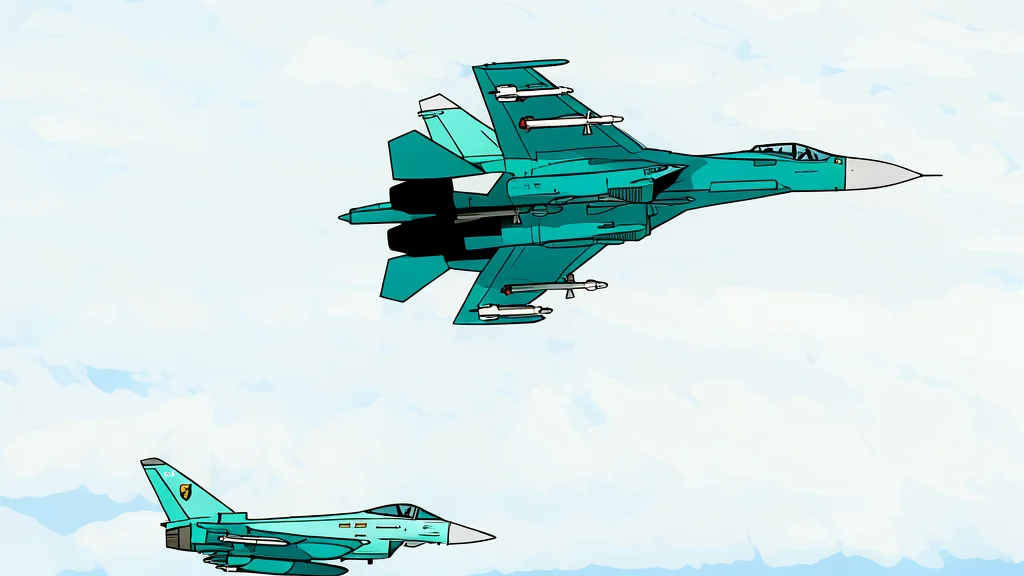
NATO's Military Committee has issued a direct call to the defense industry, prioritizing speed and predictable orders over short-term political commitments.
NATO's senior military leaders have moved beyond rhetorical commitments to issue a practical directive for the defense sector: the alliance is prepared to purchase equipment at a scale that requires immediate industrial response. During the annual Military Committee Conference held in Copenhagen on September 18 and 19, the chiefs of defense of the 32 member states outlined a strategy focused on closing the gap between political announcements and operational readiness. According to GN geopolitics/nato, the message was explicitly aimed at manufacturers, urging them to prioritize speed, scale, and predictability in their production cycles.
This shift in tone marks a significant departure from the past three decades, during which the defense industry was often characterized by lean years and fluctuating demand. Admiral Giuseppe Cavo Dragone, Chair of the NATO Military Committee, framed the agenda around the challenge of translating the spending targets established at the July Ankara Summit into tangible capabilities on the ground. The focus is no longer just on committing budgets, but on ensuring that those funds result in aircraft, missiles, and trained crews within a realistic timeframe.
Bridging the Gap Between Promise and Delivery
The core of the new directive addresses a fundamental inefficiency in current defense procurement. While announcing a spending target is a political act that can be executed quickly, converting that capital into operational hardware is a long-term industrial process. It requires an industrial base with spare capacity and a customer willing to provide long-term order books that justify factory expansions. The conference emphasized that the alliance is now ready to provide that predictability, moving away from short-term contracts toward sustained demand that allows manufacturers to plan for growth.
This approach aligns with recent initiatives such as the Front Door for Industry and the Strategy for Industry-NATO Cooperation. These measures aim to remove barriers to defense trade between allies and expand manufacturing capacity across the region. By stabilizing the demand side, NATO hopes to alleviate the uncertainty that has historically hindered rapid expansion in critical sectors. The goal is to create a stable environment where industrial expansion is a calculated risk rather than a speculative bet.
Acute Challenges in Air Domain Capabilities
The urgency of this industrial push is particularly visible in the air domain, where lead times for combat aircraft and air defense interceptors are currently the longest. As European nations increase their demand for air defense systems, production lines that were sized for a quieter geopolitical era are now operating at maximum capacity. The demand for interceptors has surged, yet the manufacturing infrastructure was not designed to handle such volume or the rapid deployment timelines now required for collective deterrence.
Admiral Cavo Dragone highlighted the recent incursions into European airspace, including incidents in the Baltic and Luxembourg, as evidence of the immediate threat environment. He commended allied forces for their swift and professional responses to these challenges, noting that the current capability gap must be addressed to maintain deterrence. The call for predictable orders is thus not merely an economic preference but a strategic necessity to ensure that air power remains a reliable pillar of the alliance's defense posture.
German Leadership and Strategic Shift
The conference also marked a significant transition in NATO's military leadership, with the alliance electing General Carsten Breuer, Germany's Chief of Defence, as the next Chair of the Military Committee. He will assume the role in summer 2027 for a three-year mandate. This appointment underscores the shifting center of gravity within the alliance, as Germany takes on an increasingly central role in forward presence and border infrastructure development in Eastern Europe.
Germany's active involvement in reinforcing capabilities in Lithuania and Poland, along with recent exercises in the Baltic Sea, reflects a broader commitment to physical defense infrastructure. Under General Breuer's future leadership, the emphasis on industrial scale and rapid capability delivery is expected to remain a priority. The next plenary session in Brussels in January 2027 will likely test the progress made in aligning political will with industrial reality, setting the stage for the alliance's defense posture in the late 2020s.
Allies prioritize long-term industrial commitments
The alliance is shifting its focus from political rhetoric to tangible procurement, explicitly asking manufacturers to prioritize rapid delivery and consistent order volumes. This approach is designed to move beyond short-term political cycles and establish a stable foundation for production.
By emphasizing predictable demand over fleeting promises, NATO aims to provide the industrial certainty required for factories to justify significant capacity expansion. This strategy seeks to bridge the gap between budget commitments and the actual arrival of equipment on the flight line.