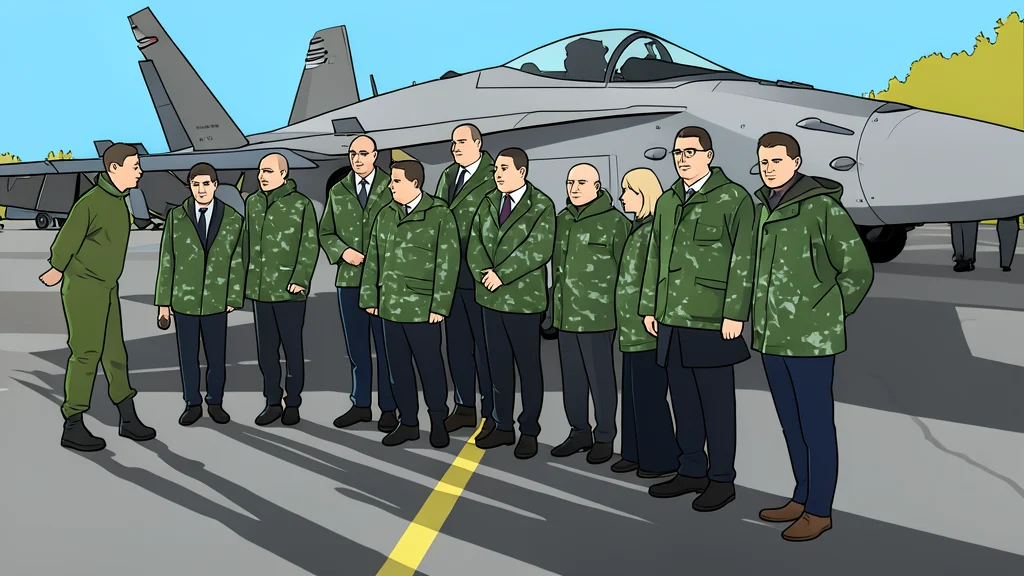
Polish FM Outlines Rapid NATO Response to Russian Aggression

Warsaw suggests the alliance could disable key Russian infrastructure quickly, citing air superiority and lessons from the ongoing conflict in Ukraine.
Polish Foreign Minister Radek Sikorski has asserted that NATO possesses the capability to significantly degrade Russia’s military and economic infrastructure within a short timeframe. Speaking in a candid setting, the minister argued that the alliance retains a decisive advantage in air power, a position he maintained holds true even in scenarios where United States forces are not directly involved in the conflict.
The remarks, reported by GN geopolitics/nato, frame a hypothetical response to a potential Russian attack on the alliance. Sikorski emphasized that while the assessment is not a formal operational plan, it reflects a strategic confidence in the collective defense posture. He suggested that the disparity in long-range precision capabilities between the alliance and Russia is substantial enough to allow for rapid, decisive action against high-value targets.
Air superiority and rapid response
According to Sikorski, NATO commands approximately 2,500 aircraft, a fleet size he described as overwhelming compared to Russian air assets. He noted that this numerical and technological edge allows the alliance to project power deep into enemy territory. The minister implied that such a force could neutralize Russian air defenses and strike critical infrastructure with a speed and intensity that far exceeds what is currently being observed on the Ukrainian front line.
Benchmarking against Ukrainian operations
Sikorski drew a direct comparison between the capabilities of the alliance and the recent campaign by Ukraine against Russian energy infrastructure. He pointed out that Ukrainian forces have managed to disrupt a significant portion of Russia’s refining capacity over the past six months using limited resources. By extrapolating this success, he argued that NATO could achieve similar or greater results in a fraction of the time, potentially halting the remaining operational capacity of Russia’s fuel-processing sector within six weeks.
Hypothetical context and caution
Analysts note that Sikorski’s comments serve as a deterrent signal rather than a concrete military order. The minister did not provide a detailed breakdown of specific weapon systems or operational timelines, acknowledging that his estimates were based on a comparison of relative strengths. The reference to 'taking off our gloves' suggests a shift from defensive posturing to active, deep-strike operations, a concept that remains largely theoretical in the context of current NATO-Russia relations.
The statement underscores the ongoing debate within the alliance regarding the balance between deterrence and escalation. While the emphasis on air power highlights a core strength of Western militaries, the practical application of such rapid strikes against Russian territory would carry significant geopolitical risks. The focus remains on maintaining a credible defense posture that discourages aggression without provoking a wider conflict.