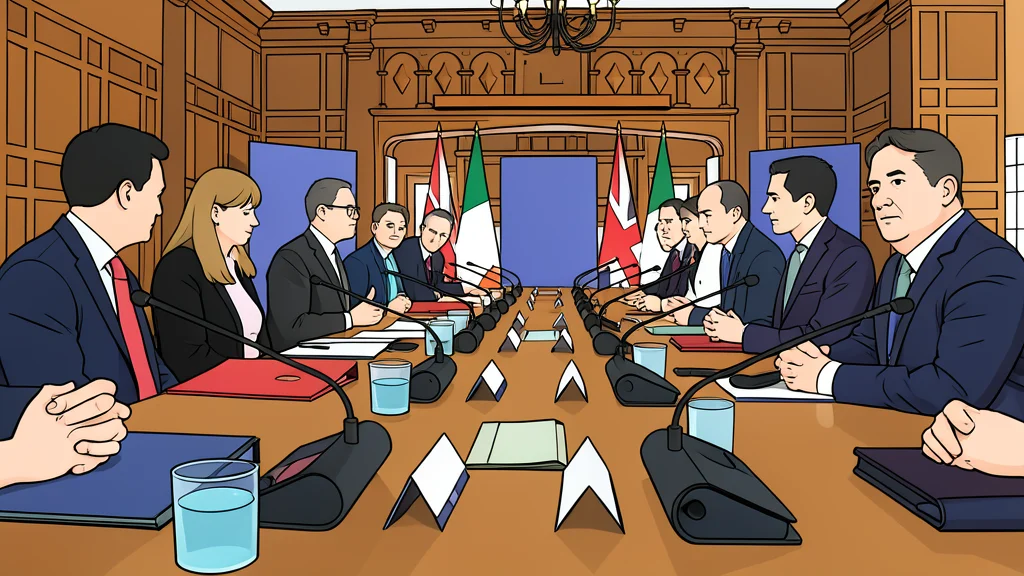
Russia’s Strategy Targets NATO’s Decision-Making Ambiguity
Moscow may seek to exploit the inherent ambiguities in collective defense commitments rather than launching a direct conventional invasion, creating a strategic dilemma for alliance unity.
The current trajectory of the conflict in Ukraine suggests a shifting dynamic in Russian strategic calculation. As military objectives on the ground become increasingly difficult to secure, there is a growing indication that the Kremlin may be exploring alternative pathways to achieve political victory. This does not necessarily manifest as a traditional escalation of kinetic warfare, but rather as a deliberate effort to test the resilience and cohesion of the Western security architecture. The core of this strategy appears to be the exploitation of procedural and political ambiguities within NATO’s collective defense mechanisms, rather than a direct confrontation with its combined military might.
According to analysis by GN geopolitics/nato, the paradox lies in the fact that a state struggling militarily might still seek to win strategically by demonstrating that its adversaries’ institutions are dysfunctional. The North Atlantic Treaty Alliance, specifically through Article 5, represents the most visible and vulnerable point in this system. While the treaty obligates members to assist an attacked ally, the precise threshold for what constitutes an attack requiring collective response remains deliberately undefined. This ambiguity, once a source of deterrence, now offers a potential opening for an adversary to provoke incidents that are severe enough to demand a response, yet ambiguous enough to allow for hesitation and division among member states.
The Deterrence Gap in Collective Defense
Historically, the uncertainty surrounding Article 5 prevented adversaries from knowing exactly where red lines were drawn. Today, that same uncertainty creates a strategic opportunity. A direct invasion of a NATO member state, such as Poland or the Baltics, would likely trigger an unequivocal and unified response, leaving little room for political debate about attribution or proportionality. Such a scenario would force NATO into a clear-cut defensive posture, which is precisely the outcome Moscow seeks to avoid. Instead, the more plausible risk involves grey-zone activities that fall between espionage and conventional warfare.
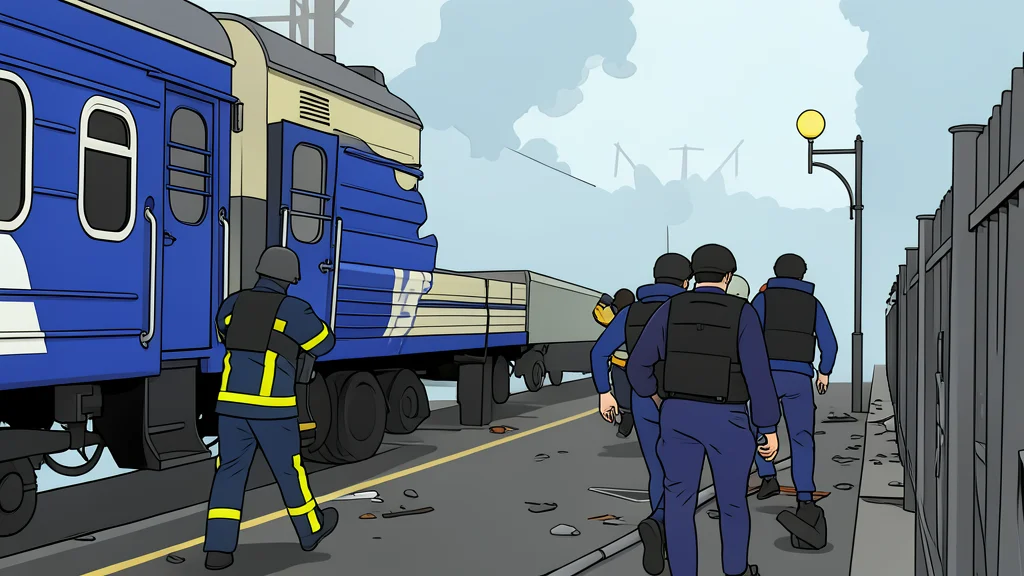
These activities could include cyberattacks on critical infrastructure, sabotage of logistics networks supplying Ukraine, or the use of drones in ways that violate airspace without constituting a full-scale invasion. European governments have expressed growing concern over such operations, which are often difficult to attribute with the clarity required for a unified political response. The strategic goal in these scenarios is not military conquest, but the erosion of trust and the demonstration that NATO’s promise of collective action is conditional and fragile.
Escalation Through Ambiguity and Proxy Networks
The potential for escalation lies in the space where an incident is serious enough to threaten national security but ambiguous enough that some governments may hesitate to commit to collective defense. This hesitation could be manipulated to create a perception of weakness or disunity within the alliance. By using proxies or deniable means, an adversary can maintain plausible deniability while still achieving disruptive effects. This approach allows for a continuous low-level pressure that tests the political will of alliance members without triggering the automatic military response mechanisms of a conventional war.
The focus is shifting from questions of military capability to questions of political cohesion. The ability of NATO to respond effectively depends not just on its hardware, but on the speed and unanimity of its decision-making process. If an incident creates a situation where response is politically costly or legally complex, the alliance risks being paralyzed. This dynamic turns the internal political processes of member states into a primary battlefield, where the goal is to fracture consensus rather than to defeat an army.
Monitoring Indicators of Strategic Escalation
Looking forward, the critical indicators to watch are not just troop movements or missile deployments, but the nature of incidents affecting infrastructure and digital systems. Increased frequency of cyberattacks on energy grids, sabotage of rail lines, or unexplained failures in telecommunications may signal a deliberate strategy to test the alliance’s response thresholds. The key question for policymakers and observers is whether NATO can develop a more consistent and rapid framework for defining and responding to these hybrid threats, thereby closing the gap that could be exploited for strategic advantage.