Sweden Election Remains Uncertain as Left Bloc Holds Narrow Lead
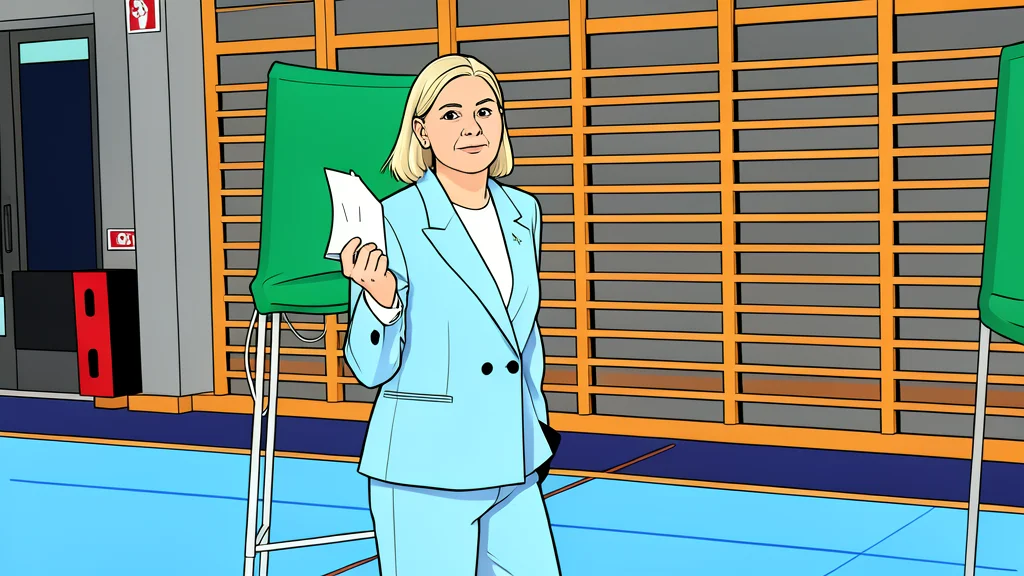
With the majority of votes counted, the left-wing opposition claims a tight advantage, but both blocs warn the final outcome remains undetermined.
Sweden’s general election remained too close to call on Sunday night, even after more than 86 percent of ballots had been tallied. Former Prime Minister Magdalena Andersson, leading the left-wing opposition coalition, stated that the race is extremely tight. According to reports from Deutsche Welle, Andersson told supporters that while the Social Democrats appear to be in the lead, the final result is not yet confirmed. She emphasized that her party stands ready to assume responsibility for the outcome should the lead hold.
Incumbent Prime Minister Ulf Kristersson, who leads the right-wing alliance, acknowledged the uncertainty. He indicated that it is still unclear which bloc will form the next government. Kristersson said he would engage with other party leaders to discuss potential coalition options, stressing that the governing mandate for the coming years remains an open question. Both sides are waiting for the final count to determine which policy platform will guide the country.
Narrowing Gap in Pre-Poll Predictions
Opinion polls leading up to the vote had initially projected a more comfortable margin for the left-wing alliance. However, that lead narrowed significantly in the final days before the election. Andersson had previously warned that the contest would be close, framing the choice for voters as a decision between a government dominated by the far-right Sweden Democrats or one led by her own administration. The shift in polling data suggests a highly contested electorate.
The Social Democrats, who have governed Sweden for much of the last century, campaign on boosting the welfare state and addressing rising living costs. In contrast, Kristersson’s campaign focused on its record in reducing organized crime and tightening immigration controls. Supporters of the right argue that a victory would validate this approach, while critics contend that the agenda undermines civil liberties and targets immigrant communities unfairly.
Potential First Far-Right Government Role
A decisive shift in Sweden’s political landscape could occur if the right-wing alliance secures a mandate. Unlike in Germany, where parties maintain a firewall against the far-right, Kristersson has pledged key ministerial positions to the Sweden Democrats. Jimmie Akesson, the leader of the Sweden Democrats, claimed victory at a campaign rally in Stockholm, stating that the party had already won. He expressed confidence that the country would become safer and more aligned with nationalist sentiments.
If the results confirm a win for the right, Akesson is expected to take on the role of migration minister. This would mark the first time the far-right party enters a Swedish government since entering parliament in 2010. The prospect of such a coalition has raised significant political stakes, as it would represent a fundamental change in the country's traditional governance structures.
High Turnout Amidst Uncertainty
Approximately eight million citizens are eligible to vote in the country of 10.6 million people. Turnout in Sweden regularly exceeds 80 percent, reflecting a high level of civic engagement. About half of the votes were cast in advance, which may have contributed to the early visibility of the trend. The final count, expected to conclude in the coming hours, will determine whether the left-wing bloc’s narrow lead translates into a new government.