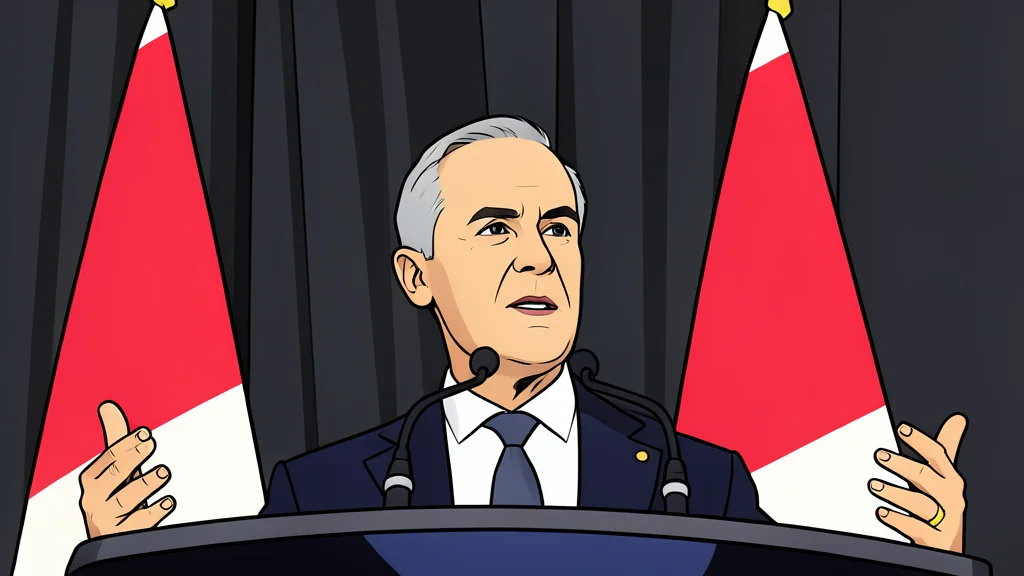
Swedish Opposition Bloc Edges Ahead in Tight Vote Count

Early projections suggest a narrow victory for the centre-left coalition, setting the stage for a potential government shift in Stockholm.
Voting in Sweden’s general election concluded on Sunday evening, with early data indicating that the centre-left opposition bloc is poised to secure a slim majority in the 349-seat parliament. According to the Swedish Election Authority, the opposition is projected to win 176 seats, slightly ahead of the ruling right-wing coalition, which is expected to take 173 seats. This margin places the outcome in a delicate balance, where the final count will determine whether the country sees a change in leadership or a continuation of the current government structure.
Social Democratic Party leader Magdalena Andersson addressed supporters on Monday, stating that if the early results hold, Sweden will form a new government. Meanwhile, Prime Minister Ulf Kristersson, who leads the incumbent coalition, acknowledged the uncertainty of the final tally. He indicated that he would reach out to other party leaders to gauge the political landscape, emphasizing that it remains an open question who will govern the country in the coming years. The atmosphere in Stockholm is one of cautious anticipation as officials continue to process votes from thousands of election districts.
Narrow margin defines the outcome
The race has tightened significantly in the final weeks of the campaign, transforming what was once viewed as a predictable contest into a closely fought battle. Earlier in the year, polls suggested the opposition had a substantial lead of around ten percentage points, but that advantage has shrunk to just two or three points. According to an exit poll by public broadcaster SVT, the centre-left bloc is projected to receive 51.3 percent of the vote, compared to 46.8 percent for the right-wing alliance. A separate survey by TV4 also placed the opposition in the lead, reinforcing the narrative of a marginal victory.
Historical precedent serves as a reminder of the volatility in Swedish politics. In 2022, exit polls initially favored the centre-left bloc led by Andersson, yet the right-wing coalition ultimately prevailed. This discrepancy underscores the importance of waiting for the official count to conclude. As the Swedish Election Authority continues to aggregate results from over 6,000 districts, the focus remains on whether the current lead will materialize into a firm parliamentary majority or if the ruling coalition can claw back the necessary seats to retain power.
European context shapes political stakes
The outcome in Sweden carries broader implications for the political balance across Europe, where right-wing and far-right parties have been gaining momentum in recent elections. According to GN geopolitics/politics (en-US), a victory for the centre-left would offer respite to left-leaning parties facing headwinds on the continent. This comes shortly after the Alternative for Germany (AfD) achieved significant gains in a key state election, bringing a far-right party closer to power at the regional level for the first time since World War II. Consequently, the Swedish result is being watched closely as a potential counter-narrative to the rising tide of right-wing populism.
Conversely, if the early projections prove inaccurate, the election could lead to a historic shift involving the Sweden Democrats. This party, which has roots in the neo-Nazi movement, has not held cabinet positions but has been a crucial parliamentary supporter for the current minority government. Prime Minister Kristersson has previously indicated that his conservative Moderates would be open to including the Sweden Democrats in a governing coalition if the right secures a majority. Such a development would mark the first time the party holds formal executive power, a scenario that many political analysts consider unlikely given the current polling data.
Uncertainty lingers over final count
As the counting continues, the political landscape remains fluid. The Sweden Democrats, who won 20.5 percent of the vote in the previous election, are currently positioned as a pivotal force regardless of which bloc takes power. Their influence may determine the stability of any new government, whether it is led by Andersson or Kristersson. The next few days will be critical as parties engage in coalition-building discussions, seeking to secure the necessary support to form a stable administration. Observers note that the complexity of Sweden’s multi-party system means that the final government composition may not reflect a simple binary choice between left and right.
The coming weeks will reveal whether the centre-left can translate its narrow lead into a durable government or if the right-wing coalition can regroup. The focus will now shift to the specifics of coalition negotiations, where policy compromises and power-sharing agreements will be hammered out. For now, the Swedish public awaits the definitive result, knowing that the final seat count could reshape the country’s political direction and its role in European affairs. The situation remains one of high tension and high stakes, with both sides preparing for the possibility of a prolonged period of uncertainty before a new government is sworn in.