India-China Relations Face Structural Challenges Despite Summitry
Recent high-level meetings in New Delhi and elsewhere have signaled a diplomatic thaw between India and China, yet underlying tensions persist. The pattern suggests that episodic summits may not be sufficient to fundamentally reset bilateral dynamics.
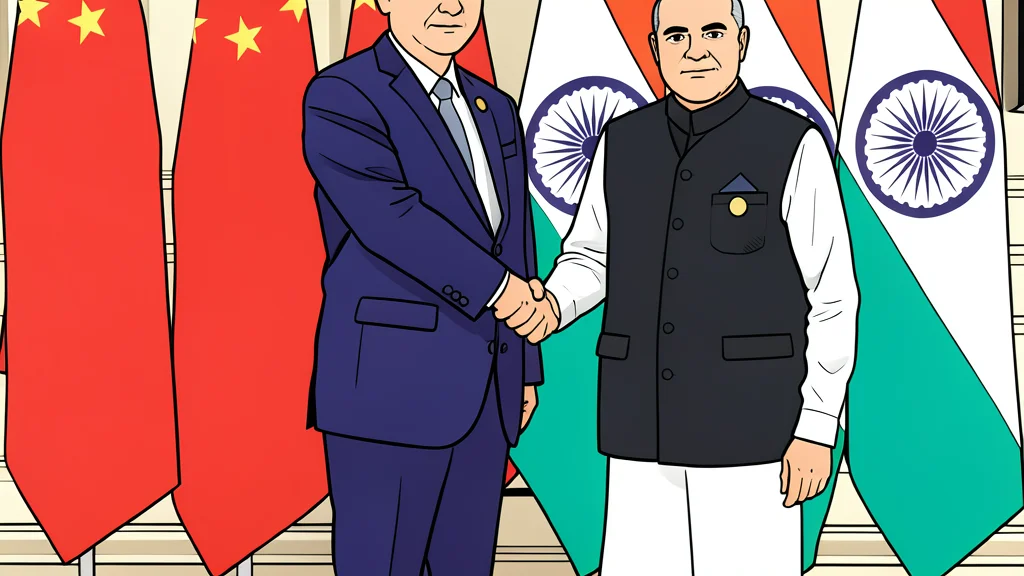
Chinese President Xi Jinping and Indian Prime Minister Narendra Modi recently met in New Delhi on the sidelines of the 18th BRICS Summit. This marked Xi’s first visit to India in nearly seven years and his third encounter with Modi in under two years. Both sides released statements emphasizing that relations, which had deteriorated significantly after the 2020 Galwan clashes, are currently on an upward trajectory. The Chinese delegation noted that the progress achieved has not come easily and requires careful preservation, while the Indian side welcomed the steady improvement in bilateral ties since their last meeting in Tianjin.
Over the past two years, there has been measurable movement in several key areas. Diplomatic talks on boundary delimitation have gradually resumed, and people-to-people exchanges have expanded with the resumption of direct flights. Economically, New Delhi has eased restrictions on certain Chinese equipment imports, while Beijing has relaxed controls on supplying fertilizers and rare earth minerals. Notably, many of these breakthroughs, particularly those concerning contentious border issues, were achieved in the immediate lead-up to major multilateral summits, suggesting a strategic alignment of diplomatic milestones with broader international forums.
Diplomatic Timing and Border Disputes
A recurring pattern emerges when examining the timeline of recent agreements. In September 2022, India and China agreed to disengage from the Gogra-Hot Springs area in eastern Ladakh just before the Shanghai Cooperation Organization Summit. Similarly, a landmark agreement on patrolling arrangements at Depsang and Demchok was reached in October 2024, shortly before the BRICS Summit in Kazan. More recently, senior officials met in Beijing just days before the 2026 SCO summit, announcing new institutional arrangements for border management, including additional hotlines and meeting points for army commanders. These coordinated diplomatic moves suggest that summitry serves as a catalyst for resolving immediate friction points.
However, the diplomatic warmth has not translated into a reduction of military posture along the frontier. Heavy deployments of troops from both nations continue, accompanied by increased infrastructure building near disputed sites. According to reports from Al Jazeera, China has repeatedly denied Indian army access to key patrolling points and has encroached on land in Arunachal Pradesh. This discrepancy between high-level political statements and ground-level realities indicates that mutual mistrust remains entrenched, despite the official narrative of de-escalation.
Economic and Regulatory Frictions Persist
While political leaders have framed India and China as development partners rather than rivals, economic cooperation remains hampered by regulatory hurdles. New Delhi has rejected the integration of China-based digital payment platforms like Alipay+ for cross-border transactions, citing national security concerns. Conversely, according to a Reuters report, Chinese companies face increased scrutiny from Beijing regarding investments in India, particularly in sectors involving sophisticated manufacturing and high-end technology. These bilateral regulatory barriers create operational challenges for businesses and limit the potential for deeper economic integration.
Assessing the Limits of Summitry
The material analyzed by GN auto geopolitics/asia-pacific: India China border suggests that orchestrated diplomatic thaws before summits may be more of a tactical maneuver than a strategic shift. While these events provide opportunities for concrete agreements and public displays of cooperation, they do not appear to address the structural issues of military deployment, economic regulation, and deep-seated mistrust. The forward question remains whether sustained, off-cycle engagement is necessary to move beyond episodic improvements toward a more stable bilateral relationship.