Assessing the Shift in U.S.-China Strategic Balance
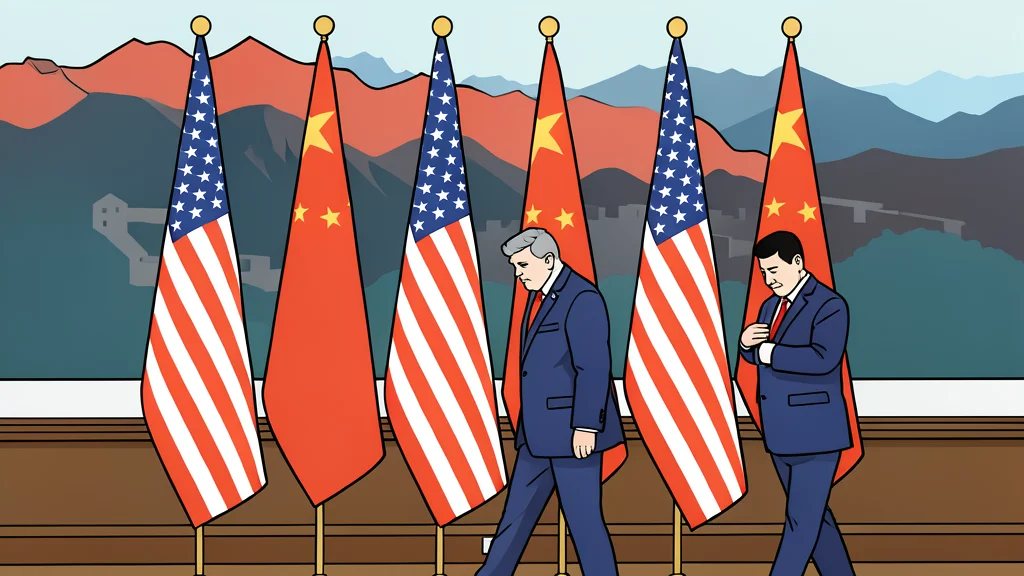
While recent diplomatic focus has been on Iran, analysts argue that the gradual erosion of American leverage in Asia represents a more profound strategic setback for Washington.
Recent geopolitical discourse has largely centered on the United States' relationship with Iran, viewing it as a pivotal moment that exposed the limits of American influence and complicated domestic political dynamics. However, a broader assessment of Washington's foreign policy suggests that the more consequential shift may be occurring on the Pacific front. According to a report from GN auto geopolitics/global: sanctions policy, the period since the current administration's inception has seen Beijing gain ground on nearly every strategic front, from economic resilience to technological parity.
This shift is not merely a matter of isolated incidents but reflects a structural change in the global balance of power. While the Iran conflict was a visible crisis, the developments regarding China have been more diffuse and long-term. The report notes that Beijing has successfully weathered trade pressures, narrowed the technology gap in key sectors like artificial intelligence, and strengthened its influence among global partners, all while the U.S. has struggled to articulate a consistent strategic objective.
Strategic Objectives and Policy Clarity
A significant factor in this evolving dynamic is the lack of a clearly defined hierarchy of objectives in U.S. policy toward China. Unlike the more immediate, crisis-driven nature of the Iran situation, the challenges posed by Beijing are structural and require long-term strategic management. The report highlights that recent national security documents have primarily framed the China issue in economic terms, despite broader military and technological concerns. This ambiguity has made it difficult for policymakers to measure success or failure, allowing incremental shifts in favor of Beijing to accumulate without triggering a unified strategic response.
Economic and Technological Competition
In the economic sphere, the intended outcomes of trade policies have not materialized as projected. The trade deficit remains a persistent challenge, and U.S. vulnerabilities in critical supply chains have not been significantly reduced. Furthermore, the race in advanced technologies, particularly in artificial intelligence, has seen China close the gap with the United States. These developments suggest that while the U.S. has applied significant pressure, Beijing has demonstrated resilience and the ability to adapt, maintaining its position as a formidable competitor in the global economy.
The geopolitical implications extend beyond bilateral trade. Beijing has deepened ties with Russia and various nations in the Global South, thereby complicating the international order. This expansion of influence undermines the Western-led institutions that have shaped global governance since World War II. The report suggests that these actions are part of a broader strategy to constrain American power and accelerate a shift in the global hierarchy, a trend that has been facilitated by the current administration's approach.
Future Diplomatic Engagements
As diplomatic engagements proceed, such as upcoming summits, the focus will remain on managing tensions while addressing the underlying structural shifts. The coming months will be critical in determining whether Washington can reassert its strategic clarity and adapt its policies to the new reality of a more balanced, multipolar world. Observers will be watching for signs of a renewed, coherent strategy that addresses not just immediate economic concerns, but the long-term competition for global influence.