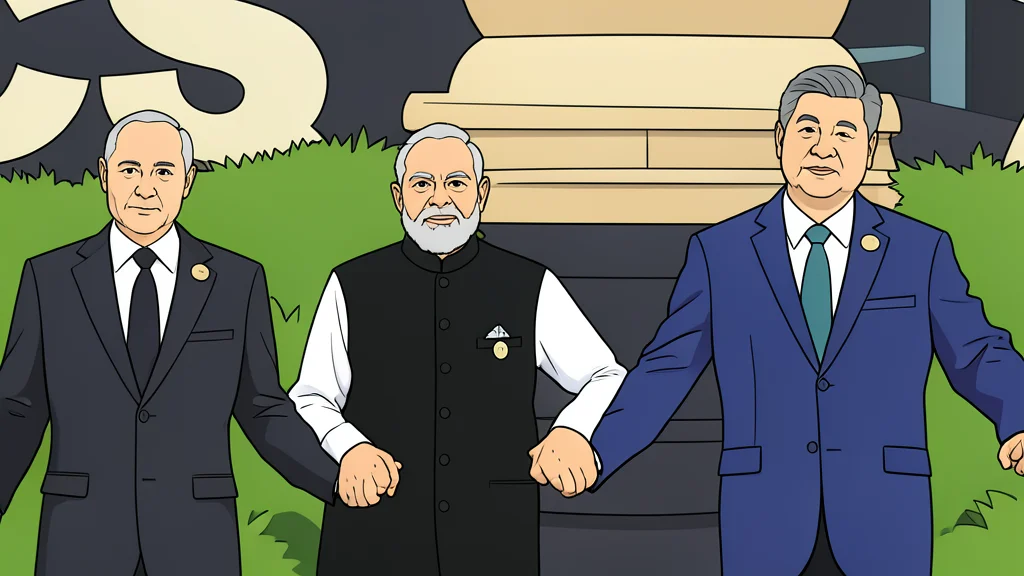
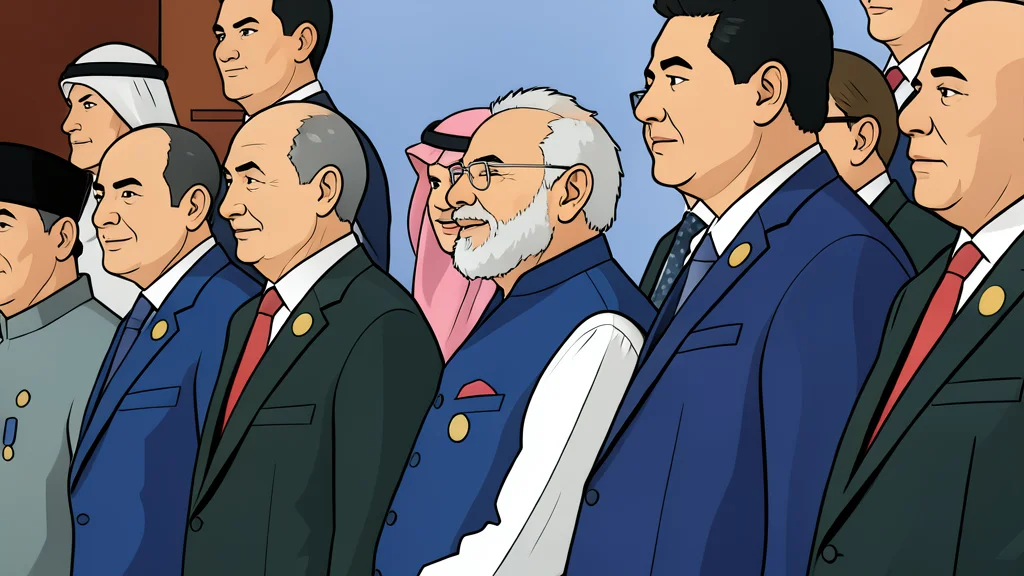
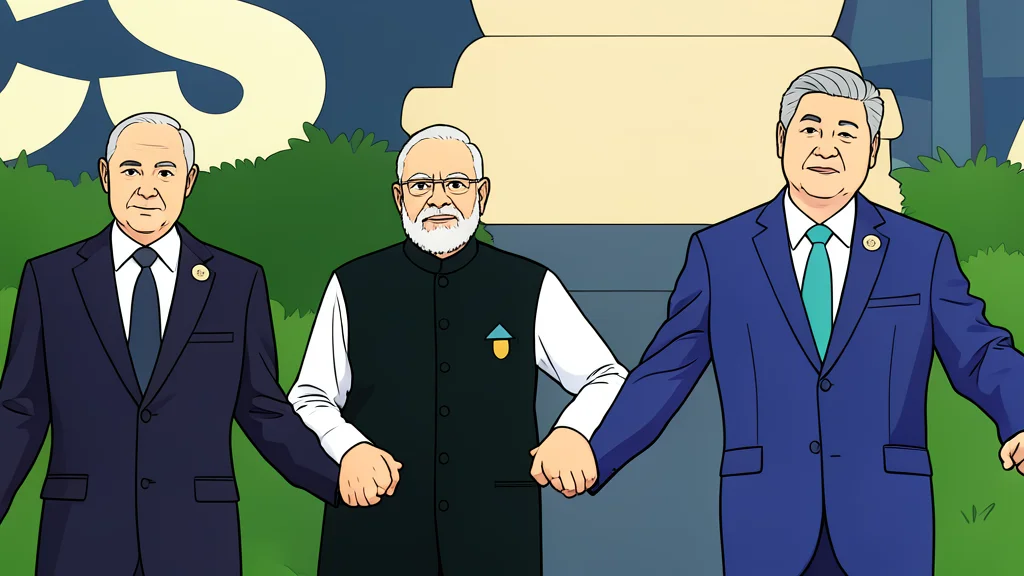
BRICS Leaders Adopt Generalized Declaration Amid Middle East Tensions
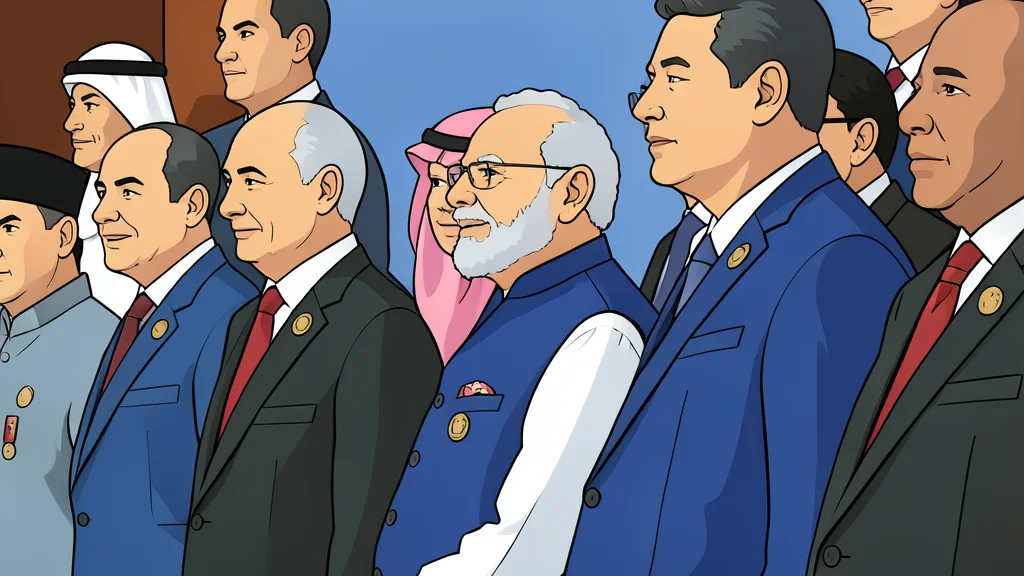
The 11-member bloc reached a unanimous accord in New Delhi, utilizing broad language to navigate deep divisions over regional conflicts and trade disputes.
Leaders of the BRICS grouping unanimously adopted a joint declaration in New Delhi, marking a significant diplomatic effort to maintain unity despite sharp internal disagreements. The bloc, which comprises roughly 40 percent of global GDP and nearly half the world's population, issued a statement that called for restraint in the Middle East while carefully avoiding direct condemnation of specific actors in the ongoing US-Israeli conflict with Iran. This approach reflects a strategic choice to prioritize consensus over precise attribution, a tactic observed by analysts covering the GN auto geopolitics/global: international summit.
Indian Prime Minister Narendra Modi described the moment as a "coming of age" for the group, urging the Global South to transition from passive rule-acceptors to active rule-shapers in global governance. While the declaration criticizes unilateral tariffs and calls for a political settlement in the Middle East, it notably omits the names of the United States, Israel, and Iran. This generalized language was viewed by former Indian Foreign Secretary Nirupama Menon Rao as a necessary mechanism to preserve consensus among members with diverging interests, such as Iran and the United Arab Emirates.
Navigating Internal Strategic Divisions
The summit in New Delhi served as a critical test for the expanded BRICS bloc, which now includes nations with conflicting regional interests. In May, foreign ministers failed to reach a joint statement on the Middle East conflict due to these differences. This time, however, the group managed to adopt a unified position by using carefully generalized language. According to reporting from the gathering, this method allowed members like India and Russia to support broader calls for stability without compromising their bilateral relationships or explicit stances on the war.
Chinese President Xi Jinping stated that the conflict does not serve the common interests of the international community, calling for a comprehensive ceasefire. Meanwhile, the declaration criticized global trade wars without naming the United States, even though several BRICS members, including India and China, have been targeted by recent tariff measures. This ambiguity allows the bloc to project a united front while leaving room for individual members to navigate their complex bilateral trade relations with Washington.
Redefining Global Economic Influence
Founded in 2006 by Brazil, Russia, India, and China, BRICS has since expanded to include South Africa, Egypt, Ethiopia, Iran, the United Arab Emirates, Saudi Arabia, and Indonesia. The group has long sought to increase the influence of developing economies in institutions traditionally dominated by Western powers, pushing for reforms in the World Bank, the International Monetary Fund, and the World Trade Organization. Modi emphasized that the bloc is not an anti-Western project but rather a platform for the Global South to exert greater influence in shaping global governance structures.
By adopting a declaration that balances calls for restraint with broad economic principles, the BRICS nations aim to present themselves as a stabilizing force in a period of global upheaval. The group’s ability to maintain unity despite significant geopolitical and economic divergences suggests a maturing diplomatic framework. However, the reliance on generalized language also highlights the limits of the bloc's ability to issue specific, actionable directives on contentious issues, leaving the true depth of their cooperation open to interpretation.
Future Implications for Multilateralism
The outcome of the New Delhi summit sets a precedent for how BRICS may handle future conflicts and trade disputes. The focus on consensus through ambiguity may become a standard diplomatic tool for the group as it navigates an increasingly fragmented international order. Observers will watch whether this approach allows the bloc to maintain its internal cohesion or if it leads to further fragmentation as member states face differing pressures from external powers.
As the group looks toward its next summit, the key question remains whether BRICS can evolve from a loose coalition into a more effective multilateral actor. The success of the New Delhi Declaration in preserving unity despite sharp disagreements offers a tentative answer, suggesting that the bloc may continue to prioritize broad principles of cooperation over specific interventions in regional conflicts. This strategy will likely be tested in the coming months as global tensions remain high and economic uncertainties persist.