Finland Urges Multilateralism as Global Conflicts Hit Record High

Finnish President Alexander Stubb warned the UN that active armed conflicts have reached post-Cold War levels, urging nations to defend international rules.
Key points
- Finnish President Alexander Stubb stated at the UN that 65 active armed conflicts exist, the highest number since the Cold War.
- Stubb urged nations to defend multilateralism and international rules to prevent competition from escalating into broader conflict.
- The address highlighted humanitarian crises in Sudan, Haiti, and Gaza, calling for increased global cooperation and sustainable development.
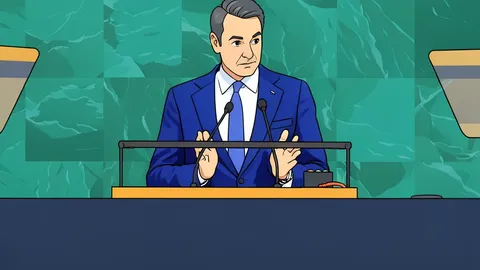
Finnish President Alexander Stubb addressed the United Nations General Assembly in New York on Tuesday, expressing deep concern over the escalating number of armed conflicts globally. He urged the international community to remain steadfast defenders of multilateralism, arguing that cooperation is currently undermined by a pervasive lack of trust and a disregard for established rules.
According to reports cited by Stubb, there are currently 65 active armed conflicts, a figure that surpasses any point since the end of the Cold War. The Finnish leader warned that the world faces a significant risk of competition that challenges the foundational rules of the international order, potentially escalating into broader conflict if left unchecked.
Defending the International Order
Stubb emphasized that upholding basic rules, values, and institutions is the best option to prevent competition from deteriorating into violence. He stated that the world needs a robust multilateral framework to address a shared agenda that includes conflict resolution, climate change, sustainable development, and the regulation of artificial intelligence.
The president noted that the current trajectory seems to be moving toward a non-cooperative and multipolar world order. He argued that nations must channel their efforts into preventing conflicts and upholding human rights, rather than growing indifferent to the increasing instability observed across various regions.
Crisis Zones Cited in Address
In his speech, Stubb specifically highlighted Sudan, describing the nation as devastated by war, and Haiti, which is struggling with both armed violence and extreme weather events. He also pointed to Gaza, noting that it remains one of the world’s most acute humanitarian emergencies, characterized by mass displacement, infrastructure destruction, and a severe lack of essential services.
Call for Global Cooperation
According to Anadolu Ajansı, the Finnish leader concluded by calling for a renewed commitment to sustainable economies and the protection of vulnerable populations. He stressed that the international community must work together to mitigate the suffering caused by ongoing violence and to strengthen the institutions that underpin global stability.