India Seeks UN Security Council Reform with Timeline Demand
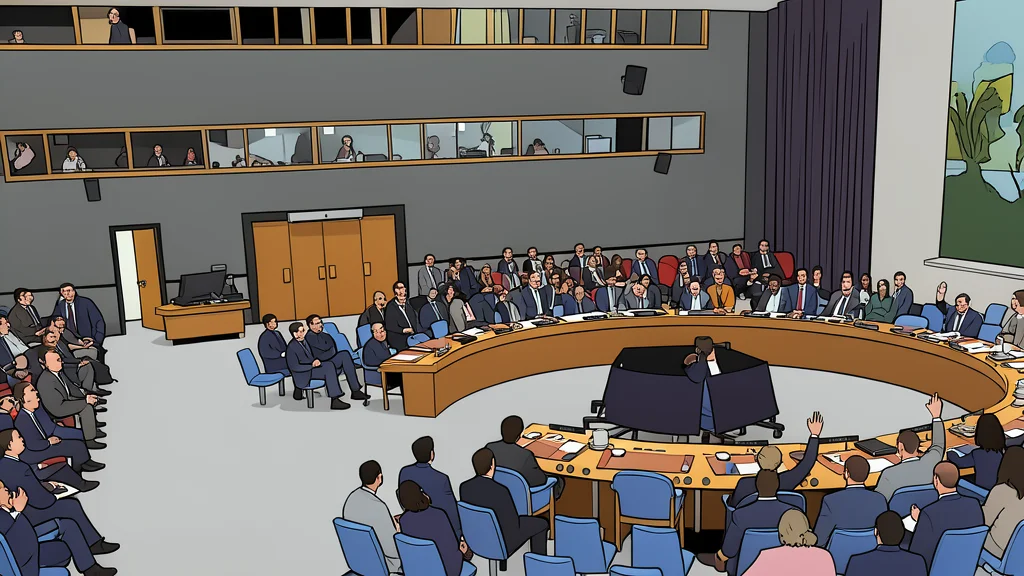
Four Visegrad nations back India's permanent seat bid as PM Modi urges a defined timeline for UN Security Council reform.
Key points
- The Visegrad Group of four European nations has formally backed India's bid for a permanent UN Security Council seat.
- Prime Minister Narendra Modi has urged for a defined timeline and concrete outcomes for Security Council reform negotiations.
- Charter amendments require ratification by all five permanent members, creating a procedural barrier to immediate change.
India’s decades-long campaign for a permanent seat on the UN Security Council has gained renewed diplomatic momentum, yet the path toward implementation remains fraught with procedural hurdles. According to reports from economictimes.com, the Visegrad Group consisting of Poland, Hungary, Slovakia, and Czechia has formally endorsed India’s candidacy, describing the nation as an indispensable part of the Global South and an emerging superpower.
This European support coincides with a broader push by Prime Minister Narendra Modi to accelerate the reform process. Speaking to BRICS leaders in New Delhi, Modi emphasized that the reform of the Security Council can no longer be delayed and that text-based negotiations must be linked to a clearly defined timeline and concrete outcomes. While the political will appears to be strengthening, the structural and procedural barriers within the UN framework continue to pose significant challenges.
European Backing Reinforces India's Bid
The recent endorsement by the Visegrad Group marks a significant diplomatic development for New Delhi. Slovakia’s Foreign Minister Juraj Blanar stated during a meeting in New York that all four V4 countries agree that India must be at the table as a permanent member. This stance aligns with the positions of other major powers, including the United States, the United Kingdom, France, and Russia, which have also publicly supported India’s aspirations for a permanent seat.
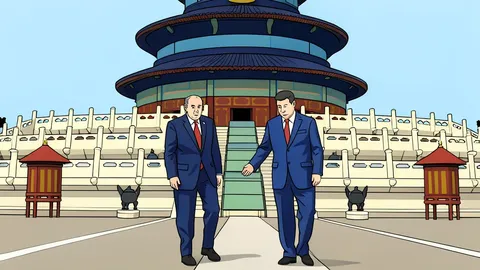
Despite this broad coalition of support, China maintains a nuanced position. While Beijing has historically expressed understanding and support for India’s desire to play a greater role in the UN, it has not explicitly committed to granting a permanent seat with veto power. This divergence in interpretation among the permanent members highlights the complexity of the negotiation landscape and the difficulty in reaching a unified consensus.
Procedural Hurdles Delay Charter Amendment
The legal framework for changing the composition of the Security Council is notoriously rigid. Under Article 108 of the UN Charter, any amendment requires adoption by two-thirds of the General Assembly and ratification by two-thirds of member states, including all five current permanent members. This high threshold ensures that no single state can be forced into a structural change, effectively giving each P5 member a veto over the reform process itself.
Experts note that the reform process has rarely moved beyond the stage of general discussions. The Intergovernmental Negotiations, established in 2009, have yet to produce an agreed reform text that could lead to a Charter amendment. As noted by former Indian Ambassador TS Tirumurti, this process has long been characterized by the absence of deadlines, specific texts, or tangible progress, creating a persistent bottleneck in the diplomatic efforts.
Unresolved Questions Shape Future Negotiations
Beyond the specific claim of India, the broader questions of how many new seats should be created and how they should be distributed among regions remain unsettled. Competing regional claims add layers of complexity to the negotiations, making it difficult to isolate a single candidate's bid from the wider context of global representation. The G4 group, which includes India, Brazil, Germany, and Japan, has consistently advocated for text-based negotiations to break the deadlock.
As the diplomatic efforts continue, the focus shifts to whether the recent political commitments will translate into concrete procedural steps. The demand for a defined timeline and concrete outcomes signals a shift from aspirational rhetoric to a more structured approach, but the ultimate success will depend on the willingness of the permanent members to engage in substantive text-based negotiations.