Kyrgyzstan Proposes Veto Restraint for UN Resolution Enforcement
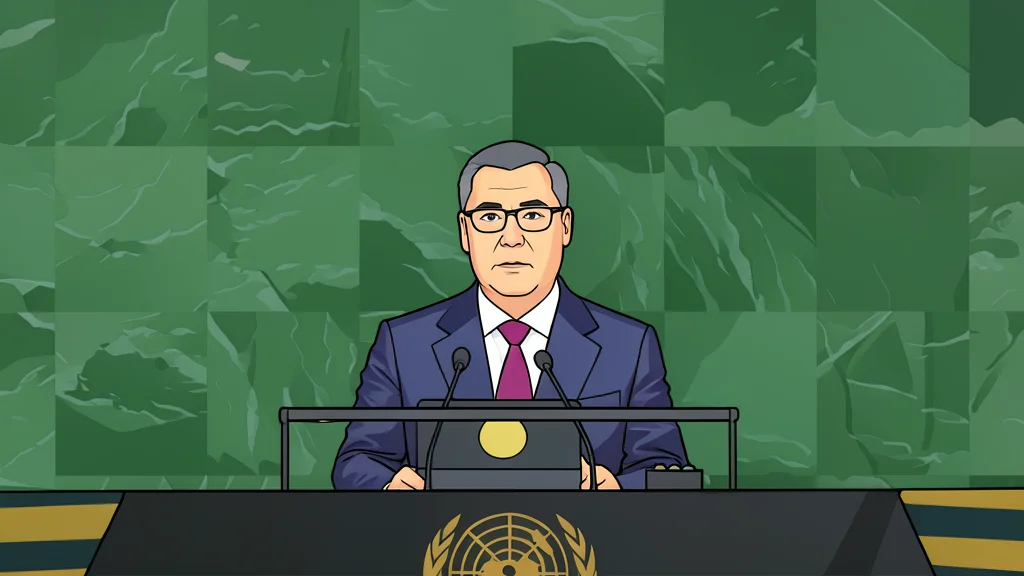
Kyrgyz President Sadyr Japarov calls for a registry to track UN compliance and urges Security Council members to voluntarily refrain from using the veto.
Key points
- Kyrgyz President Sadyr Japarov proposed a public registry to track member states' compliance with UN resolutions.
- The President urged permanent Security Council members to voluntarily refrain from using the veto in cases of systematic non-compliance.
- Kyrgyzstan highlighted the 14-meter drop in Lake Issyk-Kul’s water level over 170 years due to melting glaciers.
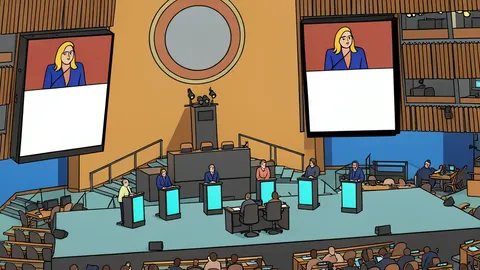
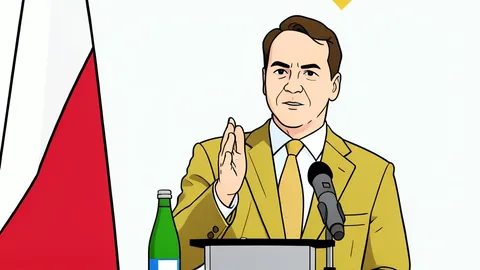
Kyrgyz President Sadyr Japarov addressed the United Nations General Assembly to outline his country’s vision for diplomatic engagement and institutional reform. According to remarks reported by un.org, the leader emphasized Kyrgyzstan’s commitment to dialogue, noting that the nation’s recent election to the UN Security Council for the 2027–2028 term reflects an expanding role for Central Asia in global affairs.
The address focused on mechanisms to enhance the authority of the organization, including a proposal for a public registry to monitor member states’ adherence to resolutions. Japarov also highlighted environmental challenges specific to his nation, particularly the rapid retreat of glaciers and the resulting impact on Lake Issyk-Kul.
Proposal for Enhanced Accountability Mechanisms
Central to the President’s remarks was a call for structural changes to ensure consistent implementation of international decisions. He proposed the establishment of a permanent public registry within the General Assembly, which would track how member states fulfill their obligations under UN resolutions. This system is intended to provide transparency and create a verifiable record of compliance across the membership.
In connection with this initiative, Japarov suggested that permanent Security Council members voluntarily refrain from exercising their veto power in cases involving the systematic non-implementation of United Nations decisions. He outlined a plan for an open working group to conduct intergovernmental consultations, aiming to prepare a report on possible models for such a mechanism. This approach seeks to balance the existing power dynamics within the Council while promoting greater accountability.
Sovereignty and Diplomatic Stance
The President also addressed the role of non-governmental organizations in global politics. He expressed concern regarding what he described as interference by NGOs in the internal affairs and policies of developing states. According to the statement, he welcomed recent decisions by the United States to halt funding for certain non-governmental organizations, characterizing these actions as steps that strengthen state sovereignty and allow nations to independently choose their own development paths.
These remarks reflect a broader diplomatic posture that prioritizes national autonomy in policy-making. By linking the reduction of external influence to the preservation of sovereign decision-making, the President positioned Kyrgyzstan as a advocate for models of development that are less subject to external conditionalities. This stance underscores the country’s desire to assert its agency within the international system.
Urgent Climate Vulnerability in Central Asia
Beyond political reform, the address highlighted the acute environmental pressures facing Kyrgyzstan. The President stressed the country’s particular vulnerability to climate change, specifically the melting of glaciers that serve as critical water sources. He called for a united international effort to address the challenges confronting mountainous regions, which are often on the front lines of climatic shifts.
A focal point of concern is Lake Issyk-Kul, which has experienced severe climatic stress. According to the President, the water level of the lake has fallen by almost 14 meters over the past 170 years due to glacial retreat. He urged the international community to provide support for a special trust fund aimed at preserving this vital water body, framing it as a necessary step to protect both the ecological balance and the livelihoods dependent on it.