Legal Ambiguity in State Proxy Warfare
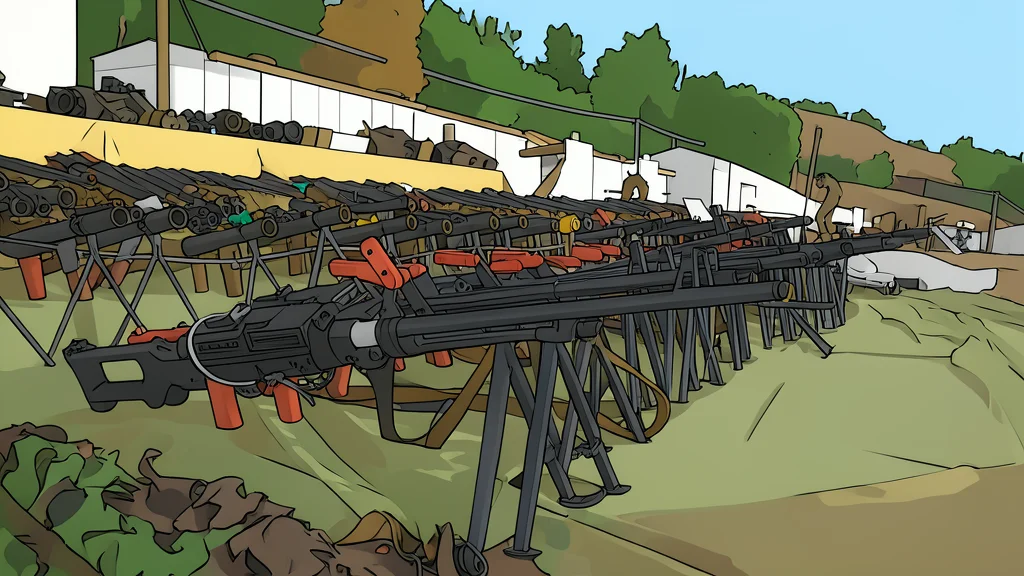
New research examines the challenges of attributing actions by non-state actors to their state sponsors in the context of modern shadow warfare.
The attribution of actions by non-state actors to their state sponsors remains one of the most complex challenges in international law. As detailed in a new monograph by Dr. Jennifer Maddocks, published in the Lieber Studies series, the concept of "shadow warfare" describes a spectrum of clandestine operations where plausible deniability serves as the center of gravity. These operations are often conducted by specialized military units, intelligence agencies, or even criminal groups acting on state instructions, creating a blurred line between direct state aggression and indirect support.
According to the report, states frequently utilize proxies to influence global events and conduct hostilities while maintaining distance from direct confrontation. This approach allows for espionage, sabotage, and other irregular operations to be masked within the shadows of conventional conflict. The legal framework governing these actions is fraught with uncertainty, as international law provides a more detailed regime for inter-state warfare than for conflicts involving non-state entities. This disparity allows states to exploit legal ambiguities to facilitate covert operations while avoiding accountability.
Complexity of Proxy Relationships
Maddocks’ work highlights the intricate dynamics between states and various non-state actors through case studies in Syria, Ukraine, and the Democratic Republic of the Congo. In the Syrian context, the involvement of groups such as Hezbollah at the instigation of other regional powers illustrates how state interests can drive the actions of non-state militias. The analysis suggests that when a state directs or substantially controls the conduct of a proxy, the resulting hostilities may be legally attributed to the state itself, despite the lack of direct official engagement.
The study argues that the current legal landscape fails to adequately address these indirect forms of warfare. While existing treaties like the Geneva Conventions attempt to regulate hostilities, they often lack the specificity required to cover the full range of modern hybrid conflicts. This gap creates a protective veil for states that employ non-state actors, making it difficult for international bodies to determine responsibility and enforce compliance with international norms.
Legal Gaps in Accountability
A significant portion of the critique focuses on the lack of consensus regarding which laws apply to non-state actor conduct. Even where legal principles exist, there is frequent disagreement over their interpretation and application. This legal ambiguity is not merely an academic concern but a practical tool used by states to mask the scope and substance of their involvement in armed conflicts. The result is a system where accountability is often elusive, and the consequences of covert operations remain largely unaddressed by the international community.
Future Directions for International Law
Maddocks proposes approaches to address these gaps, emphasizing the need for a more robust framework that can handle the nuances of substantial involvement by states. The forward question lies in how international law can evolve to keep pace with the changing nature of armed conflict. As states continue to rely on non-state actors to project power, the legal community must determine how to effectively attribute responsibility and ensure that the principles of accountability are maintained in an era of shadow warfare.