South Korea to Push UNSC Reform Amid Veto Paralysis

With the Security Council blocked by vetoes, Seoul plans to advocate for structural changes to restore multilateral conflict resolution capabilities.
Key points
- A recent column argues that South Korea should lead a push for UN Security Council reform to address veto paralysis.
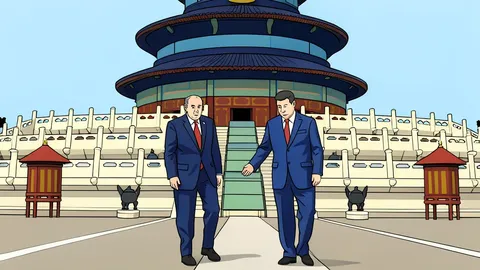
- Russia and China have recently used vetoes to block resolutions on Ukraine and shipping security in the Strait of Hormuz.
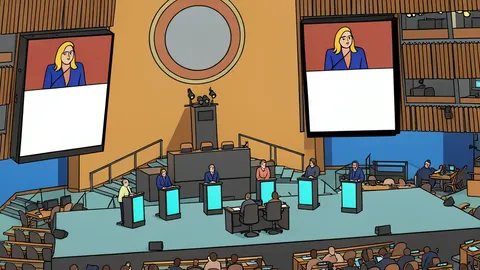
- President Lee Jae-myung is set to deliver a keynote address on UN reform at the General Assembly on September 22.
South Korea is preparing to take a prominent role in advocating for the reform of the United Nations Security Council, as recent geopolitical crises have highlighted the body's inability to function effectively. According to reporting by koreatimes.co.kr, a recent guest column argued that the current structure has become paralyzed when permanent members are directly involved in conflicts they are tasked with resolving.
The core of the argument suggests that the Security Council is trapped in a structural contradiction where the referee is also a player. When a permanent member state uses its veto power to block resolutions condemning its own military actions, the institution loses its capacity to deter war or coordinate international responses, effectively rendering it invisible during critical moments of global tension.
Veto Use Highlights Structural Flaws
Recent events in Ukraine and the Middle East have underscored these limitations. Russia has repeatedly exercised its veto to block resolutions related to its military actions against Ukraine, including conflicts originating in 2014 and 2022. Similarly, during tensions involving the Strait of Hormuz, China and Russia blocked a resolution aimed at protecting commercial shipping and establishing a coordinated international response, further demonstrating the difficulty of achieving consensus when major powers have opposing interests.
The column notes that this impotence has raised fundamental questions about the United Nations' role as the central institution for managing international conflicts. While the council played a decisive role in past crises, such as the Korean War and the Gulf War, its current inability to act when permanent members are belligerents has exposed a gap in the collective security system established after World War II.
Advocacy for Middle Power Representation
To address these issues, the proposed reform strategy involves promoting greater representation for responsible middle powers. The column suggests that South Korea, along with Canada, Australia, and India, should lead a push to limit the veto power of permanent members involved in conflicts. It further argues that the General Assembly should be empowered to respond more swiftly when the Security Council is deadlocked, ensuring that international law can still be applied even when the primary body is blocked.
This approach aims to shift the dynamic from a system dominated by the interests of a few large powers to one that reflects a broader consensus of the international community. By including more voices, the council could potentially regain its legitimacy and effectiveness in mediating disputes and enforcing peacekeeping mandates without being held hostage by the agendas of individual states.
Upcoming Address at General Assembly
President Lee Jae-myung is scheduled to outline South Korea’s vision for United Nations reform during a keynote address at the General Assembly on September 22. This speech is expected to serve as a formal platform for presenting the country's position on how to modernize the Security Council and address the structural contradictions that have emerged in recent years.
The forward question now centers on how other nations will respond to this diplomatic initiative. Observers will be watching to see if there is sufficient political will among the existing permanent members to consider any limitations on their veto powers, or if the council will remain stuck in its current state of paralysis, leaving the burden of conflict resolution to ad hoc coalitions and smaller states.