Trump Seeks Diplomatic Wins at U.N. Amid Political Setbacks
President Trump arrives in New York for the U.N. General Assembly after a week of legal challenges and low approval ratings.
Key points
- Trump addresses the U.N. after facing legal setbacks and a drop in approval ratings below 40 percent.
- The President aims to highlight peace deals and defend his Iran policy during the General Assembly speech.
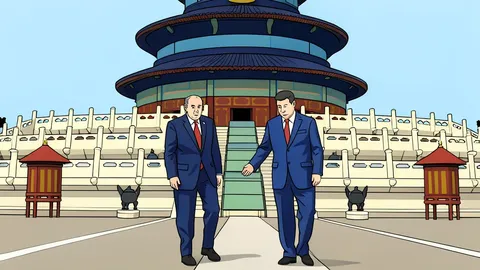
- Chinese President Xi Jinping skips the U.N. to attend a state dinner with Trump in Washington later in the week.
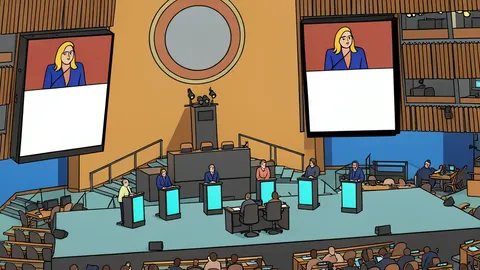
President Donald Trump is set to address world leaders at the United Nations General Assembly in New York, seeking to reassert his diplomatic standing after a turbulent period marked by legal and political setbacks. According to NPR World, the President’s approval rating has dipped below 40 percent, fueled in part by economic concerns linked to the conflict with Iran and backlash over his recent ban of several major news organizations from the White House.
With midterm elections less than two months away, the administration is looking to capitalize on high-profile diplomatic engagements. This week’s schedule includes the U.N. speech followed by a state visit from Chinese President Xi Jinping in Washington, a sequence designed to highlight the President’s role as a global peacemaker and policy architect on the international stage.
Peacemaker narrative faces scrutiny
In his address, Trump is expected to emphasize his administration’s direct approach to complex global issues, particularly regarding Iran. U.S. Ambassador to the U.N. Mike Waltz told reporters that the President will stress the necessity of ensuring Iran never acquires nuclear weapons. This framing allows the administration to defend its recent military strikes on Iranian targets while presenting a broader vision of stability and security in the region.
However, the reception of such claims may be tempered by the President’s previous interactions with the U.N. body. In past years, his remarks have ranged from threats to North Korea to blunt criticisms of member states, often drawing laughter or visible discomfort from foreign delegations. This year, the presence of Iranian President Masoud Pezeshkian, who is scheduled to speak the following day, adds a layer of direct confrontation to the diplomatic atmosphere.
Bilateral meetings drive diplomacy
Much of the substantive diplomatic work is expected to occur on the sidelines of the General Assembly rather than in the plenary sessions. Trump is slated to meet with Ukrainian President Volodymyr Zelenskyy, British Prime Minister Andy Burnham, and leaders from Gulf states. These bilateral interactions are viewed as more critical to immediate geopolitical outcomes than the formal speeches delivered in the General Assembly hall.
Richard Fontaine, a former official in the George W. Bush White House, noted that the core of current diplomacy is increasingly conducted through private channels. This shift reflects a broader trend where multilateral forums struggle to reach consensus, leading nations to prioritize direct negotiations. The U.N. Security Council itself has faced difficulties in agreeing on key resolutions, further pushing the weight of decision-making toward one-on-one meetings.
China’s absence shifts focus
A significant complication for this year’s assembly is the absence of Chinese President Xi Jinping, who will instead travel to Washington for a state dinner with Trump. Heather Conley, who worked on European issues in the Bush State Department, pointed out that many global issues, including artificial intelligence safeguards, are deeply intertwined with China’s position. Without Beijing present in New York, it will be challenging to forge broad international agreements on these topics.
Conley observed that while leaders will use the U.N. platform to articulate their own national perspectives, global attention is likely to be drawn to Washington later in the week. The upcoming state visit suggests that the most consequential diplomatic developments may occur away from the United Nations, highlighting the evolving dynamics of international relations where bilateral power holds greater sway than multilateral consensus.