UN Chief Calls for Strategic Shift in Peacekeeping Approach

Secretary-General António Guterres urged the Security Council to prioritize political solutions over purely military deployments, highlighting the growing gap between shrinking budgets and expanding conflict zones.
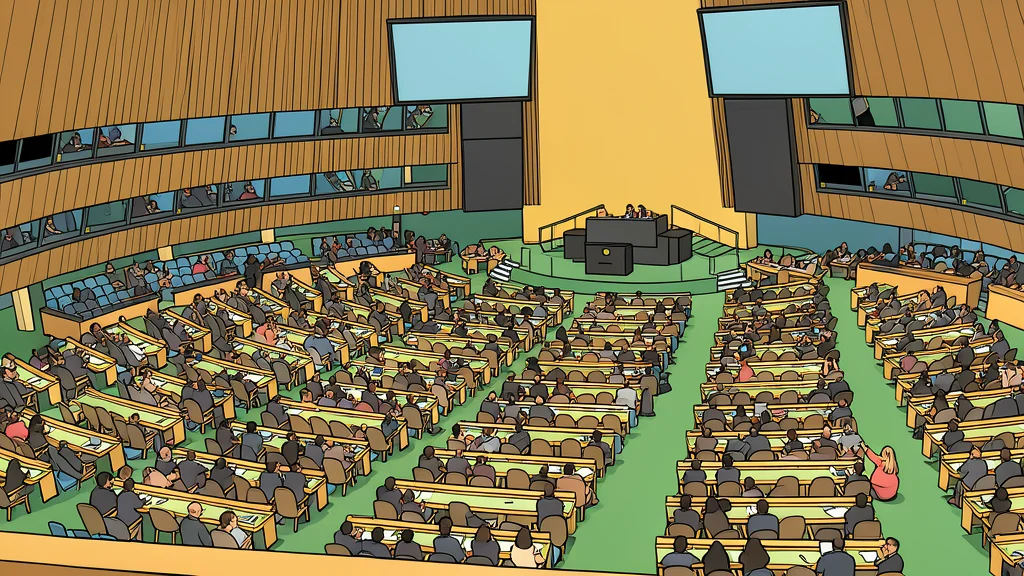
Secretary-General António Guterres addressed the United Nations Security Council with a sobering assessment of the current state of global conflict. According to reporting by GN geopolitics/un, the UN chief warned that peacekeeping missions are increasingly operating in environments where peace is not merely absent but actively contested. He emphasized that the traditional model of deploying blue helmets to stabilize fragile ceasefires is being tested by the reality of active warfare, a shift that complicates the humanitarian and protective mandates of these forces.
The Secretary-General stated that the organization faces a dual challenge of evolving threats and constrained resources. He noted that peacekeepers are now frequently tasked with containing conflicts where the parties involved feel little political pressure to negotiate a lasting end. This situation is further complicated by rapid technological changes, including the proliferation of drones and autonomous weapons, which are altering the dynamics of modern combat. Guterres urged the Council to recognize that military force alone cannot create stability without a robust political strategy.
Political Strategy Must Lead Military Action
Guterres argued that peace must be built from within by national actors who hold the key to long-term stability. He called for closer consultation with host states, conflict parties, and civil society to ensure that mandates are realistic and achievable. The Secretary-General stressed that before any deployment, there must be a clear, long-term vision of what the mission is meant to achieve. He warned against treating mission renewals as mere administrative exercises, suggesting instead that each renewal should be viewed as a strategic opportunity to adapt mandates and empower operations to better serve political goals.
The distinction between peacekeeping and peace enforcement was a central theme of his remarks. Guterres stated that peacekeeping operations should ideally be deployed only where there is a peace agreement or a robust ceasefire. When circumstances require more robust action, the UN needs peace enforcing capabilities, but he stressed that force must always serve a political strategy, never replace one. He highlighted the need for efficiency, defining it as making every dollar count while maintaining a skilled and diverse workforce. This includes overcoming strict budgetary rules to ensure that women participate fully and equally at all levels of command and operations.
Member States Debate Financial and Strategic Limits
In the subsequent debate, Pakistan’s representative highlighted the country’s long-standing commitment to UN peacekeeping, noting that more than 170,000 Pakistanis have served in these missions, with 183 losing their lives. The delegate argued that while the current environment places real pressure on operations, this should not be misinterpreted as a decline in support. Instead, the international community is navigating a cycle of expansion and retrenchment that has characterized peacekeeping since the 1960s. The representative urged that focused mandates should lead to better peacekeeping, not less, warning against starting with a financial ceiling and then shrinking the mission to fit it.
China’s delegate echoed concerns about the increasing complexity of the international security environment, noting that peacekeeping operations face new circumstances that require streamlined mandates and greater efficiency. The discussion reflects a broader consensus among member states that the current model is under strain, not from a lack of will, but from the mismatch between the scale of modern conflicts and the resources available to address them. As no new mission has been established since 2014, the focus has shifted to optimizing existing operations and ensuring that the strengths built over decades are not dismantled in a way that leaves the international community vulnerable to future crises.
Future Direction for Global Security Efforts
The path forward requires a re-evaluation of how the United Nations approaches conflict resolution. According to the insights provided in the GN geopolitics/un report, the emphasis is shifting toward predictive financing and regional partnerships, particularly with the African Union, which plays an essential role in maintaining stability. The Secretary-General’s call for a more strategic integration of political and military efforts suggests that the next phase of UN peacekeeping will depend on its ability to adapt to a world where threats are evolving faster than traditional diplomatic mechanisms. The coming months will likely see increased scrutiny on mandate clarity and resource allocation as member states seek to balance fiscal responsibility with the urgent need for effective conflict management.