UN Leadership Succession Amidst Global Instability
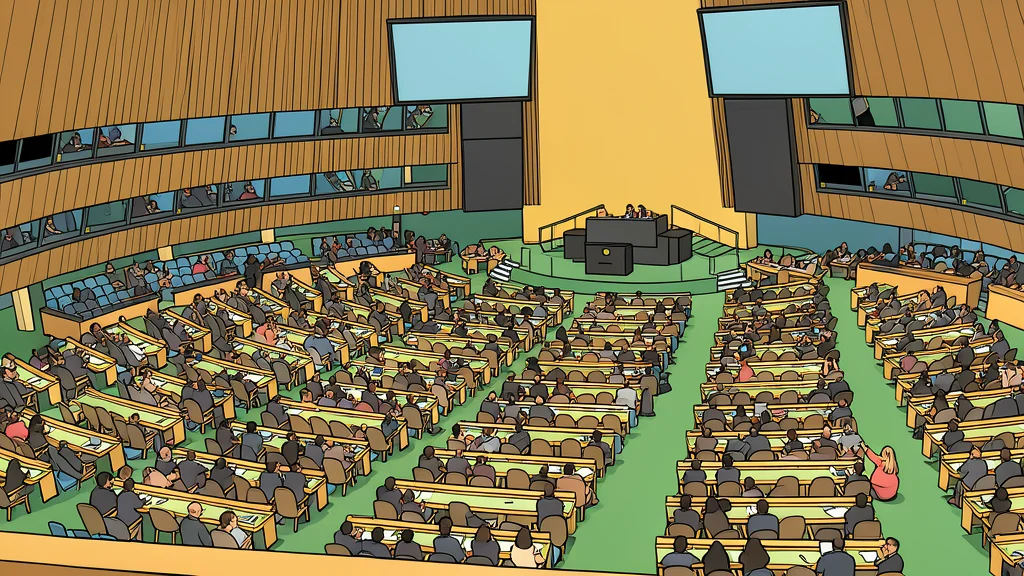
As the UN General Assembly convenes, calls intensify for a Secretary-General capable of defending international law against mounting geopolitical pressure and systemic paralysis.
The United Nations stands at a pivotal moment as it prepares for the selection of its next Secretary-General. According to a recent briefing from Amnesty International, the organization faces one of its most critical junctures since its founding more than eight decades ago. The current landscape is characterized by widespread conflict, climate instability, and rising challenges to the rules-based international order. This period of uncertainty coincides with the 81st Session of the UN General Assembly, where senior officials will gather in New York to address these escalating global crises.
Amnesty International Secretary General Agnès Callamard has emphasized that the incoming leader must be a steadfast defender of international law. She argues that the role requires more than consensus management or compromise among powerful states. Instead, the next Secretary-General must possess the conviction to confront geopolitical pressure and the capability to condemn atrocities regardless of the perpetrators. This call for a principled leader comes as the Security Council remains paralyzed, limiting the organization's ability to respond effectively to urgent humanitarian and security challenges.
Challenges to Multilateral Frameworks
The current international environment is marked by significant strain on multilateral institutions. According to the briefing, powerful nations are subjecting the UN to severe political, financial, and diplomatic pressure, which undermines its relevance and effectiveness. Specific concerns include the ongoing attacks on international justice institutions and the lack of unified responses to conflicts in regions such as Gaza, Ukraine, and Sudan. The organization faces a complex web of issues, from the regulation of artificial intelligence to the protection of human rights in the context of resource extraction and armed conflict.
Critics argue that the current leadership structure often results from closed-door compromises that prioritize geopolitical stability over human rights. To address this, there is a growing demand for a leadership style that engages meaningfully with civil society and maintains transparency. The next Secretary-General is expected to navigate these tensions by balancing the need for diplomatic engagement with the imperative to uphold the UN Charter and international humanitarian law.
Focus on Human Rights Violations
In addition to leadership concerns, the upcoming assembly will focus on specific instances of human rights abuses. Amnesty International plans to publish a briefing examining the treatment of artisanal miners in the Democratic Republic of Congo, where armed groups are reported to be perpetuating abuses with external support. This issue highlights the intersection of critical mineral supply chains and human rights, a topic that is increasingly central to global trade discussions. The organization will also address the situation in the Occupied Palestinian Territory, calling for international responsibility and accountability.
The agenda for the 81st Session includes discussions on the need for a global, binding regulatory model for artificial intelligence. As technology advances rapidly, there are concerns about the lack of transparent and effective oversight mechanisms. The UN is tasked with developing frameworks that ensure these technologies serve human rights rather than exacerbating inequality or enabling state repression. This regulatory challenge adds another layer of complexity to the organization's mandate.
Future Directions for UN Engagement
Looking ahead, the success of the next Secretary-General will depend on their ability to restore confidence in the UN's capacity to address global crises. This involves not only diplomatic maneuvering but also a commitment to constructive engagement with diverse stakeholders, including civil society organizations. The upcoming side events and high-level meetings in New York will serve as key platforms for articulating these priorities and building consensus around a shared vision for the organization's future.
As the General Assembly proceeds, the focus will remain on how the UN can adapt to a world beset by multiple overlapping crises. The selection of the next Secretary-General is seen as a crucial step in determining whether the organization can fulfill its founding mission of maintaining international peace and security. Observers will closely watch for signals of a shift towards a more assertive and principled approach to global governance, one that prioritizes the rule of law and human dignity above geopolitical interests.