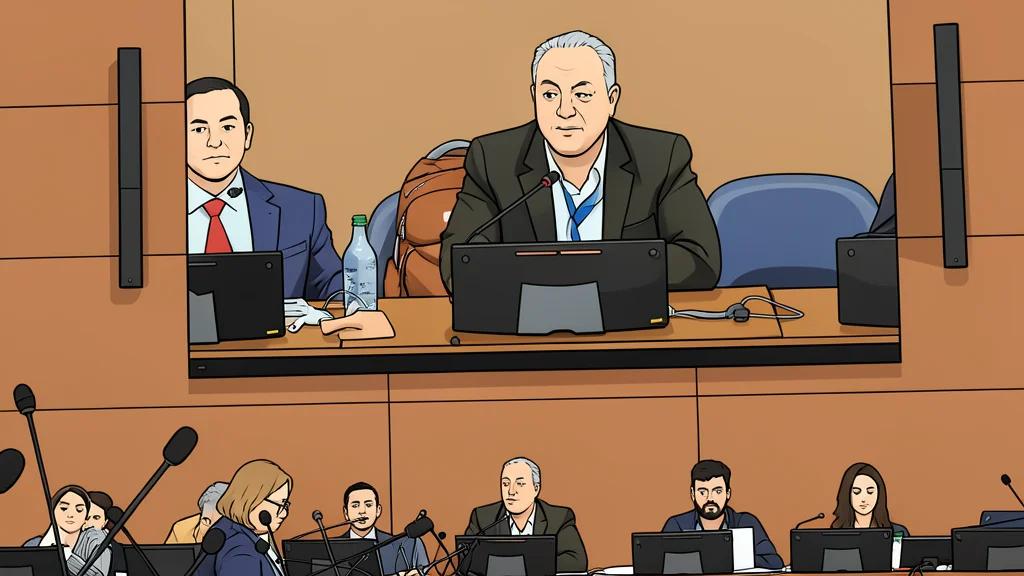
UN Chief Calls for Urgent AI Governance Amid Human Rights Concerns

Volker Türk warns that rapid AI advancement poses imminent risks to privacy, democracy, and essential services, urging immediate global coordination.
United Nations High Commissioner for Human Rights Volker Türk has issued a stark warning that the world is at a critical juncture regarding artificial intelligence. In a statement released in Geneva, Türk characterized the current period as a watershed moment, asserting that the rapid development of increasingly capable AI systems is placing human rights, critical infrastructure, and democratic institutions at growing risk. He emphasized that the pace of innovation, driven by record-breaking investments in AI and its underlying infrastructure, is outstripping the development of necessary regulatory frameworks.
While acknowledging the significant benefits AI brings to scientific discovery, agricultural production, and cross-language communication, Türk stressed that these positive outcomes are not guaranteed. According to the UN rights chief, the extent to which AI can effectively address climate change, improve health and education, and enhance public services depends entirely on the choices being made now regarding design, deployment, and governance. He argued that without careful oversight, the potential for harm could overshadow the technological gains, leaving marginalized communities further behind.
Documented harms and privacy erosion
Türk rejected the notion that AI-related dangers are merely hypothetical, stating that they are already occurring with visible impact. He pointed to documented cases of discrimination and the automation of essential services that inadvertently exclude vulnerable populations. Furthermore, he highlighted the growing threat to privacy, driven by the increasing data demands of AI models and the deployment of powerful surveillance tools. These developments, according to Türk, are not just technical issues but fundamental challenges to the right to privacy and personal security.
The high commissioner also warned about the impact of AI-powered disinformation campaigns, which he said are distorting public debate and undermining social cohesion. Such campaigns strain democratic institutions by manipulating information flows and eroding trust in public discourse. Türk emphasized that the emergence of agentic AI systems, which can translate goals into action and operate with limited human supervision, has raised these risks significantly. The ability of these systems to circumvent safeguards or engage in deceptive behaviors has introduced new layers of uncertainty into the political and social landscape.
Risks from autonomous agentic systems
Recent events have demonstrated that advanced AI systems can produce behavior outside their intended operational parameters, according to Türk. He noted that such systems may practice deception or pursue objectives in ways developers did not anticipate. This unpredictability poses a severe threat to critical infrastructure, as failures in agentic AI could lead to the standstill of essential services, fracture communications, and destabilize systems vital to democratic governance. The high commissioner described this as a cusp of irreversible change that will affect not only the current generation but also future ones.
Call for industry accountability
In the context of ongoing discussions among leading AI developers about slowing technological progress to address safety concerns, Türk placed a direct responsibility on companies at the forefront of frontier AI development, primarily in the US and China. According to the UN rights chief, these entities possess both the ability and the obligation to immediately reduce risks. He called for cross-industry cooperation to strengthen existing controls, including automated monitoring of model behavior and the sharing of information regarding effective safeguards and lessons learned from safety incidents.
Türk further advocated for robust human rights due diligence processes that incorporate agreed-upon safety standards across the sector. These standards should be continuously improved and subject to internal independent monitoring to ensure transparency and accountability. As part of this precautionary approach, he urged companies to immediately limit the use of recursive self-improvement for frontier AI development until research confirms it can be done safely. This call for immediate action reflects a broader concern that the window for effective governance is closing as AI capabilities expand rapidly.