Iran Calls for Structural Overhaul of Global Governance at BRICS
Iranian President Masoud Pezeshkian has urged BRICS leaders to pursue substantive reforms in international institutions, arguing that current global mechanisms fail to ensure equitable treatment and security for all member states.
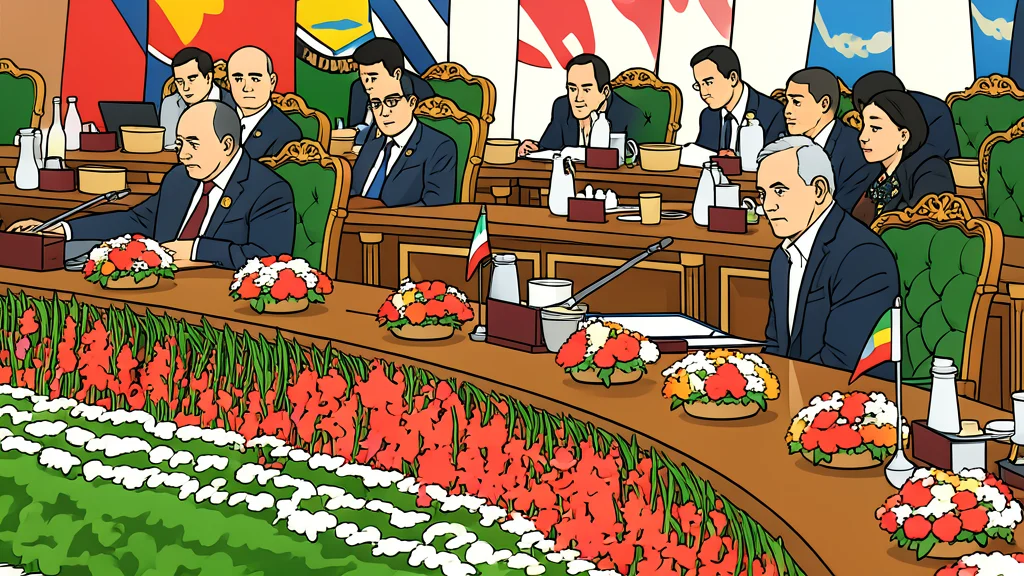
Speaking at a closed-door session of the BRICS summit in New Delhi, President Masoud Pezeshkian asserted that genuine multilateralism requires a fundamental shift in how international law is applied. According to reports from the GN auto geopolitics/global desk, the Iranian leader emphasized that the credibility of the current international order is compromised when rules are selectively enforced or when powerful nations bypass established norms to exert political influence through financial and technological means.
The address highlighted a perceived contradiction in modern diplomacy, where deeper economic interconnectedness coexists with a resurgence of unilateral policies and coercive measures. Pezeshkian cautioned that these trends undermine the foundational principles of global governance, arguing that a system which protects the rights of some while leaving others vulnerable to insecurity cannot be considered durable or legitimate.
Addressing Double Standards in International Law
The Iranian president specifically cited the limitations of the United Nations Charter in shielding nations from unlawful military action. He noted that Iran has directly experienced the consequences of what he described as double standards, referencing recent military aggression and the resulting damage to civilian infrastructure. Pezeshkian argued that international rules lose their meaning when they are binding on some countries but open to interpretation for others, thereby eroding the trust necessary for effective cooperation.
Referencing the situations in Gaza and Lebanon, he stressed that the international community must possess the capacity to defend both human life and national sovereignty in the face of conflict. The president called for reforms that produce practical changes rather than merely procedural adjustments, asserting that a fair global order must safeguard the rights of all nations irrespective of their size or power projection.
Priorities for Institutional Restructuring
Pezeshkian outlined four key priorities for the future of global governance, beginning with the strict upholding of sovereignty and international law. He proposed restructuring major global institutions, including the UN Security Council and leading financial bodies, to better reflect the interests of developing nations. Additionally, he advocated for expanding economic cooperation through the use of national currencies and independent financial mechanisms, such as the New Development Bank, to reduce reliance on dominant external financial systems.
The fourth priority involves confronting unilateral sanctions, which Pezeshkian described as tools of political pressure rather than legitimate diplomatic instruments. He urged BRICS members to coordinate their efforts in defending the UN Charter and to strengthen collaboration in critical sectors such as science, technology, energy, and food security. This coordination, he argued, is essential for withstanding outside pressure and maintaining the integrity of member states' independent policies.
Proposals for a Permanent Secretariat
To facilitate the implementation of joint decisions and deepen cooperation, the Iranian leader called for the establishment of a permanent secretariat for the BRICS group. This body would serve to streamline communication and ensure that agreed-upon measures are executed effectively. Pezeshkian emphasized that such structural enhancements are necessary to transform BRICS from a forum for dialogue into a cohesive bloc capable of influencing global policy outcomes.
Looking ahead, the focus will likely shift to how member states respond to these calls for institutional change. Observers will watch whether the summit produces concrete steps toward the proposed reforms in financial cooperation and security arrangements. The upcoming reactions from other BRICS nations will determine if these proposals gain traction or remain rhetorical, setting the stage for future negotiations on the structure of global governance.